How to Find the Perfect Meeting Space for Rent

Finding the right meeting space for rent is so much more than just ticking a box on your to-do list. Think of it as a strategic move, one that sets the entire tone for your event. The environment you choose has a direct line to focus, productivity, and the impression you leave on clients or your own team.
Honestly, the success of your meeting is often decided long before anyone even walks through the door.
Why the Right Meeting Space Matters More Than Ever
Choosing the perfect spot for your meeting is critical. It impacts everything from creativity and focus to your company's credibility. It’s about getting away from the distractions of a noisy coffee shop or the tight squeeze of your own office. A dedicated, professional space can turn a standard client pitch, team offsite, or workshop into something memorable and genuinely high-impact.
This isn’t just a nice-to-have; it's a core business tool, especially as work culture continues to shift. With so many teams going hybrid or fully remote, the need for flexible, on-demand venues has exploded. Companies are looking for spaces that bring people together for collaboration without locking them into a traditional long-term lease.
The Strategic Advantage of a Professional Venue
A well-designed space gives you more than just tables and chairs—it creates an atmosphere that gets results. Take a premier venue like Freeform House, a membership-based club in the heart of Jenks, Oklahoma's 10 District downtown. It offers members access to sophisticated meeting rooms, dynamic co-working spaces, and a community hub designed for collaboration and connection. Making a choice like this signals that you’re serious and invested in the meeting's outcome.
Here’s what you gain:
Enhanced Focus: A private, dedicated room cuts out the interruptions, letting everyone concentrate on the agenda.
Improved Collaboration: The right layout and tools can spark active participation and creative thinking.
Stronger First Impressions: Hosting clients in a premium space shows you’re credible and committed to quality.
This move toward flexible rentals is part of a huge market trend. The global market for rental meeting spaces is expected to jump from $16 billion in 2025 to $25 billion by 2035. This boom is driven by new post-pandemic work models, with reports showing that nearly 70% of meetings now have hybrid elements. That means spaces need seamless video conferencing and collaborative tech built right in. You can explore more insights on the growing meeting space rental market to see where things are headed.
A great meeting space acts as a silent partner. It handles the logistics so you can focus on the human connection and strategic goals. It removes friction and just makes the entire experience better for everyone.
At the end of the day, investing in a high-quality meeting space for rent is an investment in your meeting’s success. It lays the groundwork for clear communication, innovative ideas, and real connections, turning a simple get-together into a powerful catalyst for progress.
Defining Your Needs Before You Search
Before you even type "meeting space for rent" into a search bar, the most important work has already begun. Just jumping into a search without a clear plan is a recipe for wasted time and frustration. You'll end up scrolling through options that just aren't the right fit. A few minutes spent defining exactly what you need will make the entire process faster and more effective.
Start with the obvious, but don't stop there. Of course, you need to know your headcount, but the layout of the room is just as crucial. Are you leading a high-stakes board meeting that calls for a formal, focused setup? Or is this a creative workshop where people need to move around, collaborate, and feed off the room's energy? The right layout can completely change the dynamic of your event.
A little strategic planning ensures the environment you choose actually supports the focus of your meeting and helps you get the results you're after.
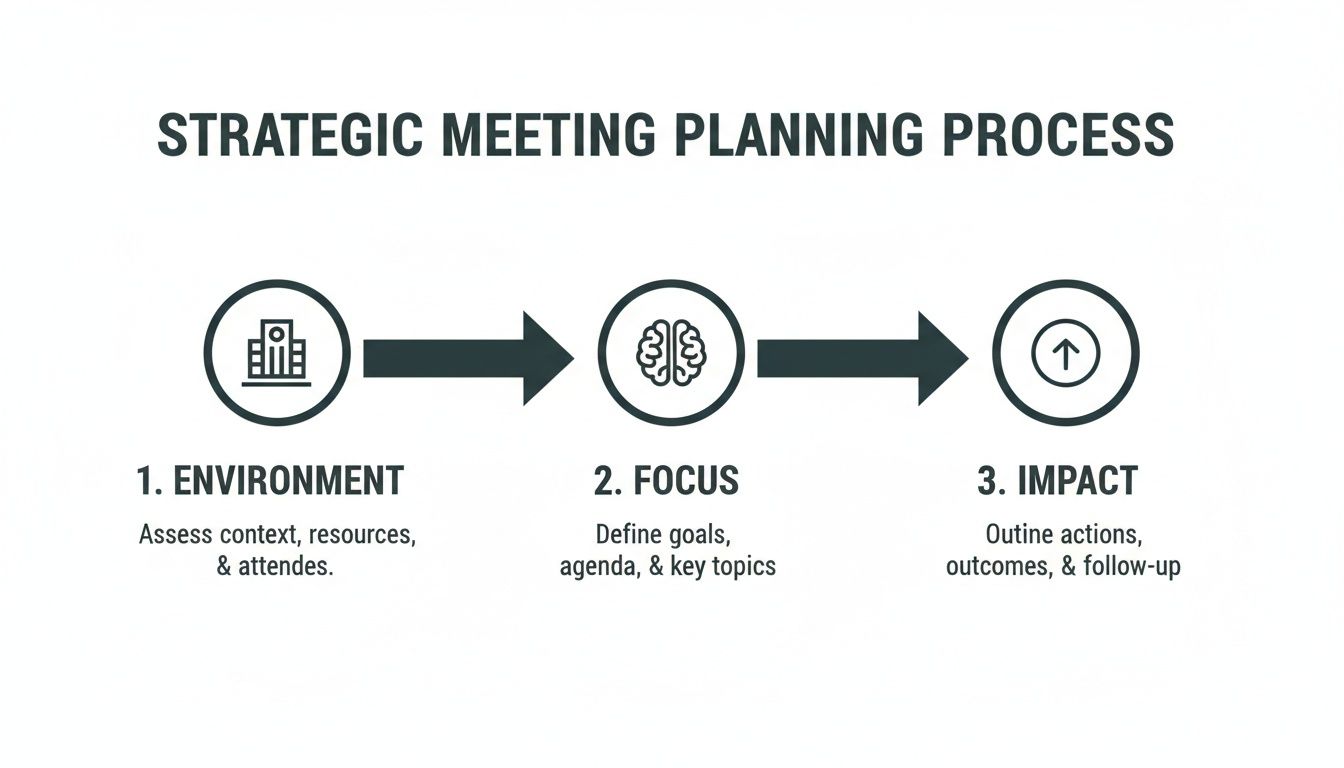
This simple model shows how the physical space directly shapes the thinking and, ultimately, the outcome of your time together.
Pinpointing Your Tech and Amenity Must-Haves
Let's be real: in today's world, technology isn't an "extra"—it's a fundamental requirement. A spotty Wi-Fi connection or a glitchy video conference setup can bring a productive meeting to a screeching halt. That’s why creating a list of your non-negotiable tech needs is one of the smartest pre-booking moves you can make.
Don't leave these to chance:
High-Speed, Reliable Wi-Fi: Is it business-grade? Secure? Can it handle 15 laptops and phones simultaneously without lagging? Ask the hard questions.
AV Equipment: Do you just need a big screen for a presentation, or do you require seamless video conferencing hardware to bring in remote team members?
Power and Connectivity: This one’s a classic rookie mistake. Make sure there are enough outlets for everyone to plug in.
Beyond the hardware, it's the amenities that create a truly smooth and productive experience. Accessibility is a big one—always confirm details like elevator access and accessible restrooms. And never underestimate the chaos that a lack of parking can cause for your attendees.
I've learned from experience that the small details often make the biggest difference. A seamless check-in process, great coffee that's always ready, or a comfortable breakout area can elevate a meeting from just "good" to truly exceptional.
Finally, think about food. Does the venue handle catering in-house, or do they have preferred partners? For example, a premier club like Freeform House in Jenks, envisioned as a central gathering spot to foster a creative and cooperative spirit, has curated relationships with local caterers. This means high-quality food shows up on time without you having to manage logistics or pay extra delivery fees. Getting these details sorted out upfront saves you from last-minute stress.
Matching Your Meeting Goal to the Ideal Space
The why behind your meeting should always dictate the where. A formal client pitch just doesn't have the same vibe—or the same requirements—as an internal team-building day.
To help you connect your goal to the right kind of room, I've put together a simple table. Think of it as a cheat sheet for finding your perfect match, using some of the great spaces at Freeform House as real-world examples.
Matching Your Meeting Goal to the Ideal Space
Meeting Goal | Ideal Space Type | Key Features to Look For |
|---|---|---|
High-Stakes Decision Making | Executive Boardroom (e.g., Freeform Executive) | Formal seating, advanced AV for crisp presentations, soundproofing for absolute privacy. |
Creative Brainstorming | Flexible Workshop Space (e.g., Freeform Studio) | Movable furniture, tons of whiteboard space, and great natural light to spark ideas. |
Client Pitch or Presentation | Professional & Impressive Room (e.g., Hall of Fame) | High-end finishes, seriously comfortable chairs, and rock-solid presentation tech. |
Team Offsite or Workshop | Collaborative & Open Area (e.g., The Freeform) | Multiple zones for breakout sessions, casual seating options, and easy access to amenities. |
By building out this kind of detailed checklist—from layout and tech to the overall atmosphere—you give yourself the power to filter venues with purpose. You'll move beyond just finding a room and confidently select a meeting space for rent that actively helps you hit your goals.
How to Choose a Space for Any Occasion
Every meeting has a purpose, and your choice of a meeting space for rent should absolutely support that goal. Think about it: the entire vibe of a room—whether it's buttoned-up and formal or wide-open and creative—can completely change how people interact and what you accomplish.
When you align the venue with your event's needs, you're doing more than just booking four walls. You're setting the stage for success. Using the spaces at Freeform House as an example, you can see how this works in real life. A great venue isn't a one-size-fits-all solution; it’s a collection of curated environments, each built for a different kind of conversation.
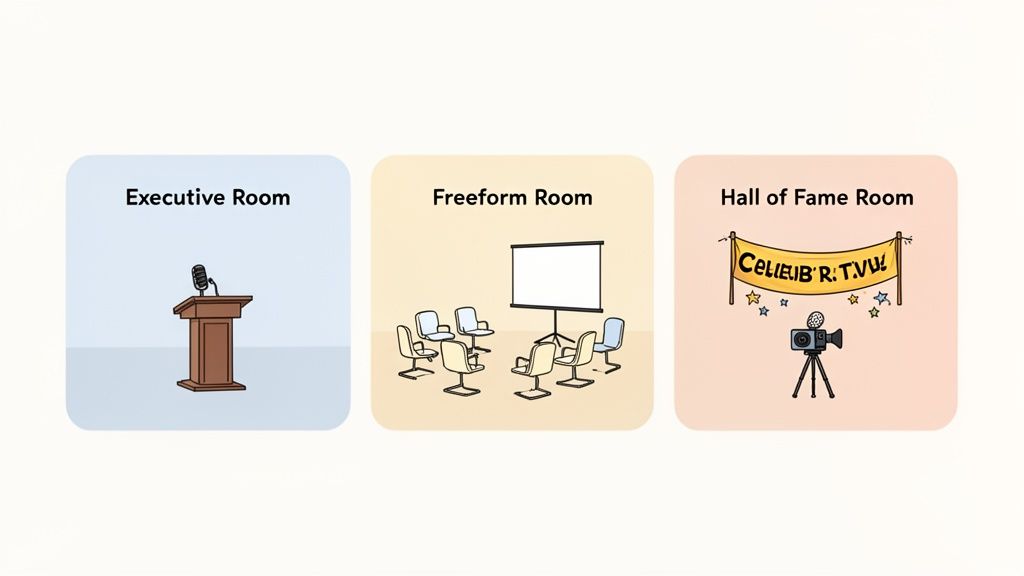
For High-Stakes and Formal Engagements
When the pressure is on—think board meetings, investor pitches, or major client presentations—you need an environment that projects authority and seriousness. The last thing you want are distractions. You need a space that feels important.
This is where rooms with a strong, traditional character, like the Executive Room or the historic Thomas Room at Freeform House, really deliver. They are designed for focus and decision-making. With their classic boardroom layouts and sophisticated decor, they create an atmosphere that tells everyone in the room that the business at hand matters. If you're weighing your options, our guide on finding a boardroom near me can help you drill down on what to look for.
For Creative Collaboration and Workshops
On the flip side, a team brainstorm or a hands-on workshop needs a totally different kind of energy. A stuffy, formal setting is the fastest way to kill creativity. What you're looking for is a flexible, inspiring space that encourages people to talk, share, and build on ideas.
This is the perfect use case for a room like the Freeform Room. It's built for interaction, with adaptable furniture, plenty of natural light, and all the collaborative tools you need. The ability to quickly reconfigure the layout means your team can go from a large group discussion to small breakout huddles without missing a beat. An environment like this really gives your team permission to think differently.
The right meeting room does more than just host your event; it becomes an active participant. It can either amplify your message or subtly undermine it. Choosing wisely is a strategic advantage.
And for those really big moments, like celebrating a company milestone or a massive win, a unique space like the Hall of Fame Room can make the occasion feel truly special. It offers an impressive, memorable backdrop that honors the achievement and makes your team feel genuinely valued.
Beyond the Traditional Meeting Room
Let's be honest, the modern definition of a "meeting" has grown. Today, creating top-notch content can be just as crucial as closing a deal. That’s why you’re seeing specialized studios become a key feature at premier venues.
Your needs might go way beyond a table and chairs. Look for a meeting space for rent that also provides facilities for these kinds of modern business needs:
Podcast Booths: For laying down professional-grade audio for interviews, marketing content, or internal comms.
Loft Studios: Versatile spaces equipped for professional photography and video, perfect for everything from product shoots to filming promotional content.
By matching the room to the occasion—whether it’s a formal board meeting, a creative free-for-all, or a content creation day—you make sure the environment is working with you, not against you.
Navigating Budgets and Booking Logistics
You’ve found the perfect meeting space. Great! But nailing the booking—without hidden costs or contract surprises—is where the real work begins. This is the moment you switch from creative planning to brass tacks. Getting a firm grip on the financials and logistics is what separates a smooth event from a stressful one.
Before you even send an inquiry, you need a budget. I know, it sounds obvious, but it’s the single most important filter you have. Think beyond just the room rental fee. What about potential add-ons like AV gear, catering, or a custom room setup? Factoring these in from the start helps you accurately compare an hourly rate for a quick client meeting against a full-day package for a team workshop.
Understanding the True Cost of Your Rental
The price you see on the website is rarely the final price you pay. To avoid any frustrating budget blowouts, you have to get curious and ask about potential fees that aren't listed in the initial quote.
Here are a few of the usual suspects to ask about:
Cleaning Fees: Is a standard clean included, or is there an extra charge? This is especially common for larger events or those with catering.
Equipment Rentals: Double-check if projectors, microphones, or specific adapters are part of the package or come at an additional cost.
After-Hours Charges: If there’s even a small chance your meeting could run late, find out what the overtime policy is.
Service or Gratuity: For any event with food and beverage, see if a service charge is automatically tacked onto the final bill.
This kind of diligence is key, especially in today's market. While Europe currently leads the global meetings industry, North America is right behind, with meeting room rentals projected to hit $1.85 billion in 2025. Rates are all over the map; the median U.S. day pass hovers around $30, but you can easily see hourly rates of $67 or more in prime markets.
If you're thinking about something more permanent, our ultimate guide to month-to-month office space breaks down longer-term options. And if you really want to geek out, you can learn more about global meeting market trends to get a feel for the pricing landscape.
Reviewing the Rental Agreement
Once the quote looks good, the rental agreement is your final checkpoint. Don't just skim it—read every line. This document lays out the responsibilities for both you and the venue, and it’s your best defense against misunderstandings.
A rental agreement is more than a formality; it's your playbook for a successful event. Pay close attention to the cancellation policy—it's the one clause you hope you'll never need but will be incredibly grateful for if you do.
Keep an eye out for key clauses on liability, damage policies, and payment schedules. A reputable venue like Freeform House will provide a clear, transparent contract that outlines everything upfront. This is what allows you to book your chosen meeting space for rent with total confidence, knowing there won't be any last-minute surprises.
Preparing for a Flawless Meeting Day
You’ve booked the perfect meeting space for rent, but your job isn’t quite done. The real magic happens in the final prep work—this is what separates a good meeting from a truly great one. Getting these last few details right ensures the day runs without a hitch, so you can focus on your agenda, not on last-minute logistics.
Think of it as setting the stage. A few thoughtful checks can sidestep those common headaches and create a professional, welcoming vibe from the moment your guests arrive.
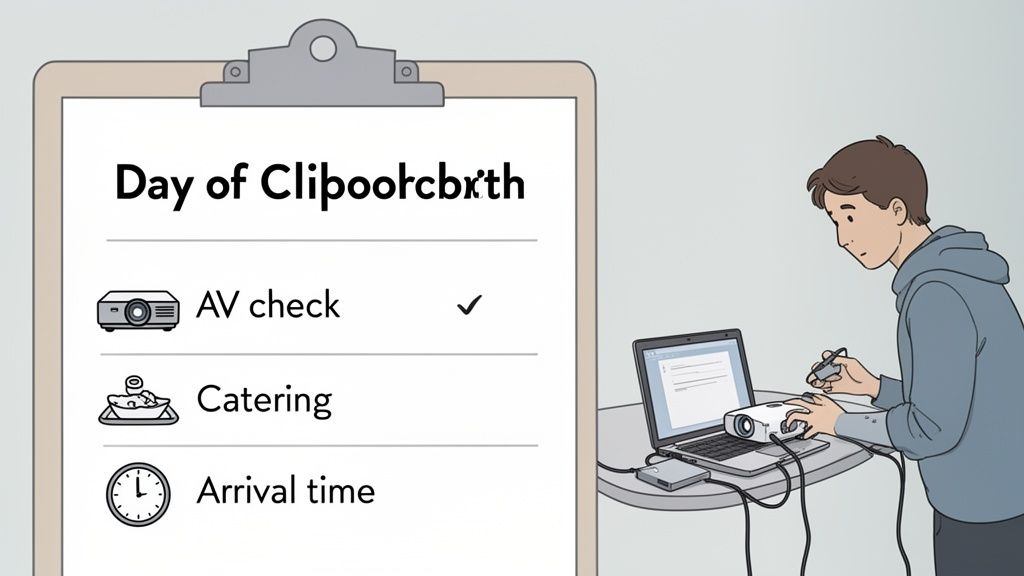
Your Pre-Meeting Logistics Checklist
In the final hours before your event, a quick but solid checklist will save you from any “I forgot to…” moments. It’s all about building confidence so you can lead without any nagging distractions.
Here’s what your pre-flight check should cover:
AV Tech Dry Run: Never assume the tech will just work. Test your presentation on the venue's actual system. Make sure you have the right cables and adapters, and double-check that any video conferencing software connects without a problem.
Catering Coordination: If you’ve got coffee or food coming, touch base with the venue coordinator or catering partner. Confirm delivery times and run through any dietary needs one last time to guarantee a smooth service.
Clear Attendee Communication: Send out a final confirmation email with crystal-clear arrival instructions. Include the exact address, parking info, and any check-in procedures to make your guests’ journey as easy as possible.
This level of detail is no longer a "nice-to-have." North America's meeting room rental market, valued at $1.85 billion in 2025, is projected to climb to $3.40 billion by 2033. Why? Because professionals demand reliable, tech-ready spaces. Data shows that hybrid-capable rooms boost attendance by 25% and satisfaction scores by 35%. From podcasters to small teams, everyone is looking for a professional backdrop, and operators are stepping up.
Arrive Early, Set the Tone
If there's one piece of advice I can give, it's this: arrive early. This isn't just about being on time; it's about owning the space before anyone else walks in. Use that extra time to do a final, hands-on tech check and lay out any materials you've brought.
Arriving at least 30 minutes before your first attendee is a game-changer. It gives you a critical buffer to fix a last-minute glitch, adjust the room's lighting, or simply take a deep breath and get centered before go-time.
This is also your chance to get the atmosphere just right. Is the temperature comfortable? Are refreshments ready to go? A well-prepared room shows professionalism and respect for your attendees' time. This is especially true for smaller rooms, where every detail counts. If you need some ideas, our guide on how to maximize space in a small conference room for impact is packed with practical tips.
By taking care of everything beforehand, you’re free to greet your guests and kick things off with complete confidence.
Got Questions About Renting a Meeting Space? We’ve Got Answers.
Stepping into the world of renting a meeting space can feel like a maze of questions, especially if it's your first time or if you’ve got a very specific vision for your event. Getting straight answers helps you book with total confidence and guarantees your day goes off without a hitch.
We’ve pulled together some of the most common questions we hear from entrepreneurs and teams looking for that perfect meeting space for rent. Let’s clear things up so you can make the best decision.
How Far Out Should I Book My Meeting Space?
This is probably the number one question we get, and for good reason. Timing is everything.
As a general rule of thumb, aim to book your space at least two to four weeks in advance. This gives you the best shot at securing your preferred room and date, especially if you need a larger setup or are planning for a high-demand day like a Friday.
But if you’re eyeing a premium venue or an executive boardroom like the ones here at Freeform House, it's smarter to think one to two months ahead. That said, business moves fast, and last-minute needs are just part of the game. That’s why many modern venues offer on-demand booking for members. It’s always worth checking for an opening, even if you need something tomorrow.
What Kind of Tech Should I Expect in a Premium Meeting Room?
In today's world, the right tech isn't a luxury—it's essential. A top-tier meeting space needs to deliver a lot more than just a table and some chairs. Your team’s productivity depends on it.
Here’s the bare minimum you should look for:
Business-Grade Wi-Fi: It has to be fast, secure, and strong enough to handle everyone’s devices without a single hiccup.
A Killer Display: Whether it's a huge HD screen or a crystal-clear projector, your presentation needs to be visible to everyone in the room, no squinting required.
Effortless Video Conferencing: Connecting with your remote team should be a one-click affair, not a 15-minute technical support call.
The best spaces don't stop there. Look for thoughtful touches like whiteboards for brainstorming, plenty of power outlets, and easy access to coffee or water service. At Freeform House, we take it a step further with specialized gear like professional podcasting equipment and studio lighting for those who are creating content, not just consuming it.
Can I Get Catering at a Rented Venue?
Of course. Most professional venues are more than ready to handle food and drinks for your meeting.
How they do it can vary. Some spots have their own kitchens, while others, like us at Freeform House, prefer to build curated partnerships with the best local restaurants. We find this gives our clients better quality and more interesting options, and it simplifies the whole ordering process for you.
When you’re booking a meeting space for rent, make this one of your first questions. Find out their catering policy—can you bring in your own food? Is setup and cleanup included? Do they have a list of recommended vendors? Getting this sorted early ensures your guests have a seamless, professional experience from start to finish.
Quick heads-up: People often mix up a meeting room rental with a coworking day pass. They're totally different things. A meeting room is your private, dedicated space for a group to collaborate. A coworking pass, on the other hand, gives one person access to a shared, open-plan workspace. It’s perfect for solo deep work, but definitely not for a team huddle.
Ready to book a space that actually elevates your meeting? Freeform House offers a collection of thoughtfully designed rooms in the heart of Jenks, Oklahoma, packed with state-of-the-art tech and backed by five-star service. Check out our spaces and book your next event with confidence at https://freeform.house.
Comments