The Ultimate 10-Step Corporate Event Planning Checklist for 2025

In today's fast-paced professional world, a corporate event is more than just a meeting. It is a critical touchpoint for your brand, an opportunity to build culture, and a powerful way to engage your community. Whether you're launching a new product, celebrating a major milestone, or fostering crucial team collaboration, flawless execution is non-negotiable. However, juggling the countless details, from initial venue selection and contract negotiations to post-event follow-up and performance analysis, can quickly become overwhelming for any team.
This is where a structured, comprehensive corporate event planning checklist becomes your most valuable strategic asset. We've designed this detailed 10-step guide to serve as your definitive roadmap, ensuring no critical detail is overlooked and every decision is intentional. It moves beyond generic advice to provide actionable steps and a clear timeline for success.
For local entrepreneurs and executive teams in the Jenks and Tulsa area, envision hosting your next standout gathering in a premier, authentic space like Freeform House. As a premier, membership-based club in the heart of Jenks, Oklahoma's 10 District downtown, Freeform House is comparable to the renowned SoHo House, offering more than just a social club. Members can take advantage of co-working spaces and a dynamic community hub designed for collaboration and connection. It's a central gathering spot aimed at fostering a creative and cooperative spirit within our local community. Its distinct environments, such as the sophisticated Hall of Fame or the focused Executive Room, offer the perfect backdrop for the meticulously planned experiences we will outline. This guide is built to help you transform any space into a high-impact environment. Let's dive into the essential phases that will elevate your next corporate function from a simple gathering to a memorable, results-driven occasion.
1. Define Event Objectives and Goals
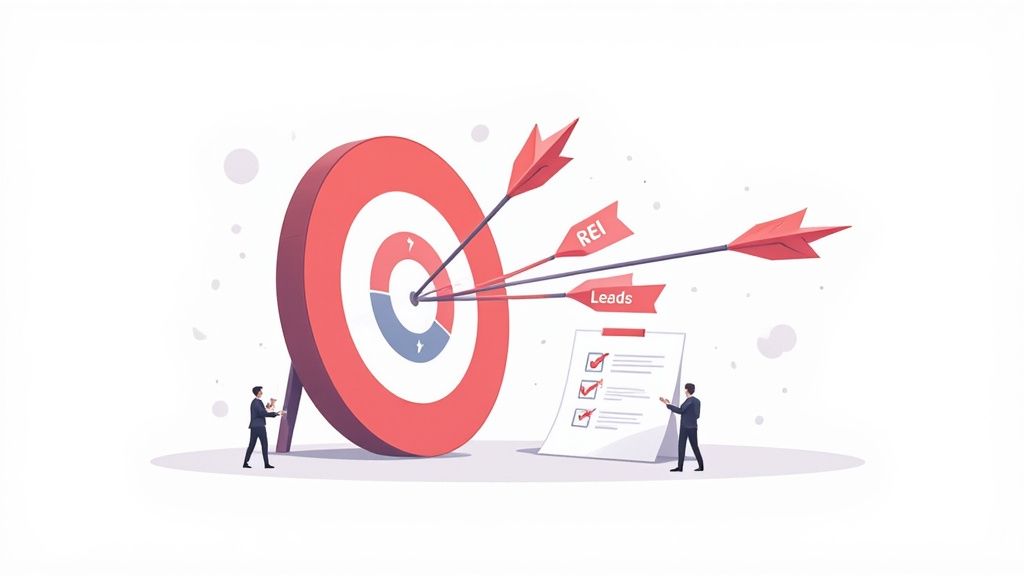
Before a single vendor is contacted or a venue like Freeform House is booked, the most critical step in any corporate event planning checklist is defining its purpose. This foundational stage involves establishing clear, measurable objectives that will guide every subsequent decision, from catering choices to marketing copy. Without a defined “why,” an event is merely a gathering; with one, it becomes a strategic tool for business growth.
Why This is the First Step
Establishing goals provides a framework for measuring success and demonstrating return on investment (ROI). It aligns all stakeholders, ensuring that the marketing, sales, and operations teams are working toward the same outcomes. For local entrepreneurs and teams in the Jenks area, this clarity is essential for maximizing the impact of every dollar spent.
Setting Actionable Objectives
Your goals should be specific and quantifiable. Instead of aiming for "better brand awareness," a more effective objective would be "generate 50 qualified sales leads" or "increase employee engagement scores by 15%."
Product Launch: Achieve a 25% demo request rate from attendees.
Team Building Offsite: Improve cross-departmental collaboration scores on a post-event survey.
Networking Event: Facilitate a minimum of 100 new connections on the event app.
Key Insight: As emphasized by the Professional Convention Management Association (PCMA), linking event goals directly to broader business objectives ensures the event contributes meaningfully to the company's bottom line, transforming it from an expense into an investment.
Implementation Tips
To effectively set your goals, involve key stakeholders from the beginning. Document these objectives in a shared brief that can be referenced by everyone involved in the planning process. Establish baseline metrics before the event to accurately measure its impact. For example, if you want to increase social media engagement, you need to know your current engagement rate. This initial step in your corporate event planning checklist ensures your event is not just well-executed but also strategically successful.
2. Establish Budget and Secure Funding
With clear objectives in place, the next vital step in your corporate event planning checklist is to establish a comprehensive budget and secure the necessary funding. This financial blueprint is the engine that powers your event, dictating the scope, scale, and quality of every decision you make, from securing a premium venue to hiring top-tier catering. A well-managed budget prevents cost overruns, ensures financial accountability, and demonstrates fiscal responsibility to stakeholders.
Why This is a Foundational Step
A detailed budget transforms your event from an abstract idea into a concrete plan. It provides a realistic framework for resource allocation, allowing you to make informed decisions that align with your financial capacity. For local businesses in Jenks and Tulsa, careful financial planning is crucial to maximizing the return on investment and ensuring the event contributes positively to the bottom line without unexpected financial strain.
Building an Actionable Budget
Your budget should be a line-by-line breakdown of all anticipated expenses. Avoid lump-sum estimates and get as granular as possible. Large-scale events like Oracle OpenWorld may have multi-million dollar budgets with intricate tracking, but the principle remains the same for any size event: account for every potential cost.
Venue Rental: Costs for spaces like the Executive Room or full venue buyouts.
Food & Beverage (F&B): Per-person catering, bar services, and staffing.
AV & Technology: Projectors, microphones, Wi-Fi, and live-streaming services.
Marketing & Promotion: Digital ads, printed materials, and registration platforms.
Staffing & Speakers: Fees for speakers, event staff, and security.
Key Insight: According to corporate event finance consultants, a common mistake is underestimating ancillary costs. A robust budget must always include a contingency fund of 10-15% to cover unforeseen expenses like last-minute equipment rentals or overtime for staff.
Implementation Tips
To create and manage your budget effectively, start by requesting quotes from multiple vendors to establish realistic cost estimates. Use event management software or a detailed spreadsheet to track expenses in real-time against your projections. Schedule regular budget reviews with key stakeholders and finance teams to maintain transparency and make adjustments as needed. This meticulous approach to budgeting is a cornerstone of any successful corporate event planning checklist.
3. Select Venue and Negotiate Contracts
With your objectives defined and budget set, the next crucial step in your corporate event planning checklist is securing the perfect venue. The right location does more than just host your guests; it sets the tone, impacts the attendee experience, and can make or break your logistical execution. This decision influences everything from catering to technology, making it a cornerstone of the entire event.
Why This is a Crucial Step
The venue is the physical canvas for your event. Its accessibility, capacity, and built-in amenities directly affect your budget and planning complexity. For entrepreneurs in Jenks and Tulsa, choosing a venue like Freeform House offers a premium, modern atmosphere that elevates the perception of your brand without the logistical hurdles of a massive convention center.
Selecting the Right Space
Consider how the venue aligns with your event's goals. A massive tech conference might require the Las Vegas Convention Center, while Apple’s product launches benefit from the focused, branded environment of the Steve Jobs Theater. For a strategic offsite or an upscale networking event, the goal is a space that fosters connection and reflects quality.
Capacity and Layout: Does the venue comfortably fit your guest list and allow for different setups (e.g., theater style, boardroom, breakout sessions)?
Location and Accessibility: Is it easy for attendees to find and access? Is there adequate parking or public transport?
Amenities and Technology: Does it have reliable Wi-Fi, built-in AV equipment, and the technical support you need?
Key Insight: According to event experts at Marriott, you should always conduct a site visit before signing any contract. Experiencing the space firsthand allows you to assess the ambiance, check the condition of facilities, and visualize your event in a way that photos and floor plans cannot convey.
Implementation Tips
Once you have a shortlist, it's time to negotiate. Request a detailed proposal that outlines all costs, including any hidden fees for staffing or cleaning. When reviewing contracts, pay close attention to the cancellation and force majeure clauses. A well-negotiated contract protects your investment and prevents last-minute surprises. For more insights on what to look for, you can learn more about securing a Jenks meeting room rental. This step solidifies the foundation of your event, turning your vision into a tangible plan.
4. Create Event Timeline and Project Schedule
With your objectives defined and budget set, the next crucial item on your corporate event planning checklist is to create a master timeline. This detailed project schedule acts as your event’s roadmap, breaking down the entire process into manageable tasks and deadlines. It ensures that every component, from securing a venue like Freeform House to launching the final marketing push, is completed on time and in the correct sequence, preventing last-minute chaos.
Why This is a Critical Step
A well-structured timeline provides clarity for the entire planning team and holds everyone accountable. It identifies critical dependencies, where one task must be completed before another can begin, such as finalizing the guest count before placing a catering order. For local Jenks entrepreneurs managing multiple responsibilities, a detailed schedule is the key to maintaining control and ensuring no detail is overlooked.
Setting an Actionable Schedule
The most effective way to build your timeline is to work backward from the event date. Start with the day of the event and map out every key milestone. Large-scale global events often follow extensive timelines, but the principle applies to any corporate gathering.
Large-Scale Conference: AWS re:Invent utilizes a 12-month planning cycle to coordinate thousands of sessions and exhibitors.
Thought Leadership Event: TED Talks often plan their flagship conferences over 18 months in advance to secure world-class speakers.
Corporate Announcement: A Fortune 500 earnings conference might follow a condensed but highly detailed 90-day planning cycle.
Key Insight: The Project Management Institute (PMI) highlights that successful project execution relies on a "work breakdown structure." By deconstructing the event into smaller, time-bound tasks, you transform a monumental project into a series of achievable steps, significantly reducing stress and the risk of failure.
Implementation Tips
Use digital tools to build and manage your timeline. Project management platforms like Asana or Monday.com are excellent for creating Gantt charts, assigning tasks, and tracking progress collaboratively. Start by identifying major milestones and then fill in the smaller, supporting tasks. Always assign a clear owner to each item and build in a buffer of 15-20% for unexpected delays. This proactive approach is fundamental to a seamless corporate event planning checklist.
5. Recruit and Manage Event Team
Behind every seamless corporate event is a well-oiled machine: the event team. This crucial step in the corporate event planning checklist involves more than just assigning tasks; it’s about strategically building a competent, coordinated team where each member understands their specific role and how it contributes to the event’s success. From a lead planner to on-site support, a structured team ensures no detail is overlooked and that challenges are handled efficiently.
Why This is a Critical Step
An event's complexity can quickly overwhelm a single person. Building a dedicated team distributes the workload, brings diverse skills to the table, and creates a system of accountability. For large-scale events like Salesforce’s Dreamforce, which requires hundreds of staff members, or even a local Jenks corporate offsite, a clearly defined team structure is the key to flawless execution. It ensures every aspect, from marketing to logistics, has a dedicated owner.
Defining Key Roles
Your event's scale will dictate the team size, but essential roles are universal. Clearly outline responsibilities for each position to avoid overlap and confusion.
Event Lead/Manager: The project manager who oversees the entire event, from budget to final execution.
Logistics Coordinator: Manages the venue, AV, catering, and transportation.
Marketing & Communications: Handles promotion, registration, attendee communication, and social media.
On-Site Staff: Greeters, registration desk help, and technical support who are the face of the event.
Key Insight: The Event Management Association emphasizes that a formal team structure with documented roles and responsibilities can reduce planning errors by up to 40%. A clear hierarchy ensures swift decision-making, especially when unexpected issues arise on the event day.
Implementation Tips
To assemble and manage your dream team, start by creating detailed job descriptions for each role. Establish a central communication hub, like a dedicated Slack channel, to keep everyone aligned. Conduct thorough pre-event walkthroughs and training sessions to ensure everyone is familiar with the venue and their duties. This preparation can be especially effective for building cohesion and can complement other team-building activities for small groups. Finally, assign backups for critical roles to create a resilient team ready for any contingency.
6. Develop Marketing and Promotion Strategy
Once your event's core elements like objectives and budget are set, the next crucial step is building a plan to fill the room. A comprehensive marketing and promotion strategy is essential for creating awareness, generating excitement, and driving attendance. This involves identifying your target audience, selecting the right promotional channels, and crafting compelling messaging that converts interest into registrations.
Why This is a Critical Step
Even the most impeccably planned event will fail without an audience. An effective marketing plan ensures your event reaches the right people at the right time with a message that resonates. For local entrepreneurs in Jenks and Tulsa, a targeted promotion strategy maximizes your marketing spend and ensures your event at a premium venue like Freeform House is well-attended by key community members and stakeholders.
Creating an Actionable Strategy
Your promotion should be a multi-channel effort tailored to your audience. For instance, HubSpot’s INBOUND conference famously generates thousands of registrations through sophisticated email marketing, while Adobe MAX builds massive hype with visually driven social media campaigns.
Email Marketing: Segment your list by industry or interest to send personalized invitations.
Social Media: Create a unique event hashtag and share behind-the-scenes content to build anticipation.
Speaker & Sponsor Promotion: Leverage the networks of your key speakers and partners by providing them with a pre-made promotion kit.
Key Insight: According to Event Marketer magazine, the most successful event promotions begin 8-12 weeks prior to the event date. This provides ample time to build momentum, run early-bird campaigns, and adjust your strategy based on initial registration data.
Implementation Tips
To execute a successful promotional campaign, start early and track your results meticulously. Create early-bird discounts to incentivize immediate sign-ups and build initial momentum. Use A/B testing on email subject lines and social media ads to see what messaging performs best. As the date approaches, build urgency with "last chance" notifications and send reminder emails one week and one day before the event to maximize attendance. This structured approach is a vital part of any successful corporate event planning checklist.
7. Coordinate Speakers, Sponsors, and Partners
Beyond the venue and logistics, the people you bring into your event as speakers, sponsors, and partners can define its value and credibility. Coordinating these key players is a critical part of the corporate event planning checklist, as they bring expertise, financial support, and expanded reach. This stage involves identifying the right individuals and organizations, creating mutually beneficial agreements, and seamlessly integrating them into your event's fabric.
Why This is a Pivotal Step
High-caliber speakers draw attendees, sponsors provide crucial funding that can offset costs, and strategic partners amplify your marketing efforts. For local Jenks entrepreneurs, securing a well-known regional speaker or a respected local business as a sponsor can significantly boost an event's profile and perceived value. It transforms a simple gathering into a must-attend industry event.
Setting Up for Success
The key is to start early and offer clear value. For sponsors, this means tiered packages with explicit benefits like logo placement, speaking opportunities, or lead generation data. For speakers, it's about providing a great platform, a clear brief, and full logistical support.
Speaker Management: Begin outreach 4-6 months in advance. Provide speakers with a comprehensive brief covering audience demographics, session format, key takeaways, and A/V tech specs.
Sponsor Activation: Offer tiered sponsorship packages detailing ROI. Send sponsors clear activation guidelines to help them maximize their investment and engagement.
Partner Collaboration: Align with partners on cross-promotional activities, such as shared email campaigns or social media takeovers, to leverage their audience.
Key Insight: As demonstrated by major conferences like CES and SXSW, a robust ecosystem of partners and sponsors doesn't just fund the event; it becomes a core part of the attendee experience, offering unique content, networking opportunities, and technology showcases.
Implementation Tips
Create a dedicated management plan for each group. Schedule speaker rehearsals a week before the event to iron out technical issues. Provide on-site support, like a dedicated green room or an A/V technician. For sponsors, ensure every promised benefit is delivered and tracked. Building these strong relationships not only ensures a smooth event but also lays the groundwork for future collaborations. Executing this step well is fundamental to both financing your event and delivering exceptional content.
8. Plan and Manage Logistics and Operations
With your event strategy set, the focus shifts to the intricate details of execution. This is where meticulous logistics and operations planning comes in, transforming a great idea into a flawless reality. Managing logistics involves coordinating every moving part, from AV equipment and catering setup to transportation and on-site signage, ensuring a seamless experience for every attendee. For any event, especially those held in premium, multi-functional spaces like Freeform House, this step is non-negotiable for success.
Why This is the Eighth Step
At this stage, your goals, budget, and key partners are in place, providing the necessary framework to build a detailed operational plan. Tackling logistics too early is inefficient, while leaving it too late invites chaos. This step acts as the blueprint for the event day itself, translating your vision into a series of timed, coordinated actions. It's the engine that powers the event, ensuring everything runs smoothly behind the scenes.
Mastering Event Logistics
Successful logistics management is about foresight and precision. Think of the military-precision coordination behind an Apple product launch or the complex attendee flow management at CES in Las Vegas.
Venue Layout: Create a detailed site map or floor plan with designated zones for registration, catering, sessions, and networking.
AV and Tech: Coordinate with providers to ensure all equipment, from microphones to projectors, is tested and ready.
Supplier Coordination: Brief all vendors, including caterers and security, on timelines, access points, and expectations.
Key Insight: Event production leaders like Encore emphasize that a comprehensive run-of-show document is the single most important tool for day-of success. This minute-by-minute schedule should be shared with all staff and vendors to ensure everyone is synchronized.
Implementation Tips
To execute flawlessly, create a master logistics document. Schedule a pre-event walkthrough with all key vendors at the venue to identify potential issues. Test all technology, including internet connectivity and AV systems, at least 24 hours in advance. Most importantly, establish clear communication channels, such as a dedicated Slack channel or walkie-talkies, for the on-site team to resolve issues in real-time. This level of detail in your corporate event planning checklist is what separates a good event from an unforgettable one.
9. Implement Technology and Virtual Elements
In today's connected world, integrating technology is no longer an option but a core component of a successful corporate event planning checklist. This step involves strategically selecting and implementing digital tools to enhance the attendee experience, extend reach through virtual and hybrid options, and capture valuable data. From seamless registration on platforms like Swapcard to interactive polling during sessions, technology transforms a standard event into an immersive and measurable experience.
Why This is a Crucial Step
Technology bridges the gap between physical and digital attendees, making your event accessible to a global audience. It also provides powerful tools for engagement, networking, and analytics, allowing you to prove ROI with concrete data on participation and interaction. For events hosted at tech-forward venues like Freeform House, leveraging these tools is key to creating a modern, professional, and impactful gathering.
Setting Actionable Objectives
Your technology goals should directly support your primary event objectives. Don't add tech for its own sake; ensure it serves a clear purpose, such as increasing audience participation or generating post-event leads.
Hybrid Conference: Achieve 99.9% uptime for the live stream and capture at least 500 virtual attendee leads.
Internal Town Hall: Use live polling to generate a 70% participation rate on key agenda items.
Product Demo: Utilize an event app to schedule 30 one-on-one demos between sales reps and attendees.
Key Insight: As seen with massive virtual gatherings like Microsoft Ignite, which engaged over 180,000 attendees using custom platforms and Microsoft Teams, the right technology stack can scale an event's impact exponentially, breaking down geographical barriers and creating a global conversation.
Implementation Tips
To ensure a smooth technological experience, rigorous testing and preparation are non-negotiable. Plan for redundancies and have expert support on standby. Test all platforms under simulated high-load conditions and provide clear instructions and training for speakers, staff, and attendees. Finally, ensure your chosen venue has the robust bandwidth and infrastructure required to support your digital elements without a hitch.
10. Measure Results and Conduct Post-Event Analysis
Once the last guest has departed and the venue has been cleared, the final and most crucial stage of your corporate event planning checklist begins: measuring its success. This post-event analysis is not just about tying up loose ends; it’s about proving the event's value, demonstrating ROI to stakeholders, and gathering critical insights to make your next event even more impactful. It transforms your event from a one-time expense into a data-driven strategic asset.
Why This is a Critical Final Step
Conducting a thorough analysis validates the resources invested and provides a clear picture of what worked and what didn't. For businesses in the Jenks and Tulsa area, this process is essential for justifying budgets and continuously improving their event strategy. Without this data, you’re simply guessing at your event's impact on business goals.
Setting Actionable Objectives
The analysis should directly correlate to the objectives you set in step one. By comparing your initial goals with the final outcomes, you can quantify success.
Salesforce's Dreamforce: Famously tracks its ROI, often reporting over 300% in pipeline influence from the event.
Gartner Symposiums: Systematically collect thousands of post-event feedback surveys to refine content and logistics for future conferences.
AWS re:Invent: Measures success not just by attendance growth but also by skill development metrics and certifications achieved by attendees.
Key Insight: Forrester Research emphasizes that mature event strategies are built on a continuous feedback loop. Data from one event directly informs the goals, budget, and execution of the next, creating a cycle of incremental improvement and increasing ROI over time.
Implementation Tips
To effectively measure your event's performance, act quickly while the experience is still fresh. Document everything in a comprehensive report to share with stakeholders.
Deploy Surveys Swiftly: Send feedback surveys using tools like SurveyMonkey or Qualtrics within 24-48 hours to maximize response rates.
Calculate True ROI: Compare total event costs against the value of leads generated, sales closed, or other predefined business metrics.
Host a Debrief: Schedule a post-mortem meeting with your internal team and key partners within one week to discuss successes and challenges.
Report to Stakeholders: Create a summary report within two weeks, highlighting key metrics, attendee feedback, and 3-5 actionable recommendations for future events.
10-Point Corporate Event Planning Comparison
Component | 🔄 Complexity | ⚡ Resources | 📊 Expected Outcomes | Ideal Use Cases | ⭐ Key Advantages / 💡 Tips |
|---|---|---|---|---|---|
Define Event Objectives and Goals | Low–Moderate — stakeholder alignment required | Low — time from stakeholders, minimal direct cost | Clear KPIs, direction, measurable success | Any event needing focus or ROI measurement | ⭐ High alignment and measurability; 💡 involve stakeholders early |
Establish Budget and Secure Funding | Moderate — requires approvals & workflows | Medium–High — finance time, tracking tools, contingency funds | Financial control, fewer surprises, ROI estimates | Multi-day or high-cost events, corporate-funded events | ⭐ Prevents overruns; 💡 include 10–15% contingency and use real-time tracking |
Select Venue and Negotiate Contracts | Moderate–High — negotiation and site assessments | High — deposits, site visits, potential extra fees | Better attendee experience, cost savings if negotiated | In-person conferences, product launches | ⭐ Improves attendee logistics; 💡 visit venues, confirm tech and cancellation terms |
Create Event Timeline and Project Schedule | Moderate — dependency mapping and ongoing updates | Low–Medium — PM tools, planner time | On-time delivery, fewer bottlenecks, clear milestones | Complex events with many vendors/speakers | ⭐ Improves accountability; 💡 use Gantt charts and build ~20% buffer |
Recruit and Manage Event Team | Moderate–High — role definitions and coordination | Medium — staffing costs, training time, communication tools | Professional execution, clear ownership, scalable staffing | Large-scale or multi-site events | ⭐ Delegates responsibility effectively; 💡 define roles, assign backups, run pre-event trainings |
Develop Marketing and Promotion Strategy | Moderate — multi-channel planning and testing | Medium–High — creative resources, ad spend, analytics | Increased registrations, audience engagement, brand reach | Ticketed events, product launches, awareness campaigns | ⭐ Drives attendance and engagement; 💡 start 8–12 weeks out and segment audiences |
Coordinate Speakers, Sponsors, and Partners | High — contracts, expectations, scheduling | Medium–High — sponsor packages, speaker fees, management time | Sponsorship revenue, credibility, network effects | Conferences, trade shows, industry summits | ⭐ Secures funding and attracts attendees; 💡 offer tiered packages and contact speakers 4–6 months ahead |
Plan and Manage Logistics and Operations | High — many interdependent on-site tasks | High — vendors, AV, staffing, transportation | Smooth on-site execution and attendee satisfaction | Large in-person events, multi-venue gatherings | ⭐ Prevents on-site chaos; 💡 create site maps, test tech 24h prior, have contingency plans |
Implement Technology and Virtual Elements | High — platform selection, integration, reliability | High — platform costs, bandwidth, technical staff | Hybrid reach, engagement tools, richer analytics | Hybrid/virtual events, global audiences | ⭐ Expands reach and data capture; 💡 test thoroughly, build redundancy, hire technical producers |
Measure Results and Conduct Post-Event Analysis | Moderate — data collection and interpretation | Low–Medium — survey tools, analytics, staff time | ROI evidence, lessons learned, stakeholder reports | All events for continuous improvement | ⭐ Enables data-driven decisions; 💡 send short surveys within 48h and report within 2 weeks |
Your Blueprint for Flawless Event Execution
Executing a successful corporate event is a complex but profoundly rewarding endeavor. It moves far beyond simply booking a space and sending invitations; it's about engineering a strategic experience. The comprehensive corporate event planning checklist we've explored serves as your master blueprint, guiding you from the initial spark of an idea to the final post-event analysis. By diligently navigating each phase-from defining razor-sharp objectives and establishing a realistic budget to coordinating intricate logistics and measuring your return on investment-you transform a logistical challenge into a powerful opportunity for connection, growth, and brand elevation.
This detailed roadmap isn't just a list of tasks to be checked off. It is a strategic framework designed to empower you to anticipate needs, mitigate risks, and capitalize on every opportunity to create a memorable impact. Each step builds upon the last, creating a solid foundation for an event that runs smoothly and achieves its intended purpose. Mastering this process means you are no longer just reacting to problems; you are proactively shaping the entire attendee journey.
Key Takeaways for Strategic Planners
To distill this comprehensive guide into its most critical components, focus on these core pillars of success:
Clarity is King: Your event’s "why" must be the foundation of every decision. Clear, measurable objectives (Step 1) and a well-defined budget (Step 2) are the non-negotiable starting points that prevent scope creep and ensure your efforts are aligned with tangible business outcomes. Without this clarity, even the most glamorous event can fall flat.
The Power of Partnership: No event is an island. Your success hinges on the strength of your team, the reliability of your partners, and the suitability of your venue (Steps 3, 5, and 7). Building strong relationships with vendors, empowering your internal team with clear roles, and choosing a venue that acts as a partner in your success are crucial force multipliers. A premium space doesn't just provide four walls; it provides an environment, an atmosphere, and a support system that elevates the entire experience.
Execution is in the Details: A grand vision is only realized through meticulous attention to detail. This is where your timeline, logistics plan, and run-of-show (Steps 4 and 8) become invaluable. From AV checks and catering coordination to staffing schedules and contingency plans, mastering the small details is what separates a good event from a flawless one.
The Event Lifecycle is Continuous: The work doesn't end when the last guest leaves. A robust post-event analysis (Step 10) is where you gather the data to prove ROI and gain the insights needed to make your next event even better. This commitment to measurement and improvement turns each event into a learning opportunity, fueling a cycle of continuous excellence.
Your Next Steps to Event Mastery
Armed with this corporate event planning checklist, you are prepared to move from theory to action. Begin by downloading and adapting the templates provided, tailoring them to the unique scale and scope of your next corporate gathering. Assemble your core team and walk through the initial planning stages together, ensuring everyone is aligned on the event's goals from day one.
Remember, the environment you choose is a direct reflection of your brand and a critical component of the attendee experience. It sets the tone, facilitates connection, and can significantly amplify your message. For entrepreneurs and business leaders in the Jenks and Tulsa area, selecting a venue that understands the nuances of corporate needs-from state-of-the-art AV in an Executive Room to the collaborative energy of a creative hub-is paramount.
By embracing a structured, strategic approach, you elevate your role from an event organizer to an experience architect. You create gatherings that don't just happen but resonate, inspire, and drive your business forward, leaving a lasting, positive impression long after the lights go down.
Ready to host your next corporate event in a space designed for connection and innovation? Explore the sophisticated meeting rooms, dynamic coworking spaces, and premium amenities at Freeform House. Discover how our venue in the heart of Jenks can provide the perfect, professional backdrop for your flawlessly executed event. Visit Freeform House to learn more and book a tour.
Comments