Your Guide to Jenks Meeting Room Rental

A successful meeting room rental begins with clarity, not a search engine. Before you book a space, you must first pinpoint your actual goals, because the success of your pitch, workshop, or review depends on an environment built to support it. The right room can elevate your presentation, while the wrong one creates friction you can't afford.
Finding a Meeting Room That Matches Your Goals
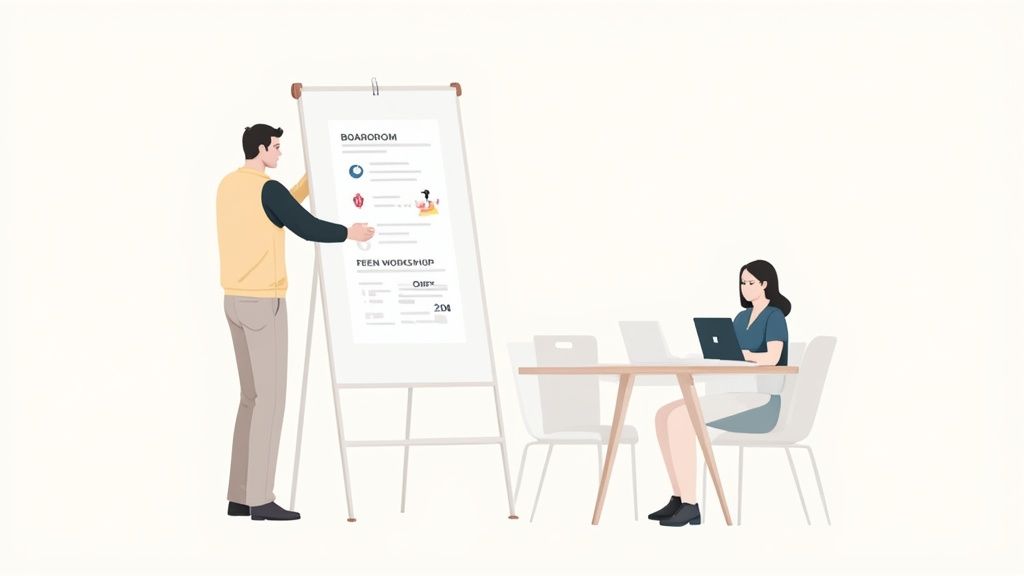
The first step is to define the event’s purpose. A high-stakes pitch for a new client demands a different atmosphere than a collaborative workshop for your internal team. Is the goal to impress, to brainstorm, or to make tough decisions? The answer shapes every subsequent choice, from the room’s layout to the technology required.
Consider your true attendee count—not just the number of people on the invite list, but who will realistically show up. A room that feels too empty can kill energy, while a cramped space stifles productivity. For a quarterly review with 12 executives, a formal boardroom setup is ideal. However, a design sprint for 20 creatives would thrive in a more open, flexible arrangement with whiteboards and breakout areas.
Define Your Essential Tech and Amenities
Once you have a clear purpose and headcount, create a list of non-negotiable technical and comfort needs. Does your presentation require a 4K display and seamless video conferencing capabilities? Will you need a high-quality sound system or just a reliable Wi-Fi connection for everyone? Thinking through these details prevents last-minute technical glitches that can derail an important session.
This level of preparation is increasingly vital. The demand for quality venues is surging as the global meetings market is projected to grow from $773 billion in 2025 to over $1.5 trillion by 2032. You can explore more data on this trend and see the full market forecast from Fortune Business Insights. This growth underscores the need to be selective and find a space that offers a true professional advantage.
Your meeting space is not just a location; it's a tool. A well-chosen room should actively contribute to your meeting’s success by removing obstacles and fostering the right atmosphere.
Before you even begin your search for a meeting room rental, build a clear checklist based on your specific event. This simple document becomes your guide for evaluating potential venues.
Client Pitch: Requires a formal, impressive setting like a boardroom, premium AV technology for a flawless presentation, and perhaps options for high-end catering to make a lasting impression.
Team Workshop: Needs a flexible layout, ample whiteboard space for brainstorming, comfortable seating for extended sessions, and access to great coffee and snacks to keep energy levels high.
Board Review: Demands privacy, a secure and fast internet connection for accessing sensitive data, and a professional, distraction-free environment that promotes focused discussion.
By building this simple checklist first, you make your search for the perfect meeting room rental in Jenks efficient and targeted, ensuring the space you choose is a perfect fit.
Choosing the Right Space in Jenks 10 District
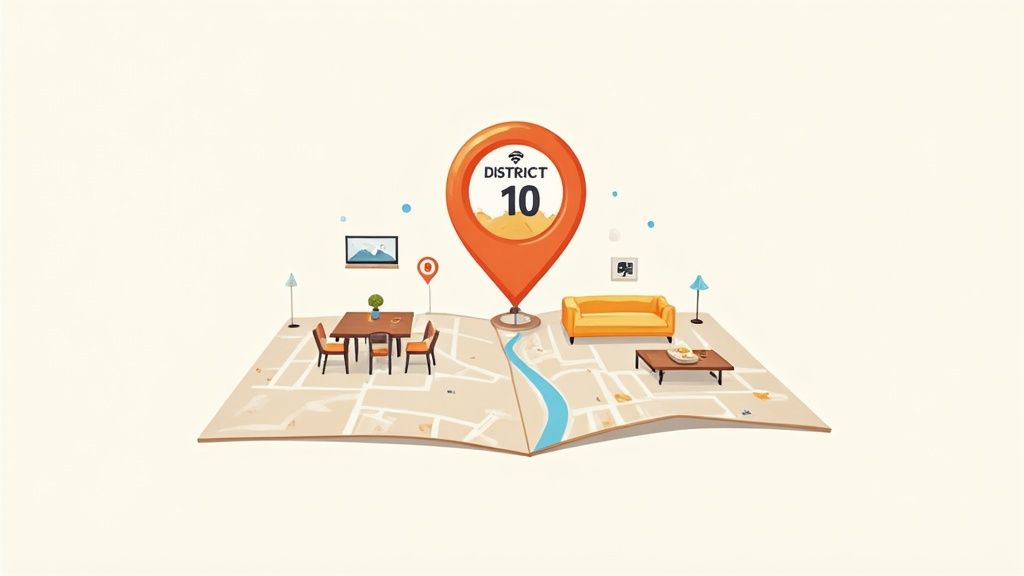
Okay, you’ve got your game plan. Now for the fun part: finding the perfect spot. The room you choose can either make your meeting buzz with energy or kill the focus before you even pass out the agenda. It’s about more than just checking boxes; it's about finding a space that actively helps you hit your goals.
This is exactly why a location like Jenks' 10 District is such a game-changer. Its unique, walkable vibe feels worlds away from a sterile, forgettable office park.
Picking the right environment is a bigger deal now than ever. The global market for meeting space rentals is projected to be worth around 16 billion USD by 2025—a huge number that shows just how seriously businesses are taking their meeting spaces. If you're curious, you can explore the full rental market forecast and see the trend for yourself. The takeaway is clear: companies are looking for an experience, not just four walls and a table.
Choosing a great venue in a vibrant spot like the 10 District isn't just about convenience. It gives your event an authentic sense of place that can really impress clients and get your own team fired up. The location itself becomes part of the experience.
Evaluating Amenities That Actually Drive Productivity
The right amenities are the unsung heroes of a great meeting. Your checklist needs to focus on the essentials that eliminate those all-too-common frustrations and keep things moving.
Rock-Solid, High-Speed Wi-Fi: Let’s be real, this is non-negotiable. You need to know the connection can handle a dozen laptops, a few virtual attendees, and cloud-based docs all at once without a single hiccup.
Seamless AV and Conferencing Gear: Look for spaces with modern, intuitive tech. A tech-forward boardroom at a place like Freeform House means no more fumbling with dongles or fighting with a confusing remote right before a big presentation.
Quality Catering Options: Good coffee and food are fuel for good ideas. A venue with curated catering partnerships takes the guesswork out of it, ensuring your team stays energized without clunky breaks or logistical headaches.
These are the practical details that separate a decent space from a truly exceptional one. A room can look perfect on a website, but it’s a failure if the Wi-Fi is spotty or the coffee tastes like it was brewed yesterday.
Matching the Vibe to Your Objective
Beyond the technical stuff, the feel of the room has to align with your meeting’s purpose. Every space has its own personality, and picking the right one can completely change the outcome of your day.
Here at Freeform House, for example, we’ve designed our rooms with specific goals in mind.
The Executive Room: This space is all business. It’s a formal, focused environment built for high-stakes presentations or board meetings where you need to make big decisions.
A Relaxed Lounge: Trying to spark some creative brainstorming? A more casual setting with comfy chairs will always beat a rigid boardroom for encouraging open, collaborative conversation.
The best meeting room rental is one that feels like an extension of your company’s culture and goals. It should make your guests feel valued and put your team in the right mindset to achieve its best work.
When you’re looking at a potential meeting room rental, actually picture your team in that space. Does it feel right? Does the atmosphere support the kind of energy you’re trying to create? Answering these questions will help you land on a venue that doesn’t just provide the tools you need, but also inspires the connection and creativity that make an event truly memorable.
Sorting Out the Price and Locking in Your Room
Let's talk money. Figuring out the cost is obviously a huge piece of the puzzle, and you want to make sure your event stays on budget. Meeting room pricing can look a little complicated at first, but it really boils down to a couple of common models.
Most venues offer simple hourly rates, which are great for quick client meetings or brainstorming sessions. For anything longer, like an all-day workshop or a team off-site, you'll probably see half-day or full-day packages. These often give you more bang for your buck by bundling the essentials into a single price, which makes planning a whole lot easier and helps you avoid a surprise bill at the end.
Decoding What’s Included (and What’s Not)
So, what are you actually paying for? The base rental fee almost always covers the room itself, along with the necessary tables, chairs, and high-speed Wi-Fi. A top-notch spot like Freeform House in Jenks usually throws in standard AV gear, like a big display screen, since that's a must-have for pretty much any meeting these days.
But the real key is to get crystal clear on what costs extra. These are the things that can sneak up on you and blow your budget if you aren't paying attention.
Upgraded AV Gear: While you’ll likely get a screen, more specialized equipment—think multi-camera video conferencing systems or high-quality microphones for a panel—will almost certainly be an add-on.
Catering: Coffee, water, snacks, or a fully catered lunch are almost always priced separately. Be sure to ask for a menu with per-person or platter pricing so you can get an accurate forecast.
Dedicated Staff: Need an on-site tech whiz to handle your presentation or a dedicated host to greet your guests? That's typically an added service with an associated cost.
Here's a little inside tip: if your schedule is flexible, ask about booking during off-peak times. A Tuesday afternoon might be more affordable than a Monday morning. And don't be shy about asking if they offer bundles—packaging your AV and catering needs together can sometimes unlock a better rate.
From First Call to Signed Contract
Once you've zeroed in on the perfect space and you have a handle on the pricing, the booking process should be pretty smooth sailing. It usually kicks off with an official inquiry to check availability and get a formal quote. Make sure that quote is itemized, showing you exactly what you’re paying for. No fuzzy math allowed.
Before you put pen to paper (or click "sign"), take a good, hard look at the rental agreement. This document is your best friend, so you need to pay close attention to a few clauses to avoid any last-minute headaches.
Your rental agreement isn't just a formality—it’s the playbook for your event. Get really familiar with the cancellation policy, payment deadlines, and any liability clauses. It ensures you and the venue are completely on the same page.
You'll want to look for a clear payment schedule that tells you exactly when the deposit and final balance are due. And really understand the cancellation policy. What happens if you need to reschedule or, worst-case scenario, cancel? Knowing this stuff upfront is the key to a stress-free experience as you finalize your meeting room rental.
Your Day-Of Meeting Preparation Checklist
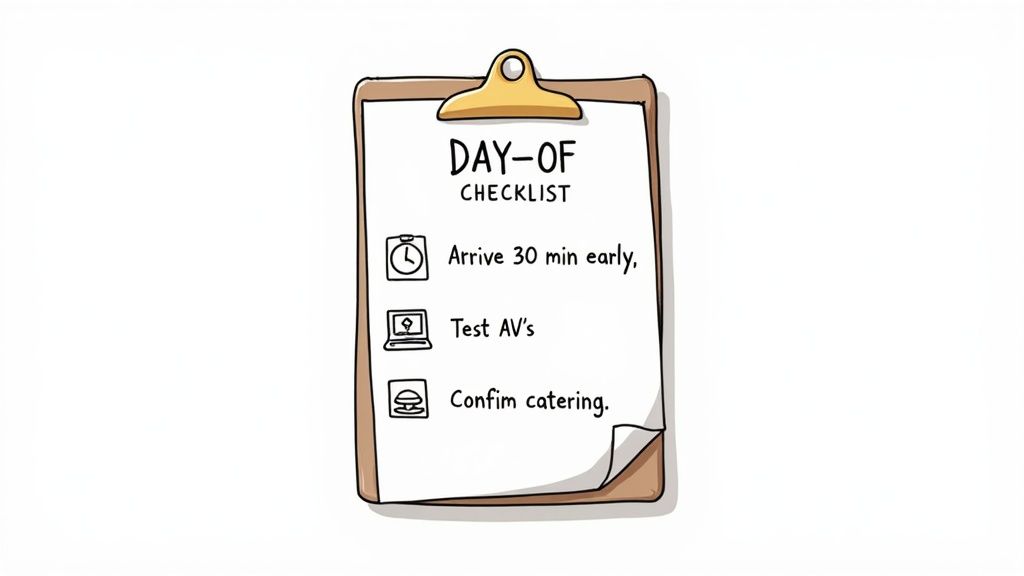
You’ve done the hard work and booked the perfect room. Now, the day of your meeting is here. A little focused prep in these final hours can be the difference between a smooth, impressive event and a stressful, chaotic scramble. This isn't just about showing up; it's about owning the room before anyone else walks in.
My number one piece of advice? Arrive at least 30-45 minutes early. This isn’t just a buffer for Jenks traffic. It’s your golden window to do a final walkthrough, test the tech, and get centered before your guests arrive. You want to be the calm, confident host, not the flustered organizer.
The Pre-Arrival Tech and Setup Check
Before that first person walks through the door, your priorities are technology and logistics. A glitchy projector or a missing coffee pot can throw off the entire vibe right from the start.
Test All Your AV Gear: Don't just flip the screen on. Actually connect your laptop, pull up your presentation, and click through a few slides. If you're using video conferencing, start a test call to make sure the audio and video are crystal clear. There's nothing worse than fumbling with cables while everyone watches.
Confirm the Layout and Supplies: Does the room look like what you agreed to? Count the chairs. Check for the essentials like whiteboard markers that actually work, pens, and notepads.
Verify the Refreshments: Make sure your catering order—whether it’s coffee and water or a full lunch—has arrived and is set up properly. Happy, caffeinated attendees are engaged attendees.
Running through this quick check lets you tackle any surprises with the venue's staff while the stakes are low and the room is still empty.
A smooth meeting is no accident. It’s the direct result of proactive planning that addresses potential problems before they have a chance to interrupt your agenda.
Final Touches for a Great First Impression
Once the technical side is locked down, you can switch gears to the human element. How your guests feel from the moment they arrive sets the tone for the entire meeting.
Get your materials organized and ready to go. Print out any agendas or handouts and lay them out for easy access. If you have name tags, arrange them alphabetically on a welcome table so people can find theirs without a hassle.
Finally, find your on-site contact—at a place like Freeform House, this would be our community manager. Introduce yourself and confirm they’re your go-to person for any immediate needs, whether it's getting the Wi-Fi password or adjusting the thermostat. Knowing who to turn to is the final piece of the puzzle, freeing you up to focus on what really matters: leading a successful meeting.
Why a Premier Club Is Your Best Venue Choice
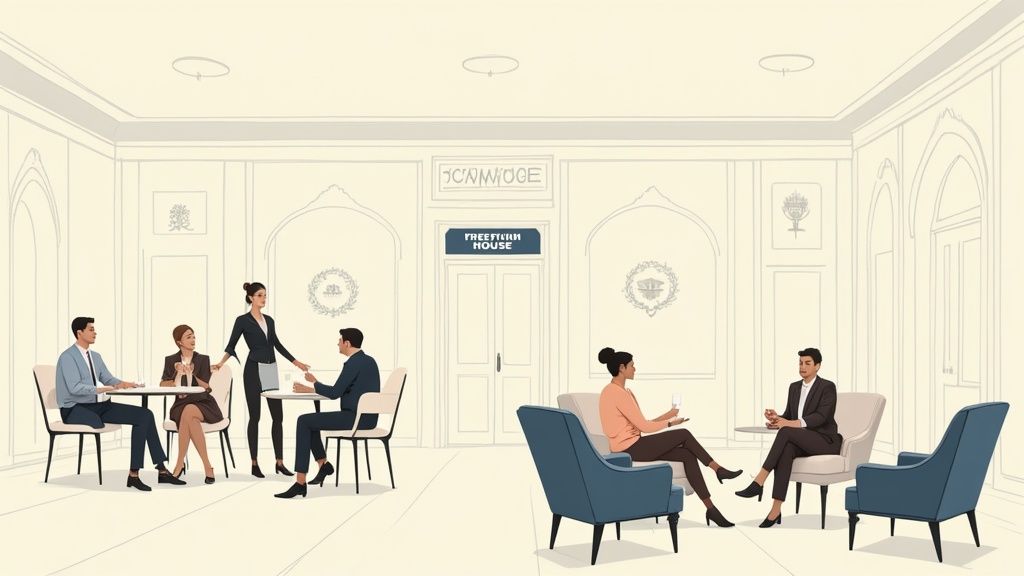
Let's be honest, where you hold your meeting says a lot before you even say a word. Booking a space is more than just finding a room with enough chairs. The environment itself is part of your pitch.
Choosing a premier, membership-based club like Freeform House in Jenks’ 10 District isn't just a rental; it’s a strategic move. Comparable to the renowned SoHo House, it offers more than just a social club. Members can take advantage of co-working spaces and a dynamic community hub designed for collaboration and connection. It’s a central gathering spot aimed at fostering a creative and cooperative spirit within our local community.
Unlike sterile, one-size-fits-all venues, a curated club is built for connection. Every detail, from the art on the walls to the quality of the coffee, is intentionally chosen to create a sophisticated yet welcoming vibe. This kind of setting immediately tells your clients and team that you’re serious about quality, setting a powerful tone for whatever comes next.
An Environment Built for Collaboration
The real magic of a premier club is its focus on community. These spaces are designed as dynamic hubs where professionals actually connect, not just anonymous locations for one-off meetings. That energy is tangible, and it can completely change the dynamic of your session, sparking more creativity and better conversations.
This isn't just a hunch; it's a major trend. The global coworking market, which fuels the demand for high-quality meeting rooms, is booming. Occupancy rates in shared professional spaces are hitting over 70% in major cities, with a huge demand for meeting facilities. It's a clear sign that businesses are moving away from isolation and toward environments that foster genuine interaction. You can learn more about the rising demand for flexible meeting spaces to see just how big this shift is.
Hosting your meeting in a space designed for networking and innovation provides an intangible benefit. It positions your brand as forward-thinking and plugged into the local professional pulse.
This sense of community doesn’t stop at the meeting room door. At a club like Freeform House, the beautifully designed lounges and common areas give your guests a place to decompress or keep the conversation going after the agenda is finished. It transforms a simple meeting into a memorable, holistic experience.
Access to Premium Amenities and a Built-In Network
Beyond the vibe, a premier club delivers a suite of high-end amenities that make your life easier and leave a lasting impression on your guests.
Think state-of-the-art AV equipment that just works and seamless catering partnerships with top local restaurants. Every detail is handled with a higher standard of service. You’re not just renting four walls; you're tapping into a full-service ecosystem designed to make your event flawless.
Venue Comparison Standard Hotel vs Freeform House
When you're weighing your options, the differences become pretty clear. See how a standard meeting room rental stacks up against a premier club like Freeform House.
Feature | Standard Hotel Venue | Freeform House |
|---|---|---|
Atmosphere | Often generic, impersonal, and lacking character. | Curated, sophisticated, and designed to inspire creativity. |
Amenities | Basic AV (often extra), standard coffee/water service. | State-of-the-art tech, premium coffee, and access to exclusive club amenities. |
Service | Functional but can be impersonal and slow. | High-touch, personalized service from a dedicated community team. |
Flexibility | Rigid packages and fixed room layouts. | Multiple unique room options, flexible setups, and bespoke packages. |
Networking | Limited to your own attendees. | Opportunities for organic networking with a community of vetted professionals. |
Overall Experience | A forgettable room for a meeting. | A memorable, impressive experience that reflects well on your brand. |
The choice really comes down to the kind of impression you want to make.
Plus, there’s an advantage you can’t put a price on: the network. Being in a members-only environment means the people you and your guests bump into in the lounge could be your next big client or collaborator. That potential for serendipitous connection adds a layer of value that lasts long after your meeting ends, making your meeting room rental a much smarter investment in your business relationships.
Got Questions About Renting a Meeting Room?
Finalizing the details for a meeting room can feel like you're playing 20 questions. It's totally normal. Getting clear answers upfront is the key to a booking that’s smooth and stress-free. We get these kinds of questions all the time from folks here in Jenks and Tulsa, so let's walk through the most common ones.
What Does a Standard Rental Include?
Typically, your rental fee gets you private use of the room itself, plus the essentials like tables and chairs. Any modern venue worth its salt will also throw in high-speed Wi-Fi and standard A/V gear, like a big screen, as part of the deal.
But that’s usually just the baseline. Other things are almost always add-ons.
Fancy A/V Gear: Think multi-camera setups for video conferencing or professional-grade microphones. These will almost always cost extra.
Catering: Coffee, water, snacks, and full-on meals are priced separately.
Dedicated On-Site Support: Need a technician or a host to manage your event? That's typically an additional service.
My advice? Always ask for an itemized list of what’s included in your meeting room rental. It’s the best way to avoid any surprise charges on the final bill.
How Far in Advance Should I Book?
This really boils down to the size of your meeting and when you need the space. If you're planning a small get-together for under 10 people, booking two to four weeks out is usually a safe bet.
For bigger crowds, or if you're eyeing a popular date, you’ll want to book at least one to three months ahead. And if you're planning something during a peak season here in the Jenks or Tulsa area—think holidays or major local events—give yourself even more lead time. That said, it never hurts to check on last-minute availability. You never know when a cancellation might open up the perfect spot.
One of the biggest mistakes I see people make is assuming all venues have the same rules. From booking windows to catering policies, the details can vary wildly. Always, always confirm the specifics directly with the venue.
Can I Bring My Own Food and Drinks?
Ah, the big catering question. The answer here is a classic "it depends." Traditional spots like hotels and big conference centers often have exclusive catering contracts, which means a hard "no" on outside food and drinks.
More modern, flexible spaces are sometimes open to it, but you might get hit with a service or corkage fee. Here at Freeform House, we have curated, high-quality catering options that are perfect for professional events, but we're always willing to chat about what you have in mind. It's just one of those crucial details you need to lock down before you sign anything.
What If I Need to Cancel or Reschedule?
Life happens, and plans change—we get it. That’s exactly why your rental agreement will spell out the cancellation policy in detail. Most venues use a tiered system. For instance, if you cancel a month or more in advance, you might get a full refund of your deposit.
On the other hand, canceling within a week of the event could mean you lose that deposit. A true last-minute cancellation often means you're on the hook for the full rental fee. Rescheduling is usually more flexible, but it’s completely dependent on the venue's calendar. Just make sure you read this section of your contract carefully so you understand exactly what a change of plans might cost you.
Ready to find a space that does more than just host your meeting—one that actually elevates it? Freeform House offers a curated selection of premier rooms right in the heart of Jenks’ 10 District, designed to impress your clients and inspire your team.
Comments