Master the meeting room business: Start, design, and profit

Before you even think about furniture or paint colors, you need to lay the groundwork for a successful meeting room business. This is the strategic stuff that happens long before your first client walks through the door—deeply understanding your local market, carving out a unique identity, and building a financial plan that actually works.
Getting this right is what separates a thriving community hub from just another empty room for rent.
Building Your Foundation for Success
A profitable meeting room business isn't just about setting up tables and chairs. It's about a smart strategy, one that’s plugged directly into the dynamics of your local market.
The global appetite for collaborative spaces is exploding. The market was valued at USD 706.46 billion in 2024 and is expected to hit a staggering USD 1,557.17 billion by 2032. That's a massive wave of demand, and it’s a golden opportunity for entrepreneurs who nail the fundamentals. Discover more insights about the growing meetings market.
This first phase is all about asking the right questions: Who are we actually serving? What makes us different? And is there a real need for this in my neighborhood? The answers you find will become the bedrock of your entire business.
Define Your Ideal Customer
You can't design a space or set a price until you know exactly who you're trying to attract. A vague "we're for everyone" approach is a fast track to failure. You have to get specific.
Corporate Teams: Are you targeting established local companies that need a professional spot for offsite strategy sessions, training days, or big client presentations? These folks value reliability, top-notch tech, and a polished environment.
Local Entrepreneurs and Solopreneurs: This crowd often needs flexible, inspiring spaces for client meetings, collaborative projects, or just a professional step-up from the coffee shop.
Creative Professionals: Think podcasters, photographers, and consultants. They need specialized environments. A place like Freeform House, with its in-house podcast booth and photography loft, is a perfect example of catering directly to a high-value niche.
Community Groups and Event Hosts: From non-profits running workshops to individuals planning small private events, this segment wants adaptable, welcoming rooms that are easy to book and use.
Knowing your primary audience shapes every single decision you make, from the chairs you buy to the services you offer. It also tells you what kind of support they might need, like a virtual receptionist to help manage their professional image. Our guide on virtual office and receptionist services gives more context on this killer add-on.
Analyze the Competitive Landscape
Once you’ve got your target customer in your sights, it's time to scope out the competition. This isn't about a race to the bottom on price; it's about understanding the entire experience they’re offering.
Fire up a simple spreadsheet and start mapping out every competitor in your area. Note their pricing, room sizes, tech offerings, and the overall vibe. Are they modern and sleek, or cozy and rustic? What about amenities—do they offer free coffee, catering partnerships, or easy parking? This analysis will quickly show you where the gaps in the market are.
A critical mistake is competing solely on price. Instead, compete on value. Find what others aren't doing well—whether it’s customer service, technology, or atmosphere—and make that your undeniable strength.
Take Freeform House in Jenks, Oklahoma. We knew we couldn't just be another room. We differentiate ourselves by blending the historic charm of a 1920s building with cutting-edge tech. It creates an experience that generic hotel conference rooms simply can't match. This unique value proposition allows us to attract a premium clientele who care just as much about atmosphere as they do about function.
Your analysis should help you find a similar angle—one that makes your meeting room business the obvious choice for your ideal customer.
Designing Spaces That Command Premium Rates
Your physical space isn't just a container for a meeting; it's the core product you're selling. If you want to attract high-value clients and justify premium pricing, you have to move beyond the sterile, cookie-cutter boardroom. It’s all about crafting distinct, memorable environments tailored to specific needs—a strategy that turns a simple room rental into an experience people seek out.
Success here boils down to a simple truth: different meetings have different goals. A high-stakes negotiation requires a completely different atmosphere than a freewheeling creative brainstorm. When you design rooms with a clear purpose, you create tangible value that clients will happily pay more for.
This means finding the sweet spot between aesthetics and pure function. Every single element, from the chairs people sit in to the way the light hits the table, contributes to the room's ability to spark productivity, creativity, and connection.
This is the foundation you build everything else on.
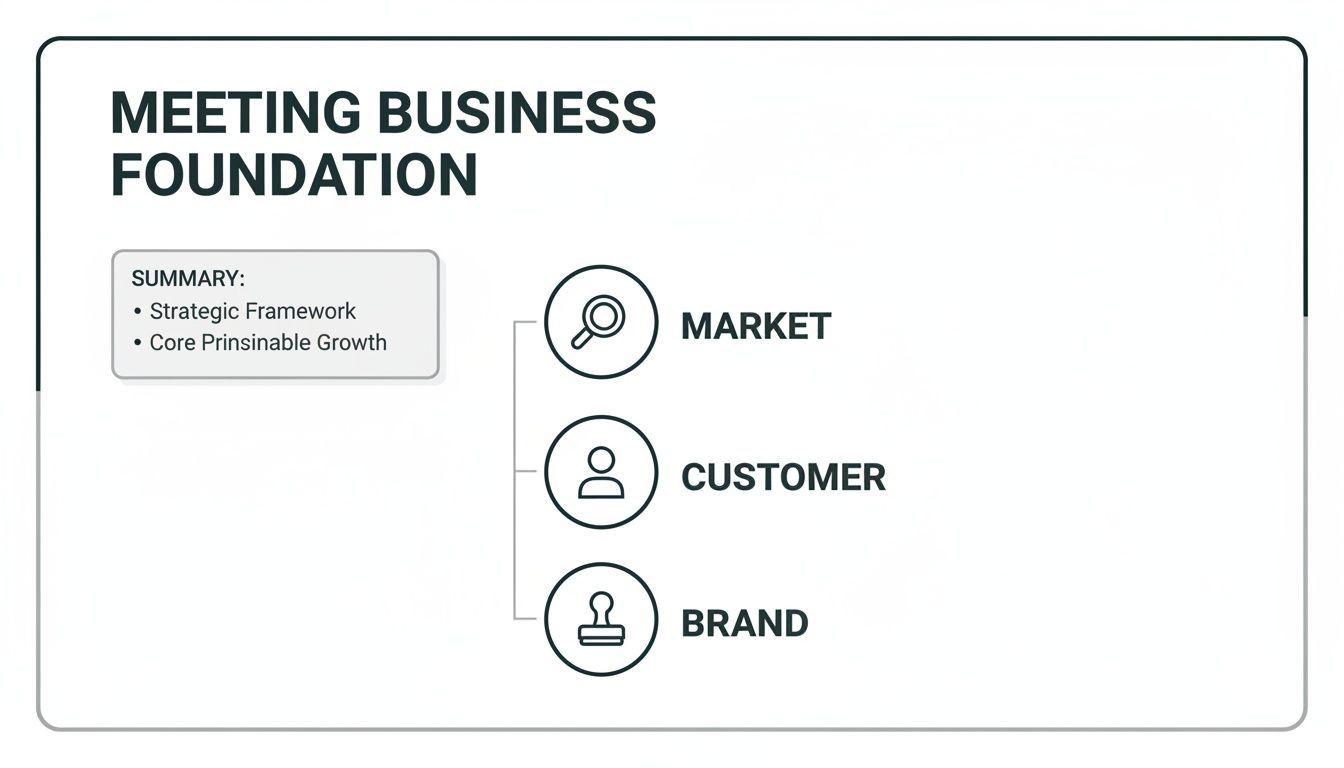
As you can see, a deep understanding of your market, customer, and brand has to come first. It’s what informs every decision you’ll make, especially when it comes to design.
Theming Spaces for Specific Client Needs
Theming your rooms is one of the most powerful ways to stand out. Forget "Meeting Room A." Create branded spaces like the "Hall of Fame Room" or the "Executive Room," each designed to serve a unique function. This concept is central to how we operate at Freeform House.
For example, a prestigious event space like our Hall of Fame Room needs to feel grand and inspiring. Think high ceilings, rich textures, and professional AV equipment built for keynote speakers or award ceremonies. On the other hand, an Executive Room should be intimate and sophisticated, built for privacy and intense focus during critical negotiations or board meetings.
Design isn't just what it looks like and feels like. Design is how it works. A beautifully designed room that's frustrating to use will never command a premium rate. Functionality must always lead the way.
We've found incredible success by breaking our spaces down into four core concepts. This framework gives you a clear vision for how to differentiate your rooms.
Here's a look at how we approach the design and differentiation for our primary room types, inspired directly by the Freeform House model. Each concept is intentionally crafted to meet a specific client need, which allows us to market them to very different audiences.
Meeting Room Design and Differentiation
Room Concept | Target Use Case | Key Design Elements | Tech & Amenities |
|---|---|---|---|
Hall of Fame | Large presentations, workshops, award ceremonies | High ceilings, natural light, premium textures, modular furniture for flexible layouts. | Professional-grade projector, integrated audio system, microphones, staging capabilities. |
Executive | Board meetings, high-stakes negotiations, private client sessions | Soundproofing, luxurious finishes (wood, leather), comfortable ergonomic seating, secure access. | High-resolution video conferencing, smart board, discreet charging ports, premium coffee service. |
Freeform | Creative brainstorms, team-building, collaborative work sessions | Whiteboard walls, movable furniture (beanbags, stools), vibrant colors, informal atmosphere. | Wireless screen sharing, multiple displays, high-speed Wi-Fi, ample power outlets. |
Thomas | Small team huddles, hybrid meetings, interviews | Compact footprint, excellent acoustics, professional camera and microphone setup. | All-in-one video bar (e.g., Logitech Rally Bar), simple one-touch meeting start, good lighting. |
This focused approach ensures that no matter the purpose of the meeting, we have a space that doesn’t just accommodate it but enhances it. It transforms the conversation from "How much per hour?" to "Which space is right for my event?"
And don't worry if you have limited square footage. You can still apply these principles. For some expert advice on that, check out our guide to maximize small conference room space for impact and productivity.
Balancing Aesthetics and Ergonomics
A premium meeting room has to be comfortable, especially for long sessions. Investing in ergonomic furniture isn’t a luxury; it’s a non-negotiable. Research has shown time and again that comfortable seating and proper desk height can make a huge difference in focus and productivity.
When you're picking out furniture, think form and function. Go for chairs that offer solid lumbar support and are adjustable. Tables need to be sturdy and provide enough real estate for laptops, notebooks, and drinks without feeling cramped. Lighting is another huge piece of the puzzle—opt for adjustable lighting that can be brightened for focused work or dimmed for presentations.
Of course, the overall aesthetic should be a reflection of your brand. At Freeform House, we blend historic 1920s architecture with clean, modern lines. This creates a unique atmosphere that feels both professional and welcoming, setting us miles apart from the competition.
Differentiating with Unique Amenities
Finally, unique amenities are what can truly elevate your meeting room business from a commodity to a destination. These are the features that get people talking and attract those niche, high-value clients who can't find what they need anywhere else.
Think beyond the standard free coffee and Wi-Fi. What truly unique value can you offer?
In-House Podcast Studio: A fully equipped, soundproofed booth where professionals can record high-quality audio content.
Professional Photography Loft: A dedicated space with professional lighting and backdrops for headshots, product photography, or video shoots.
Curated Catering Partnerships: Seamless integration with the best local restaurants to provide high-quality food and beverage options, not just lukewarm coffee and stale pastries.
On-Site Conveniences: Little things like an Amazon Hub Locker or even a rentable golf cart for transit can add a layer of convenience that busy professionals genuinely appreciate.
These amenities become powerful marketing tools. They allow you to target specific professional communities and build a reputation not just as a place to meet, but as an indispensable local resource.
Nailing Down Your Pricing and Membership Models
Alright, you've got these beautifully designed spaces ready to go. Now comes the real make-or-break part: figuring out how to price them. This isn't just about slapping a number on a room; it’s about creating a structure that pulls in revenue while building a loyal following.
How you package and sell your meeting rooms will directly shape your profitability and your ability to build a real community. The magic is in the balance—you need a model that's approachable for a one-off user but also offers undeniable value for your long-term members.
One of the biggest mistakes I see operators make is building a model that’s way too rigid. A winning strategy needs multiple on-ramps. You have to cater to everyone, from the freelance consultant who needs a professional backdrop for a few hours to a local corporation booking recurring team off-sites. This kind of flexibility is non-negotiable if you want to capture the biggest slice of your local market.
Establishing Your Core Pricing Strategy
The foundation of everything is your simple hourly or daily rate. Think of it as your à la carte option, perfect for non-members and spur-of-the-moment bookings.
To get this rate right, start by scoping out the local competition, but don't just copy them. Your premium design, killer tech, and unique amenities—all the things we just talked about—justify a price point that’s a cut above the basic, uninspired options in town.
For a premier space like Freeform House, the hourly rate isn't just for a room; it’s for an experience. It's access to a one-of-a-kind atmosphere in a historic building, backed by top-tier service. This pay-per-use model is your best tool for getting new clients in the door. It lets them experience your value firsthand and often acts as the perfect gateway to a full-blown membership.
Your pricing shouldn't just cover your costs; it has to scream value. If you've poured money and soul into creating a premium environment, your prices have to reflect that. Underselling your space is a rookie move that can signal it's no different from the generic, low-quality competition.
Once you’ve set that baseline, you can get a bit more sophisticated. Dynamic pricing, for example, lets you adjust rates based on demand. You might charge a premium for peak hours (like a Tuesday afternoon) and offer a deal for off-peak times (like a Friday morning) to keep the rooms full and the revenue flowing.
Building a Lucrative Membership Program
While hourly bookings pay the bills day-to-day, memberships are where you build predictable, recurring revenue and a genuine community. A well-designed membership program turns one-time clients into long-term partners who see your space as an essential part of their business. The name of the game is creating tiers that offer more and more value as people commit.
Here are a few structures that work well:
Credit-Based Plans: Members buy a monthly block of credits they can cash in for room bookings. The higher the tier, the more credits they get and the better the per-credit rate. It’s a simple way to encourage commitment.
Bundled Access Tiers: Each tier comes with a set number of free meeting room hours per month, plus other perks. A "Community" tier might include 5 hours, while an "Executive" tier could offer 20 hours and access to exclusive networking events.
All-Inclusive Packages: This is your corporate play. These plans can offer unlimited access to certain rooms, bundled catering, and dedicated support for a flat monthly or annual fee.
At Freeform House, our membership model is the heart of our identity as a community hub. Members don't just get a room; they get plugged into a network of local professionals. That sense of belonging is a powerful edge that a simple booking transaction can never match.
Packaging Services to Boost Your Bottom Line
Finally, make your pricing tiers even more attractive by packaging in value-added services. This not only makes your offers feel like a better deal but also drives up your average revenue per customer. Just think about what your ideal clients need to make their meetings completely seamless.
Try incorporating options like these:
Catering Packages: Team up with great local restaurants, like we do at Freeform House, to offer effortless meal and beverage delivery.
Technology Tiers: A basic booking might get you Wi-Fi and a display. A premium package, however, could add high-end video conferencing gear, a dedicated tech, or even podcast recording equipment.
Business Support Services: Offer helpful add-ons like printing, admin support, or even package handling with an on-site Amazon Hub Locker.
By mixing straightforward hourly rates with smart, multi-tiered memberships and valuable add-ons, you create a powerful pricing ecosystem. This approach makes sure your meeting room business can serve a wide range of clients, maximizing both your profits and your community's engagement.
Weaving in Essential Tech and Premier Services
A beautifully designed room is a great starting point, but it's not the finish line. If you really want to make a mark in the meeting room business, you have to deliver a flawless, frictionless experience. That boils down to two things: seamless technology and five-star service.
Clients today don't just hope the Wi-Fi works; they expect it to be fast, secure, and completely invisible. Technology isn’t just an amenity anymore—it's the very foundation of a productive meeting. Likewise, genuine hospitality is what turns a one-time booking into a long-term relationship. It's the small, thoughtful details that show you're one step ahead of your clients' needs. When you nail both, you build a reputation that commands loyalty and justifies premium rates.
Building Your Must-Have Tech Stack
The right tech gets out of the way. It removes friction and lets clients focus on their work, not on fiddling with cables and inputs. Your tech stack has to be reliable, intuitive, and beefy enough to handle whatever modern business throws at it. It's no surprise that one recent survey found 70% of employees feel more confident sharing ideas when the tech simply works.
You have to start with the non-negotiables:
Business-Grade Wi-Fi: This is table stakes. A residential router won't cut it. You need to invest in a commercial-grade network built to handle dozens of devices at once without a single hiccup in speed or security.
Intuitive Online Booking Platform: Your clients need to be able to see availability, book a room, and pay for it online, anytime. This system should be dead simple to use and plug right into your website, automating a huge chunk of your operations.
State-of-the-Art A/V Equipment: Every room needs a big, high-resolution display. For today's hybrid meetings, quality video conferencing gear is an absolute must—think all-in-one video bars with sharp cameras and crystal-clear microphones.
The goal is zero-friction connectivity. A client should be able to walk in, connect their device, and start their meeting in under 60 seconds. Anything more complicated creates a poor first impression.
This isn't just about convenience; it's a response to a booming market. The coworking sector, which includes premium meeting hubs, is seeing incredible growth. The market hit USD 22.01 billion in 2024 and is projected to skyrocket to USD 93.68 billion by 2035. This explosion is fueled by a massive demand for well-equipped spaces for teams and events, making a top-tier tech offering a powerful way to stand out. You can read the full analysis on coworking statistics to get a better sense of the trend.
Delivering Premier Hospitality and Services
Technology gets people in the door, but it’s the human touch and exceptional service that convinces them to stay. This is where a high-end concept like Freeform House really shines, turning a simple meeting space into a full-service business hub. Hospitality is all about anticipating needs and creating an environment where clients feel genuinely cared for.
Think beyond just providing a clean room. How can you make their entire day easier and more productive? It often starts with building smart local partnerships.
For example, we've forged relationships with the best local restaurants in Jenks. This allows us to offer seamless, high-quality catering delivered directly to a member's meeting. It’s a simple touch, but it eliminates a major logistical headache for our clients and completely elevates their experience.
Going the Extra Mile with Value-Added Conveniences
Finally, it’s the unexpected perks that build a memorable brand and let you charge premium prices. These are the thoughtful extras that show you’re thinking about your clients' entire workflow, not just the two hours they booked a room.
Consider adding unique amenities that solve common pain points for busy professionals:
On-Site Package Lockers: An Amazon Hub Locker gives members a secure, convenient place to receive packages, saving them a trip.
Community Transit: In a walkable district like Jenks, offering a rentable fleet of golf carts is a fun and practical way for members to get to and from local partner restaurants or run quick errands.
Curated Local Perks: Team up with nearby businesses—a great coffee shop, a dry cleaner, a gym—to offer exclusive discounts just for your members.
These kinds of services create a powerful ecosystem around your meeting room business. You're no longer just offering a space; you're offering a key to a more productive, connected professional life in the local community. That’s how you build a brand that clients can’t imagine living without.
Marketing Your Space to the Local Community
A beautifully designed space with flawless tech is a powerful asset, but it won’t make you a dime if nobody knows you exist. Once your doors are ready to open, your job shifts entirely. Now it's all about a smart marketing strategy to fill your rooms, build a waitlist, and make your brand the go-to hub in town.
This isn't about casting a wide, generic net. It's about targeted, community-focused efforts that build genuine connections. The goal is to become an indispensable part of your local business ecosystem, moving beyond just renting rooms. Get this right, and you’ll create a self-sustaining pipeline of bookings fueled by a stellar reputation and word-of-mouth referrals.
Building a Powerful Digital Footprint
Everything starts online. Think of your website as your digital storefront—it has to do more than just list prices and room dimensions. It needs to tell your story. Ditch the stock photos and use authentic, high-quality photography that captures the vibe of your space. For a premier venue like Freeform House, this means showing off that unique blend of historic architecture and modern amenities that sets you apart.
Beyond just looking good, you have to be discoverable. This is where local search engine optimization (SEO) becomes your most valuable player. Your site and your Google Business Profile need to be dialed in to capture high-intent searches like "meeting rooms near me" or "conference space in Jenks."
This really boils down to a few key things:
Keep your business name, address, and phone number perfectly consistent everywhere online.
Encourage your first clients to leave positive reviews. Nothing builds trust faster.
Publish blog posts that answer the real questions your target audience is asking.
Nailing this digital groundwork means that when a local professional needs a space, you're the first and most credible option they find. For a deeper dive, check out these powerful local business marketing strategies for 2026.
Forging Strategic Local Partnerships
While digital marketing gets people to your door, a truly successful meeting room business is built on real-world connections. You have to weave yourself into the fabric of the local community, building partnerships that drive referrals and solidify your reputation.
The local Chamber of Commerce is your first stop. Seriously. Offer to host one of their networking events for free or at a steep discount. Just like that, you've got dozens of local business owners walking through your door, experiencing your space firsthand.
Your best marketing often comes from turning your space into a community asset. When you become the go-to venue for important local events, you generate organic word-of-mouth that no ad campaign can replicate.
Another goldmine? Nearby hotels, especially the ones that don't have their own decent meeting facilities. Get to know their event managers and concierges. Offer a small commission for referrals—it’s a simple win-win. They solve a problem for their guests, and you get a steady stream of qualified leads.
The Art of Community Engagement
Your marketing should feel less like selling and more like you're building a community. Hosting events is the single best way to do this. Plan a grand opening or a series of open houses. Let local professionals tour the space, enjoy some local catering, and network with their peers. It creates a buzz and, more importantly, it lets people see exactly how they could use your rooms for their own needs.
The timing couldn't be better. The meetings industry is bouncing back strong, with 41% of planners expecting bookings to increase in 2025. Mid-sized events for 100-250 attendees are the sweet spot, making up nearly 36% of all bookings. This data signals a healthy demand you can tap into by positioning your business as the premier local venue.
By combining a strong online presence with genuine community engagement and smart partnerships, you build a powerful marketing engine that keeps your calendar full and cements your business as a true cornerstone of local commerce.
Answering the Big Questions About Your New Venture
Jumping into a new meeting room business is exciting, but it definitely brings up a lot of questions. Getting clear, practical answers to these unknowns from the get-go is the best way to build your confidence and move forward. We'll tackle everything from the initial cash outlay to the day-to-day operational details to help you build a solid, successful business right from the start.
Here are the most common questions we hear from aspiring space owners, along with our straight-shooting advice.
What Are the Biggest Upfront Costs to Expect?
Let's be honest: the initial investment is usually the most intimidating part. Your biggest checks will almost certainly be written for a few key things. First and foremost is the real estate—either signing a lease and fronting a hefty deposit or, in rarer cases, buying a property outright.
Right after that comes the build-out and design. This is where a major chunk of your budget will go. Creating those premium, one-of-a-kind spaces we've been talking about means spending real money on construction, lighting, and high-quality finishes. Then you have to furnish the place with great ergonomic chairs, solid tables, and all the little touches that bring your brand to life. It's a substantial cost, but it's absolutely essential.
And you can't skimp on the technology. A rock-solid tech stack isn't a "nice-to-have," it's a requirement. This includes:
Business-grade internet infrastructure for perfect, uninterrupted connectivity.
High-quality A/V equipment in every single room, from sharp displays to easy-to-use video conferencing systems.
A seamless online booking platform that automates the whole reservation and payment process.
Finally, make sure you've got a healthy marketing budget set aside. You need to create buzz and lock in pre-launch bookings before you even open the doors.
How Should I Price My Meeting Rooms?
Pricing is a delicate balance of art and science. Your first move should be to scope out the local competition to get a feel for the going rate, but whatever you do, don't just copy their numbers. Your price has to reflect the quality you're offering—the better design, the flawless tech, and the unique perks that set you apart.
You’ll want a layered pricing strategy. An hourly rate is a must for attracting casual users and first-timers. But the real goal is predictable, recurring revenue, and that's where tiered memberships come in. These plans need to offer obvious value, like discounted room access or a set number of monthly credits, to get clients to commit long-term.
My advice? Play around with different price points and packages in your first few months. Watch the booking data like a hawk and listen to client feedback. That’s how you’ll find the sweet spot that keeps your rooms full and your business profitable.
What Kind of Insurance Do I Need?
Insurance is one of those critical things that’s easy to overlook until it’s too late. To protect your investment and manage risk, you need a few layers of coverage. You absolutely cannot open for business without these core policies.
First up is general liability insurance. This is non-negotiable. It covers you if a client has an accident on-site, like tripping and getting hurt. Next, you need commercial property insurance to protect all your physical stuff—the building (if you own it), your expensive furniture, and all that tech—from disasters like fire, theft, or water damage.
I’d also strongly recommend looking into business interruption insurance. If something unexpected forces you to shut down temporarily, this policy can be a true lifesaver by covering your lost income. The best move is to talk to an insurance agent who specializes in commercial hospitality or coworking to make sure you’re covered for the specific risks of this business.
What Are the Most Critical Tech Features Customers Want?
Today’s clients just expect technology to work perfectly. A smooth tech experience isn’t a bonus anymore; it's table stakes. In fact, a recent study showed that 70% of employees feel more confident sharing ideas when the meeting room tech is frictionless.
From all the client feedback we’ve seen and market trends we've followed, these are the absolute must-haves:
Fast, reliable, and secure Wi-Fi. This is priority number one. No exceptions.
Large, high-resolution displays with dead-simple connectivity for everyone, whether they're plugging in an HDMI or casting wirelessly.
High-quality video conferencing gear, especially the all-in-one video bars that are intuitive and easy for anyone to use.
Beyond what’s inside the room, an easy-to-use online booking system is a deal-breaker. People expect to see availability, book a room, and pay for it on their own time—24/7, no phone call required.
Freeform House is a premier, membership-based club in the heart of Jenks, Oklahoma's 10 District downtown. Comparable to the renowned SoHo House, it offers more than just a social club. Members can take advantage of co-working spaces and a dynamic community hub designed for collaboration and connection. It's a central gathering spot aimed at fostering a creative and cooperative spirit within our local community. Ready to create a space where local professionals can truly thrive?
Comments