How to Improve Team Collaboration: A 3-Step Guide for Real Results

Fixing team collaboration isn't about buying new software or just telling people to "work together better." It's a strategic move that needs to align your people, your processes, and your tools. The first real step is figuring out what's actually broken—is it unclear roles? Tech headaches? Only then can you start implementing solutions that actually work, like clear communication rules and genuinely shared goals.
Why Most Collaboration Efforts Fail
Let’s be honest, true collaboration is rare. So many well-meaning attempts to improve teamwork just fall flat because they treat the symptoms, not the disease. You give a team a new project management tool or tell them to "communicate more," but they stay stuck in their silos. The result? Missed deadlines, stalled projects, and a team that’s slowly losing morale.
This isn’t just a minor frustration; it’s a direct hit to your bottom line. When the marketing team launches a campaign without talking to sales, leads go nowhere. When developers build a feature based on what they think users want instead of getting real feedback from the support team, the product misses the mark entirely. These aren't just one-off mistakes. They’re signs of a much deeper disconnect.
The Real Cost of Disconnected Teams
Poor collaboration has some pretty serious consequences. A staggering 86% of leaders point to a lack of teamwork as the main reason for failures in the workplace. It's the number one reason projects get derailed.
Now, picture your team in a space like the Freeform Room at Freeform House—a premier, membership-based club in the heart of Jenks, Oklahoma's 10 District downtown. It's a dynamic community hub designed for connection, where members can find the focus needed to combat the very issues that throw projects off course. It makes sense, especially when you learn that businesses prioritizing collaboration are five times more likely to be high-performing. You can discover more insights about these teamwork statistics and see the impact for yourself.
The core problem is that collaboration is often treated as a soft skill, not a critical performance metric. It’s seen as a "nice-to-have" instead of what it really is: a strategic necessity for survival and growth.
Shifting Your Perspective
To really fix team collaboration, you have to reframe the problem. It’s not about forcing people to work together. It's about creating an environment where working together is naturally the most effective and rewarding way to get things done. This means moving beyond buzzwords and making a clear, urgent case for a totally new approach.
Think of it this way: your team is an engine. Every person is a vital part, but if they aren't aligned and lubricated, the parts just grind against each other. You waste energy and eventually, the whole thing breaks down. Effective collaboration is the oil that keeps everything running smoothly, giving you maximum power with minimum friction. The next few sections will walk you through the practical strategies you need to make that happen.
Pinpointing Your Team's Collaboration Breakdowns
Before you can fix how your team works together, you have to play detective. You can't just slap a fresh coat of paint on a cracked foundation and hope for the best. Guessing at solutions—like buying the latest software or jamming everyone into more meetings—is a recipe for wasted time and mounting frustration. The real goal is to get past assumptions and dig into the data to see where teamwork is actually falling apart.
This all starts by creating a space where people feel safe enough to give honest feedback. Those annual surveys? They're often too generic and infrequent to catch the real day-to-day friction. It's better to build in more direct, continuous ways for people to share what's on their minds.
Gathering Honest Feedback
To really get to the bottom of your collaboration gaps, you need to move beyond surface-level complaints. It’s all about asking better, more specific questions in a way that encourages genuine, unfiltered answers. Here are a few ways I’ve seen this work really well:
Structured One-on-Ones: Carve out a specific part of your regular 1:1s for a "collaboration audit." Ask pointed questions like, "Where did you feel blocked on the last project?" or "Which tool is causing the most friction for you and why?"
Anonymous Digital Suggestion Boxes: A simple online form can be a game-changer. It gives team members a place to submit specific challenges or ideas without worrying about judgment, often revealing systemic issues people are hesitant to voice out loud.
"Start, Stop, Continue" Sessions: This is a classic for a reason. In a team meeting, ask everyone to contribute one thing the team should start doing, one they should stop doing, and one they should continue doing to improve collaboration.
This isn't just a feel-good exercise; the stakes are incredibly high. The difference between a team that clicks and one that doesn't is stark.
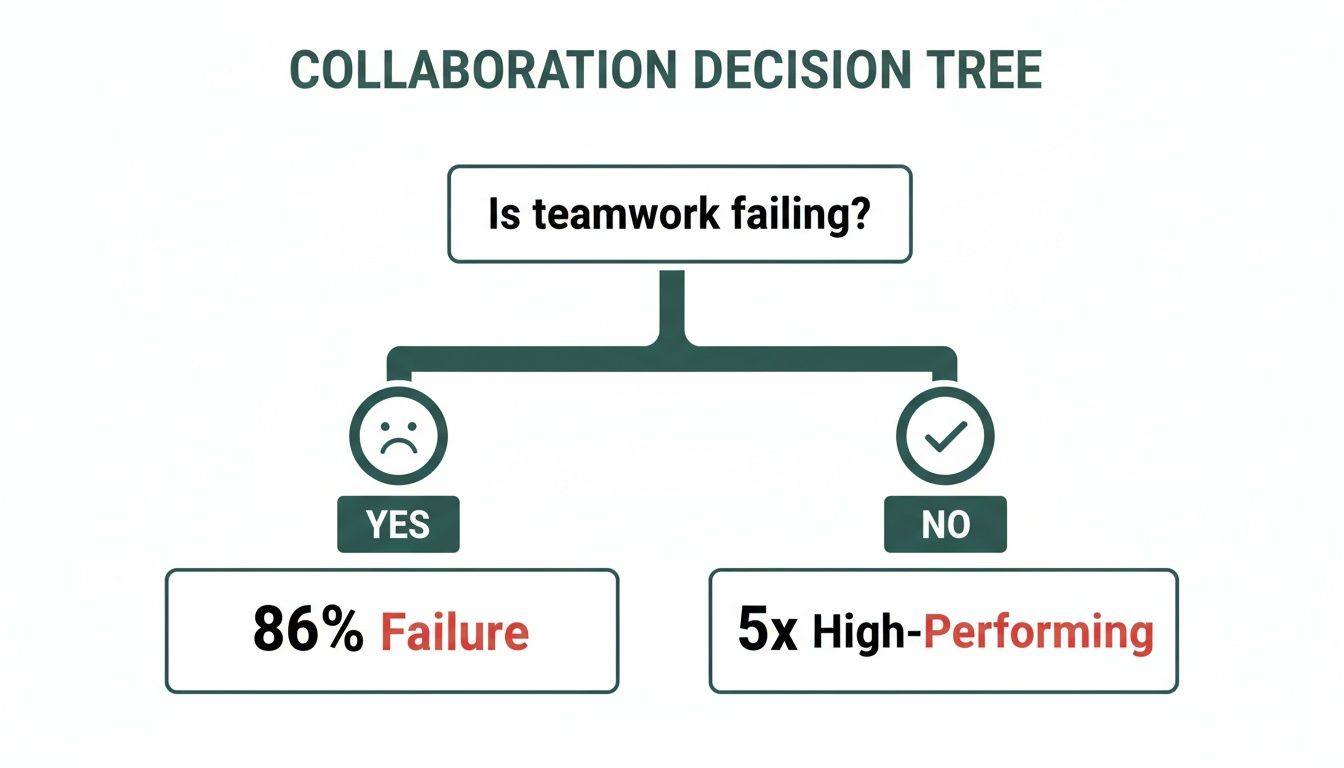
As you can see, the data paints a pretty clear picture. Fostering great collaboration makes your team five times more likely to be high-performing. On the flip side, neglecting it is a factor in a staggering 86% of workplace failures.
Diagnosing the Core Problem
Once you have all this feedback, it's time to sort through it. Most collaboration breakdowns fall into one of three buckets: technology, culture, or workflow.
Is the feedback full of complaints about confusing software, a dozen different apps, and a lack of training (technology)? Or does it point to a lack of trust, fear of speaking up, and no psychological safety (culture)? Maybe the real issue is that no one knows who’s responsible for what, and the processes are a mess (workflow).
To help you get specific, I've put together a quick diagnostic checklist. Use it to reflect on what you're hearing and observing.
Area of Assessment | Key Questions to Ask | Red Flag Indicators |
|---|---|---|
Communication | Are messages getting lost? Do people know where to find important information? Is communication timely and clear? | "I didn't see that message." Constant requests for information that's already been shared. Missed deadlines. |
Tools & Tech | Does our tech stack help or hinder collaboration? Do people know how to use the tools effectively? Are there too many (or too few) tools? | Low adoption rates for specific software. Complaints about clunky interfaces. Workarounds using unsanctioned tools. |
Meetings | Are meetings productive? Do they have clear agendas and outcomes? Are the right people in the room? Could this meeting have been an email (or an async update)? | Meeting fatigue. Lack of clear action items post-meeting. People multitasking or disengaged during calls. |
Roles & Process | Is it clear who is responsible for what? Are handoffs smooth? Is our project management process efficient and understood by everyone? | Duplicated work. Confusion over ownership. Projects stalling at specific stages. Frequent "stepping on toes." |
Culture | Do team members feel safe sharing ideas or admitting mistakes? Is there a sense of trust and mutual respect? Do people feel connected to the team's mission? | Low engagement. Hesitancy to speak up in meetings. Blame-shifting when things go wrong. Lack of proactive help. |
This isn't about finding someone to blame; it's about identifying the weakest pillar so you know where to focus your energy.
By asking the right questions and listening—really listening—you can pinpoint the exact friction points. This data-backed approach gives you a clear starting line, ensuring your efforts are aimed at solving the right problems from the very beginning.
When you can clearly identify whether your primary issue is with your tools, your culture, or your workflows, you can stop guessing. You can finally start building a targeted strategy that fixes what's actually broken and sets the stage for real, lasting improvement.
Building a Tech Stack That Actually Connects People
The right technology should feel invisible. It should be the nervous system that connects your team, not another frustrating barrier getting in the way of real work. Building a great tech stack isn't about chasing the latest shiny app—it's about intentionally creating a unified digital workspace for your team.
The real goal here is to avoid "tool fatigue," where your team is constantly jumping between a dozen different platforms that don't talk to each other. It’s a huge time-waster.
Think about a creative team at Freeform House using the co-working spaces to collaborate on a new project. They need a smooth way to record, edit, and then share massive files with clients for review, all without clunky email attachments or confusing download links.
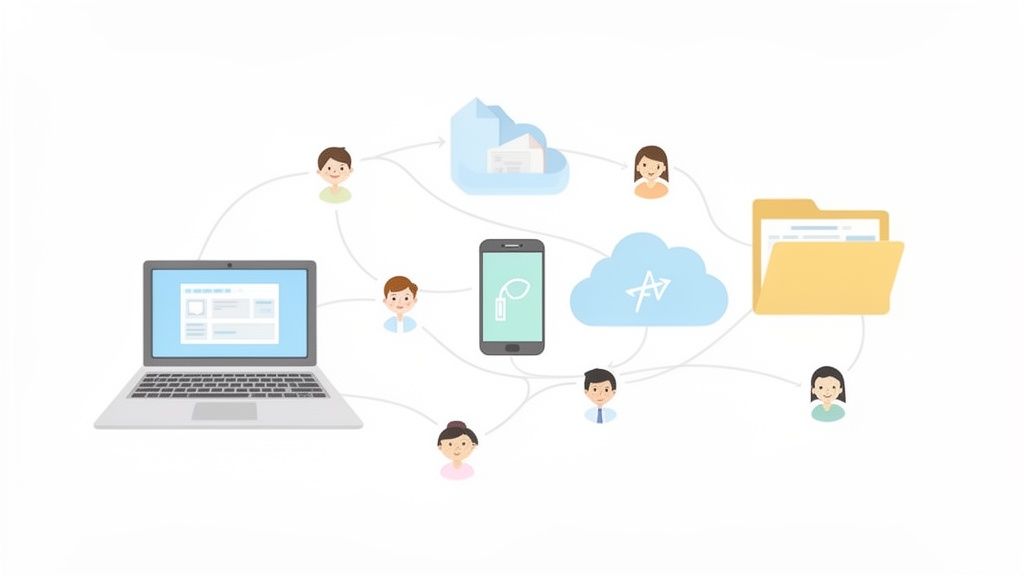
This means choosing platforms that fit how your team already works, not forcing them into some rigid, one-size-fits-all system. It’s a simple shift, but it’s critical if you want people to actually adopt the new tools you bring in.
Choosing and Integrating Your Core Tools
First things first: audit what you're already using. Do you have overlaps? Is your team chatting on three different messaging apps? Just consolidating your stack around a central hub can bring a ton of clarity and cut down on the digital noise.
I'vefound that a solid collaborative tech stack always rests on three pillars:
A Central Project Hub: This is your single source of truth for tasks, deadlines, and project progress. Platforms like Asana, Trello, or Monday.com can act as the backbone, giving everyone instant visibility into who is doing what and when it's due.
A Dedicated Communication Channel: Instant messaging is a must for quick questions and real-time updates. Tools like Slack or Microsoft Teams are perfect, but the key is setting clear rules for how to use them to avoid constant interruptions.
Cloud-Based File Management: A system like Google Drive or Dropbox is completely non-negotiable for modern teams. It ensures everyone is always working from the most current version of a file and kills the chaos of tracking down email attachments.
For remote and hybrid teams, getting these tools right is even more important. If you need a refresher on the basics, check out our guide on essential remote work productivity tips for professionals in 2025.
Avoiding Digital Friction and Waste
The explosion of online tools has been a mixed blessing. While we have more capabilities than ever, we've also created new problems. We've seen a 44% rise in the number of work apps since 2019, and meetings have shot up by 153% since early 2020. Teams are spending way too much time just trying to get on the same page.
This digital friction comes at a steep price.
One hour spent daily on collaboration fixes—like chasing project statuses or clarifying tasks—costs a single manager $16,491 per year. For a company with 160 managers, that figure balloons to over $874,000 annually.
This is exactly why a truly integrated system is so urgent. When your project management tool automatically updates a task's status in your team chat channel, you eliminate the need for another status meeting. It’s that simple.
The best tech stack isn’t the one with the most features. It's the one that gives your team back their most valuable resource: time.
Designing Environments That Spark Collaboration
A collaborative culture doesn’t just happen—it needs the right environment to grow. You have to be intentional about creating spaces, both physical and digital, that actually encourage people to connect. The goal is to build a workplace that supports deep focus when needed but also sparks those spontaneous chats where the best ideas often come from.
Think about it: a high-stakes strategy session needs a very different vibe than a freewheeling creative brainstorm. The space has to match the task. This is where having varied settings is a game-changer. You might book a formal executive room for a client pitch, then move to a relaxed open studio to hash out a new campaign. The environment itself becomes a tool for better work.
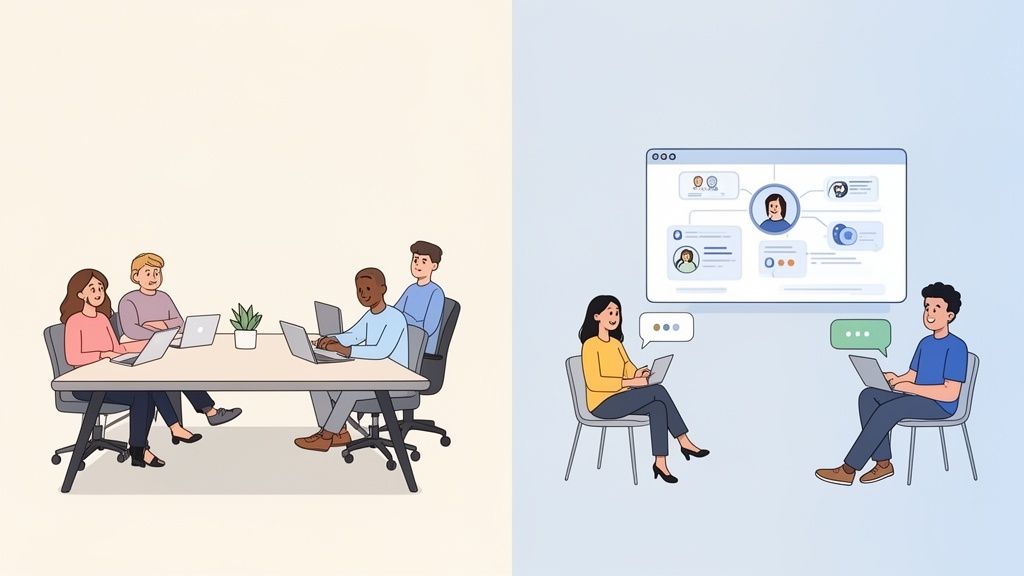
This same thinking applies to your digital world, too. For remote and hybrid teams, their digital tools are their office. Without a thoughtful design, that "office" can feel chaotic and isolating. The trick is to build a digital hub that has the same energy and connection you'd find in a great physical workspace.
Crafting a Vibrant Digital Workspace
A strong digital environment isn't just a random pile of apps; it's a carefully structured ecosystem. You have to be deliberate about replicating those valuable "water cooler" moments that happen naturally in an office.
Here’s how to build a digital space that feels more human:
Make Room for Casual Chatter: In your messaging app like Slack or Teams, create dedicated channels for non-work stuff. Think , , or . This gives everyone a low-pressure way to connect on a personal level, which builds the trust great collaboration runs on.
Set Clear Online Etiquette: Lay down some ground rules. Define what's an urgent message versus an email, set "quiet hours" to protect personal time, and encourage using status updates so people know when a colleague is head-down in focus mode.
Run Engaging Virtual Meetings: Beat back video call fatigue with a clear agenda every single time. Assign a facilitator and build in moments for actual interaction. Use breakout rooms for small-group discussions and encourage "cameras on" to create a stronger sense of being together.
The Power of a Purpose-Built Physical Space
While a solid digital hub is essential, you just can't deny the impact of a physical environment. Imagine stepping into a space like Freeform House, where the central gathering spot is designed to foster a creative and cooperative spirit within the local community. It's the perfect backdrop for Tulsa's entrepreneurs and executives to connect and create.
The numbers back this up. According to these revealing collaboration statistics, employees in collaborative environments are over 50% more effective at completing tasks. On top of that, 73% report better work quality, 60% feel more innovative, and 56% are more satisfied with their jobs.
The best workspaces offer a whole spectrum of options. They have quiet nooks for solo focus, comfy lounges for casual chats, and fully-equipped rooms for structured projects. This variety lets people choose the right setting for their task and their mood.
In the end, whether you're setting up a Slack channel or booking an offsite, the goal is identical: you're creating a container for connection. When you're intentional about these spaces, collaboration becomes the easiest, most natural way to work.
Clarifying Roles to Eliminate Friction and Boost Accountability
Great collaboration isn't about everyone pitching in on everything. It’s about each person knowing exactly what part they play. Ambiguity is the enemy of teamwork. When roles are fuzzy, you get duplicated work, missed handoffs, and that frustrating "I thought you were doing that" conversation.
This confusion is a massive source of friction. In fact, research shows a staggering 86% of workplace failures are tied directly to poor communication and collaboration—and that often starts with unclear roles. If you want your team to collaborate effectively, you have to architect its structure with the same care you put into a project plan.
Defining Who Does What with a RACI Chart
One of the best tools I've found for bringing this kind of clarity is the RACI chart. It’s a simple but powerful framework that assigns a specific role to each person for every single task, decision, or deliverable in a project. Honestly, it’s a game-changer for accountability.
Here’s a quick breakdown of what the acronym stands for:
Responsible: This is the person who actually does the work. To avoid confusion, there should only ever be one "R" per task.
Accountable: The person who owns the task and is ultimately on the hook for its success or failure. This is often a project manager or team lead.
Consulted: These are the folks who provide input and expertise. It's a two-way street; they are looped in for their opinions before work is done or signed off on.
Informed: People who just need to be kept up-to-date on progress. They aren't directly involved in the day-to-day work or decisions.
Putting a RACI chart in place completely eliminates the guesswork. Everyone can see, at a glance, what they need to do and who they need to talk to for approvals or information. It transforms a vague group effort into a clear, efficient sequence of individual contributions. This level of clarity is foundational for any high-performing team and a key theme in our guide on how to run effective team meetings that boost productivity.
Measuring the Impact of Better Collaboration
Defining roles is a huge first step, but you also need to measure if your efforts are actually paying off. Tying collaboration initiatives to real business outcomes is how you prove their value and make the case for continued investment in your team’s dynamic.
Vague goals lead to vague results. Instead of just aiming for "better teamwork," focus on tracking concrete metrics that show a direct link between improved collaboration and business performance.
Start tracking tangible numbers that reflect how well your team is actually working together. Look at things like project cycle times—how long does it take to get from an idea to a finished product? Are those times getting shorter? You can also monitor employee engagement scores through regular pulse surveys; a happy, connected team is almost always a more productive one.
Also, start measuring cross-functional project success rates. When teams from different departments, like sales and marketing, can successfully launch a project on time and on budget, it's a powerful indicator that your collaborative framework is working. By connecting the dots between clear roles and bottom-line results, you’re not just improving teamwork—you’re building a more resilient and successful business.
Common Questions About Improving Team Collaboration
As leaders start digging into how their teams really work together, a few key questions always pop up. Let's tackle some of the most common challenges you'll face, with practical answers you can actually use.
How Do You Encourage Collaboration in a Hybrid Team?
With hybrid teams, it all comes down to intentionality. You can't just hope for those magical water-cooler moments to happen. You have to actively build them into your team's rhythm.
First, standardize your communication channels. Decide what tool is for what purpose—is Slack for quick pings and project chatter, while email is for formal updates? Getting this clear cuts down on a ton of confusion.
Next, level the playing field in meetings. Good video conferencing tech is non-negotiable, so remote folks feel just as present as the people in the room. Most importantly, make a point to get everyone together in person now and then. Strategic offsites at a place like Freeform House—where members can take advantage of co-working spaces and a dynamic community hub—are crucial. Those personal bonds are the glue that holds effective digital work together.
What Is the Single Biggest Mistake to Avoid?
The biggest mistake is thinking collaboration just happens. Too many leaders assume that putting a bunch of smart people in a room (or a Zoom call) is all it takes.
In reality, true collaboration needs a deliberate framework. Without clear goals, defined roles, and agreed-upon ways of working, you don't get synergy—you get chaos.
A great way to avoid this is by creating a "Collaboration Charter" for your most important projects. This simple document outlines objectives, who's responsible for what, communication protocols, and how decisions will be made. It sets the stage for success before a single task is started.
How Can I Measure the ROI of Better Collaboration?
Measuring the return on your collaboration efforts isn't just about feelings; you can track hard numbers, too. It’s about connecting the dots between teamwork and tangible business outcomes.
On the quantitative side, you can look at things like:
Project efficiency metrics like time-to-completion
Employee productivity rates
Innovation outputs, like how many new features are launched
Qualitatively, use employee engagement surveys to get a pulse on morale and job satisfaction. Keep an eye on employee turnover, too—highly collaborative companies almost always have better retention.
Think about it this way: a 10% reduction in project timelines and a 5% decrease in employee turnover are direct financial wins. It proves that investing in a connected team is one of the smartest business decisions you can make.
Ready to give your team an environment actually built for connection and focus? At Freeform House, we offer premier, membership-based co-working spaces and meeting rooms in the heart of Jenks, Oklahoma's 10 District downtown, designed to help your team do its best work. Explore membership opportunities at Freeform House and find the perfect space to bring your next big idea to life.
Comments