Hourly Meeting Rooms in Jenks and Tulsa

Your partner pitch is this week, your home office isn't an option, and someone on the call will be joining remotely. You need a room in Jenks or Tulsa that feels professional without turning a straightforward meeting into an event-planning project. The advertised hourly rate helps you start a shortlist, but it won't tell you whether everyone can hear the conversation or what you'll pay.
Why Hourly Meeting Rooms Matter in Jenks and Tulsa
Book for the meeting you're hosting, not the office you don't need. A Jenks founder preparing for a board call needs privacy, dependable audio, and a controlled arrival experience. A Tulsa team lead bringing a colleague in from Dallas might need a working room for the afternoon, not an ongoing office commitment.
That's the practical appeal of hourly meeting rooms. You can separate a specific business need from the expense and responsibility of maintaining permanent space. Treat an on-demand room as a deliberate operating choice, not an apology for working remotely.
Start with the people and the outcome
Before you browse interiors, write down who will attend, who will join remotely, and what must happen before everyone leaves. A decision meeting needs a different layout from a workshop. A confidential negotiation needs a different setting from a community introduction.
The case for right-sizing isn't just aesthetic. A 2019 workplace-usage analysis examined more than 10,000 hours across 60 meeting rooms over six months and found that 85% of meetings had fewer than seven attendees.
Don't turn that finding into a rigid booking rule. Use it as a reason to question the oversized conference room you're considering because its photographs look impressive.
For a Jenks client conversation: Prioritize privacy, comfortable seating, and straightforward guest access.
For a Tulsa regional meeting: Consider the whole arrival journey, including parking instructions and the building entrance.
For a distributed team: Judge the room from the remote attendee's perspective, not just the host's chair.
Use two filters before comparing venues
Your first filter is total booking cost. Your second is hybrid readiness, meaning the room supports the conversation from connection through wrap-up.
Practical rule: A room is good value only if it lets you run the meeting you intended without buying essential pieces afterward.
Location still matters, but use the address intelligently. A downtown Jenks room makes sense when participants will spend time there before or after the meeting. A Tulsa venue may suit a different guest itinerary. Choose around the actual journey rather than assuming either location is automatically more convenient.
Success is simple: guests arrive without confusion, the meeting works, and the final bill matches the agreement.
The Four Room Types Worth Knowing
The room's label matters less than its working layout. A boardroom can feel cramped once presentation equipment, catering, and personal belongings occupy the available surfaces. A smaller room can be entirely appropriate when the conversation needs focus rather than ceremony.
For local comparisons, use huddle rooms, executive rooms, boardrooms, and creative or event-grade spaces as your starting categories. The capacities below describe example meeting needs, not published occupancy limits for any particular venue.
Room Types in Jenks and Tulsa at a Glance
Room type | Typical capacity | Best for | Atmosphere |
|---|---|---|---|
Small huddle room | A one-on-one or small working group | Interviews, private calls, partner discussions | Focused and informal |
Mid-size executive room | A six-person client pitch, subject to layout | Presentations, negotiations, leadership discussions | Polished and businesslike |
Large boardroom | A twelve-person offsite, subject to confirmed capacity | Group decisions, structured reviews, facilitated sessions | Formal and organized |
Creative or event-grade space | An intimate gathering sized to the approved configuration | Workshops, community dinners, content production | Flexible and expressive |
A huddle room is the sensible choice when intimacy helps the conversation. Don't rent a larger space merely to make a small business look bigger. For a sensitive Jenks partner discussion, an appropriately scaled private room is a stronger choice than a cavernous table.
An executive room suits a pitch where guests need to see both the presenter and the material. A boardroom fits a more structured offsite, provided the seating supports discussion rather than forcing everyone to watch the person at the end of the table.
Character matters, but names aren't specifications
Freeform House offers the Hall of Fame Room, Freeform Room, Executive Room, and Thomas Room as distinct member meeting options. That gives you named spaces to compare, but it doesn't establish which room fits your headcount, equipment, or preferred configuration. Ask for the actual layout rather than assigning a purpose based on the name.
For an intimate community dinner, compare event permission, food arrangements, and conversation-friendly seating. For a creative workshop, look for usable work surfaces and freedom to rearrange the room.
Choose atmosphere deliberately: A formal setting can support a consequential client conversation; a relaxed setting may better suit collaborative work.
Keep capacity separate from comfort: An approved maximum doesn't necessarily describe a pleasant working arrangement.
Match the configuration: Dinner seating, presentation seating, and workshop seating aren't interchangeable.
What to Check Before You Book
A screen on the wall doesn't make a room hybrid-ready. Before paying, ask the venue to explain how a remote participant will hear a quiet speaker, follow a whiteboard discussion, and contribute without repeatedly interrupting.
The service gap is substantial. Jabra's small-meeting-room research found that only one-third of surveyed small rooms had video-conferencing tools, while only 30% of employees felt confident that everyone could consistently see or hear one another.
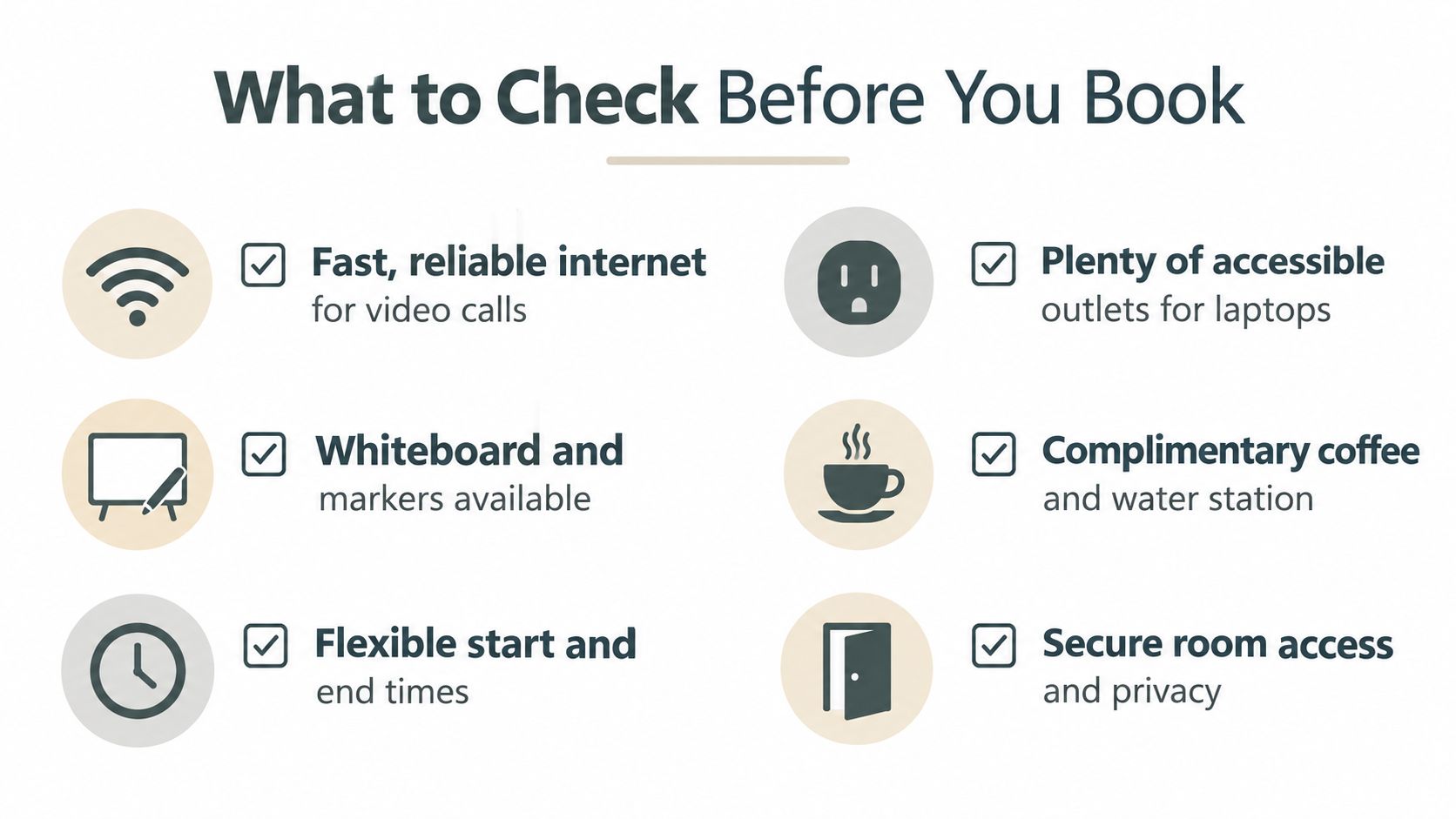
Treat every amenity in a listing or graphic as something to confirm for your particular reservation. Don't assume refreshments, flexible access, or equipment are included.
Ask for a working demonstration
Use these questions when speaking with the venue:
Can we join using our meeting platform? Confirm whether joining is one-touch, laptop-based, or dependent on an adapter.
Will the camera show every seat? Ask what happens when someone presents away from the table.
Can remote attendees hear everyone? Request a test from the farthest seat, not just beside the microphone.
Is the display readable? Check whether your presentation, spreadsheet, or design review will be legible from the guest seats.
How does the room handle sound? Ask about corridor noise, neighboring activity, and echo.
Can remote guests follow whiteboarding? Establish whether the board is captured digitally, shown by camera, or shared afterward.
For a Tulsa client presentation with a remote decision-maker, I'd reject an elegant room with uncertain microphone coverage. That person needs to participate, not reconstruct the conversation from fragments.
Confirm the time around the meeting
Ask who provides technical support and whether that person will be available during your reservation. Request a backup procedure for a failed connection, including how you'll share material if the primary display or conferencing system stops working.
Then establish whether setup, testing, and post-meeting reset fall inside your paid window. If you need to connect a laptop, arrange materials, or remove workshop supplies, those tasks need an agreed place in the schedule.
Use the meeting-room space requirements guide to help frame layout questions, then verify the actual configuration with the venue. Accessible outlets, reliable internet, privacy, and clear circulation routes deserve the same attention as the presentation equipment.
The hidden hybrid meeting tax is the extra effort you impose on remote participants. Don't make them pay it because the room photographed well.
Pricing, Memberships, and the True Cost
Compare written totals, not headline rates. A higher inclusive rate can cost less than a cheaper room that requires separate equipment, service, and access charges. Neither pricing model is wrong, but an incomplete quote isn't useful for making a decision.
Cost pressure makes that distinction worth taking seriously. In MPI's early-2025 Meetings Outlook, 47% of respondents were very concerned that costs would outpace budgets, and more than half reported food-and-beverage and audiovisual cost increases above 6% in 2024.
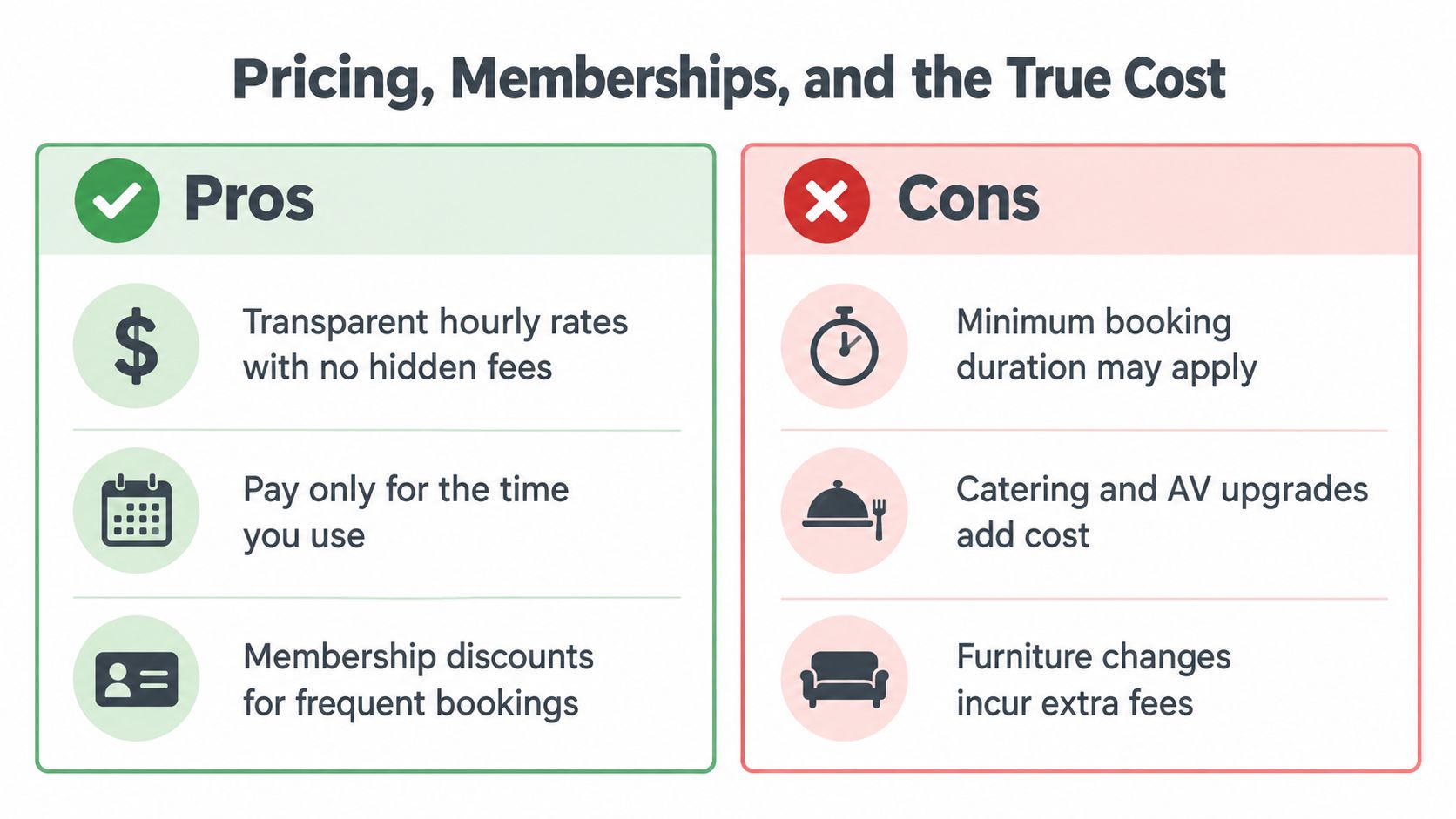
The pricing features illustrated above aren't universal promises. Confirm discounts, minimums, furniture charges, and included services against the venue's written terms.
Put competing quotes on the same basis
For a Jenks business comparing a hotel, coworking venue, and membership club, request the same meeting specification from each. Don't compare a bare-room quote with a supported booking that includes the equipment you need.
Venue model | What to establish about the headline price | What belongs in the total-cost comparison |
|---|---|---|
Budget hotel conference room | Whether the quote covers space alone or a package | Equipment, food requirements, service, furniture, taxes |
Coworking day-pass meeting room | Whether a day pass actually includes private-room access | Guest eligibility, reservation rights, equipment, extended access |
Premium membership-based club | Whether membership and room use are charged separately | Dues allocation, included allowances, guest terms, booking charges |
Read minimum booking duration, deposits, cancellation terms, overtime, cleaning, and early-access conditions before deciding. Ask whether a deposit is credited toward the final invoice or held separately as security.
Build a two-hour executive meeting budget
Use a two-hour executive meeting as a planning example, not a price estimate. Enter the venue's own figures into this worksheet:
Room subtotal: Quoted rate multiplied by the required billable duration.
Meeting essentials: Any separately charged conferencing equipment, display, or support.
Hospitality: Coffee, meals, service charges, and any delivery charge.
Access and labor: Early entry, furniture changes, staffed reception, or reset.
Final adjustments: Applicable taxes and other agreed charges, with deposits clearly identified.
A lower base rate isn't a saving if you still have to purchase the services that make the meeting usable.
Membership requires a separate calculation. Compare your expected booking pattern with dues, included room access, restrictions, and the services you'd otherwise buy. The coworking membership overview is a useful starting point for membership questions, but request current terms before making the comparison.
For occasional use, avoid paying for access you won't exercise. For recurring meetings, evaluate the whole working arrangement rather than chasing a nominal room discount.
The Booking Process Step by Step
A room isn't secured because someone says it should be available. You need a written confirmation that identifies the space, reservation window, permitted use, and payment terms.
For a members-only venue such as Freeform House, begin by establishing eligibility. Don't assume a public inquiry creates a non-member booking route.
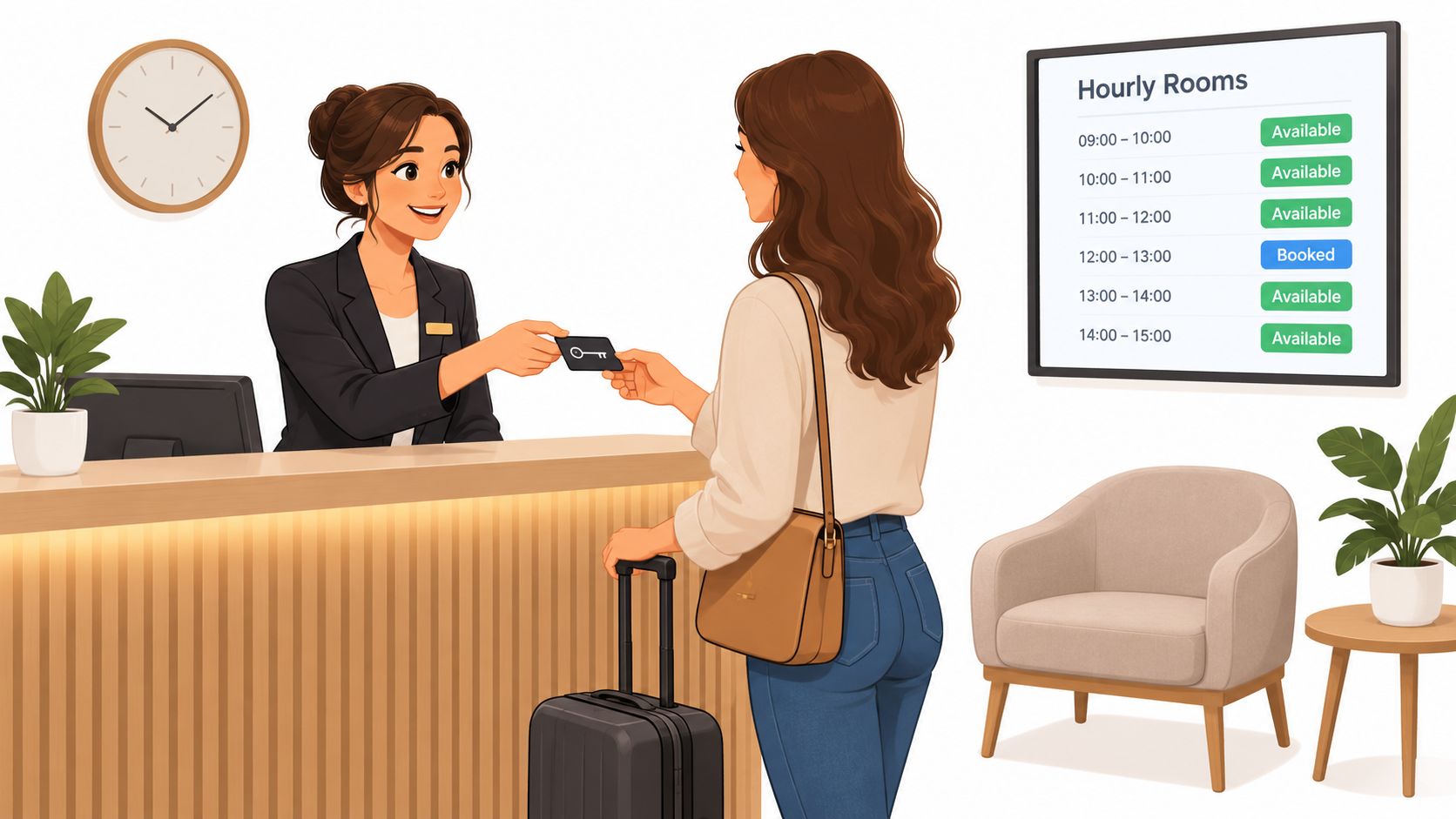
From inquiry to confirmation
Send a useful inquiry. Include your preferred date, attendance, remote participation, meeting purpose, and proposed configuration. Mention catering, recording, or outside suppliers immediately.
Verify availability and eligibility. Ask whether the room can accommodate the complete reservation, including any agreed preparation period. Establish the member, hosted-guest, or other permitted access path.
Review the written offer. Match the quoted room and services against your requirements. An attractive alternative room still needs its own layout and equipment check.
Accept the terms and arrange payment. Confirm when the reservation becomes binding, when the balance is due, and how any deposit is handled.
For a Tulsa leadership session with traveling participants, get confirmation before circulating a calendar invitation with the venue address. Otherwise, you may have to correct both the location and everyone's travel arrangements.
From arrival to checkout
Before the meeting, send attendees the correct entrance, parking guidance, access instructions, and host contact. Identify who will greet guests and who can solve a technical problem.
At check-in, verify that the room matches the agreed setup. Report any existing damage or missing equipment immediately rather than leaving uncertainty for checkout.
Cancellation window: Ask for the exact deadline and financial consequence, including date changes.
Overtime rules: Establish whether an extension requires approval and what happens if another booking follows yours.
Cleanup expectations: Clarify food removal, furniture restoration, waste disposal, and responsibility for supplier materials.
Damage procedure: Understand how concerns are documented and how charges are assessed.
Before leaving, remove confidential papers, sign out of shared devices, and confirm any additional services used. Request an itemized final invoice so your records reflect the meeting you hosted.
Sample Use Cases for Local Teams
These are illustrative planning scenarios, not customer case studies. Each shows how a different local meeting should shape the room choice.
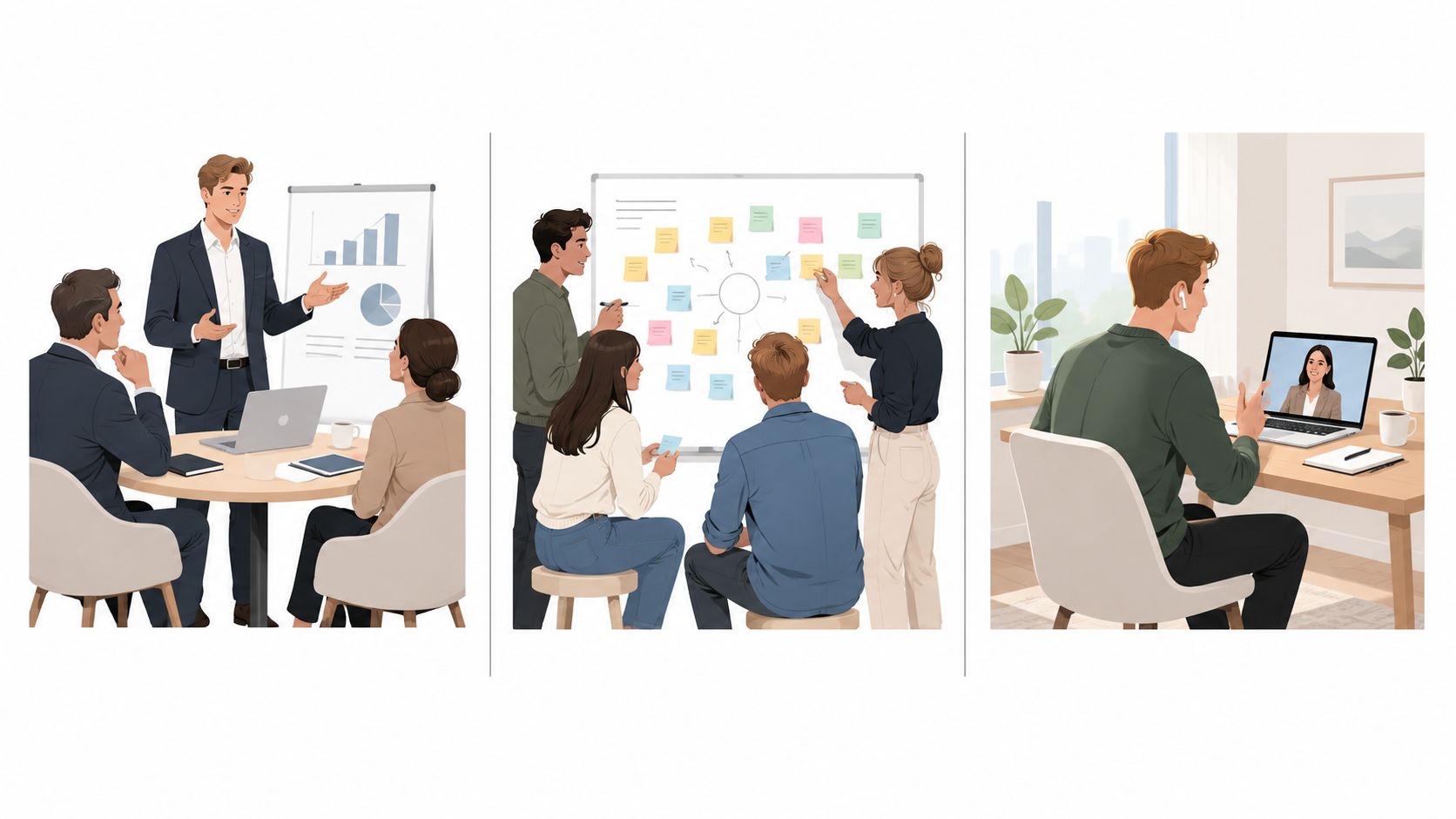
A Jenks entrepreneur hosting a partner pitch
A founder needs to explain a proposal, discuss commercial terms, and bring a remote partner into the conversation. A huddle room or executive-style room is the appropriate starting point, depending on the presentation setup.
The important amenities are a readable display, private conversation, and a remote connection that doesn't require the founder to become the technician. Coffee should support the welcome, not require the host to leave guests unattended.
At Freeform House, curated restaurant and coffee partnerships offer meals and beverages without an extra delivery cost. Confirm ordering arrangements and the underlying food or beverage charges rather than interpreting that convenience as complimentary catering.
A regional executive team working through decisions
An executive group gathering in Jenks needs a boardroom or adaptable workshop setting, chosen around the work rather than status. A leadership review may need a shared display; a planning session may need writable surfaces and space to move.
Build the agenda before choosing the furniture configuration. The strategy offsite agenda guide can help you distinguish presentation time from discussion and decision-making.
Convenience features should solve specific problems. Amazon Hub Lockers may help with eligible package collection, but don't treat them as a receiving service for event freight. A rentable golf cart fleet may support a local outing if the intended use, availability, and operating terms are confirmed.
Host's advice: Keep the working session focused. Add local experiences only when they serve the gathering, not because they're available.
A creative host combining production and community
A Tulsa creative professional planning a recorded conversation followed by an intimate community gathering needs different environments for different tasks. A podcast booth supports recording; a flexible event setting supports guests, refreshments, and conversation.
The Rise loft studio and in-house podcast booth provide creative resources to investigate alongside meeting rooms. Ask about equipment, sound conditions, permissions, scheduling, and whether studio use requires a separate reservation.
For photography, request original images of the actual space and arrange a visit if the setting is central to the project. A 2025 image-authenticity study found that participants used natural lighting and visible imperfections as authenticity cues, a useful reminder that believable interiors don't need synthetic polish.
Choose real photography, not clip-art-style imagery, when documenting the gathering. The room, people, and activity should look recognizably like the experience you're offering.
Your Hourly Meeting Room Checklist
The strongest booking decision is one you can explain plainly: this room fits the work, the guests can use it comfortably, and the written total fits the budget. If you can't explain one of those points, resolve it before paying.
Free Form House is envisioned as a premier, membership-based club in the heart of Jenks, Oklahoma's 10 District downtown. Comparable in concept to the renowned SoHo House, it combines social connection, coworking, and a community hub designed for collaboration. Its relevance to meeting hosts is that broader gathering model, not an assumption that every amenity is included in every reservation.
Copy this into your booking notes
Purpose and fit: The room and configuration support the meeting's actual work.
Guest experience: Arrival, accessibility, parking guidance, and privacy have been addressed.
Remote participation: The conferencing arrangement has been verified for your platform and seating plan.
Time boundaries: Your confirmation distinguishes meeting time from preparation and departure requirements.
Complete price: You have an itemized total and understand any variable charges.
Access rights: Membership, guest permissions, and permitted activities are clear.
Risk and changes: Cancellation, overtime, cleanup, and damage terms are documented.
Accountability: You know the support contact and who can authorize changes.
Choose a working relationship, not just a transaction
If you expect to host regularly, ask about membership before establishing a habit of separate bookings. Familiarity with a venue can be useful: you'll know the access process, the equipment, and which setting suits your guests.
Still, frequency alone doesn't prove membership is cheaper. Compare the actual terms against your expected use, including whether desirable rooms are available when you need them. Don't count an allowance as valuable if you're unlikely to use it.
For an occasional meeting, a permitted on-demand booking is the cleaner choice. You're solving a specific need without adding an ongoing commitment.
My recommendation is straightforward: shortlist by suitability, eliminate rooms with unresolved operational questions, and compare complete written offers. Pay for the environment and support your meeting needs, not the largest table or the lowest number on a listing.
Freeform House brings member meeting rooms, coworking, creative resources, and community gathering space together in downtown Jenks. Visit Freeform House to discuss membership, room suitability, and the current booking terms for your next client meeting, offsite, or creative session.
Comments