10 Content Creation Examples for Freeform House

A member arrives at Freeform House with one idea and leaves with a week of usable content. In the podcast booth, they record a conversation with a local founder. In a sunlit workspace, they capture authentic footage of the team collaborating. Later, they develop a long-form story about the project, then turn the event, interview, and behind-the-scenes material into a campaign for social media and email.
That's the difference between collecting isolated content creation examples and building a practical content system. Freeform House, a membership-based club in the heart of Jenks, Oklahoma's 10 District downtown, gives members credible settings for that work. Its restored 1920s building, four distinct rooms, coworking areas, The Rise loft studio, podcast booth, and community partnerships can support ideation, production, and distribution without making every image look like clip art or a staged stock photo.
The examples below focus on realistic, authentic production. Each one connects a format to its process, strategic purpose, member value, constraints, and repurposing potential. The strongest content won't show a beautiful room. It'll show people doing meaningful work inside it.
1. Member Spotlight Documentary Series
A member spotlight works best when it feels like a story, not an advertisement. Follow an entrepreneur through a working day at Freeform House, from an early planning session to a client meeting, peer conversation, or production block. Ask about the business challenge behind the work, what changed, and what the member is building next.
Short-form documentary clips can show the person working in natural light throughout the restored 1920s building. The Hall of Fame Room, Freeform Room, Executive Room, and Thomas Room each offer a different visual and professional context. The Rise loft studio and podcast booth can support cleaner interviews when the story needs stronger audio or a more controlled setting.
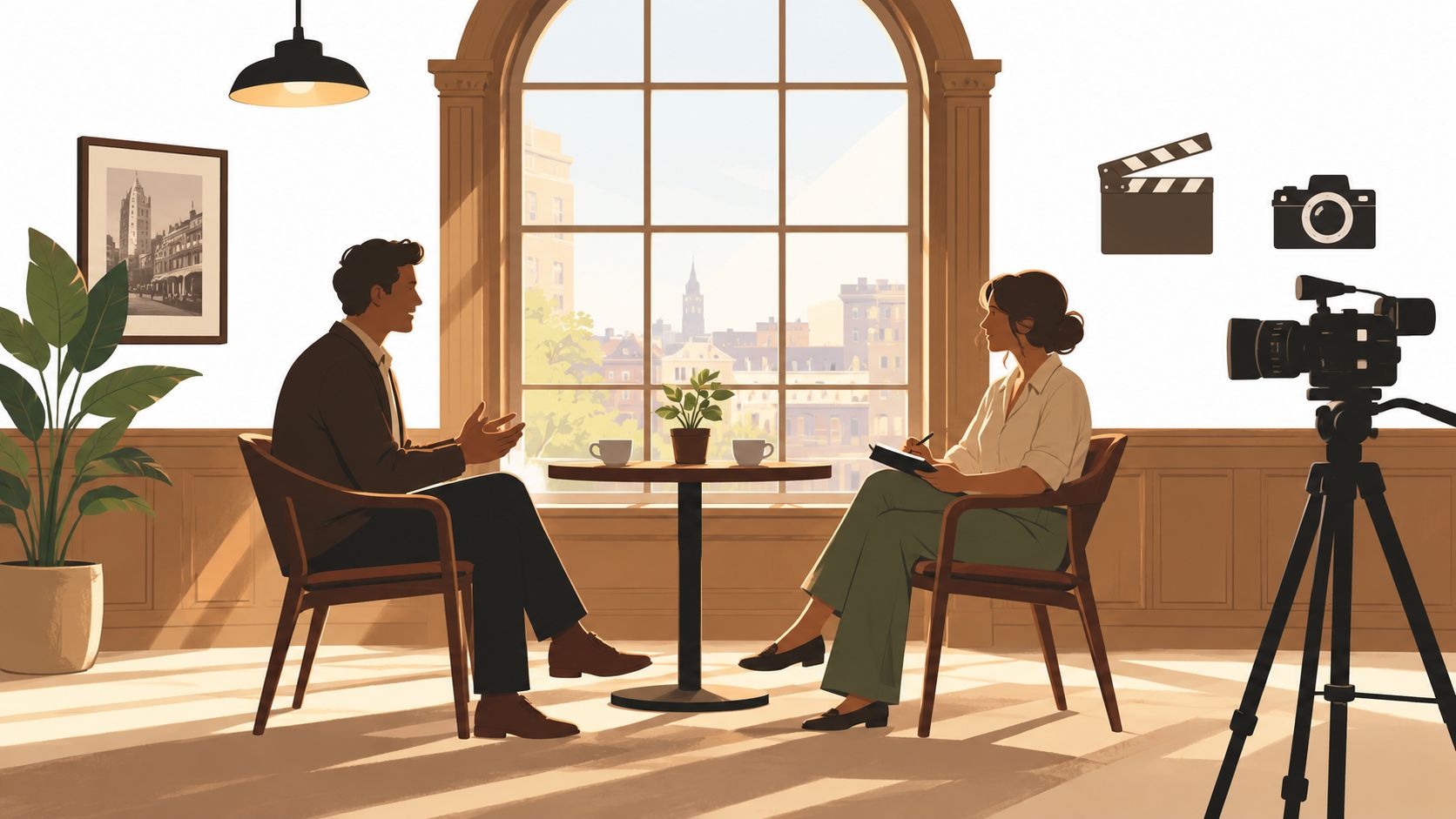
Make the member the subject
Schedule filming during active periods so collaboration appears naturally, but don't interrupt confidential meetings or focused work. Secure written permission before publishing testimonials, workspace footage, or identifiable conversations. Rotate members from different industries so the series reflects the breadth of the community rather than repeating the same founder profile.
A single interview can become a short documentary, several vertical clips, a member newsletter feature, a LinkedIn post, and a quote-led image. The trade-off is that authentic storytelling takes coordination. A heavily scripted interview may be easier to edit, but it usually produces less distinctive content than a conversation built around real work and specific challenges.
Practical rule: Show what the member actually does in the space. A polished portrait builds recognition, but a working session explains value.
2. Behind-the-Scenes Restoration and Architecture Content
The building itself offers a strong editorial subject. Document the restoration journey, architectural details, materials, craftsmanship, and decisions that combine historic character with modern functionality. The story becomes more useful when it explains why an old surface, room layout, or design detail was preserved rather than presenting the property as a decorative backdrop.
Photograph the four distinct rooms separately. Capture wear, patina, natural light, doors, fixtures, textures, and construction details alongside contemporary features such as Amazon Hub Lockers and the golf cart fleet. That contrast gives the audience a reason to look closely. It also helps local readers understand how a historic property can serve modern professionals without losing its identity.
Build a credible local narrative
Research historical details with local historians or preservation organizations rather than guessing from visual cues. Pair a photo essay with a long-form article that explains the building's transformation, then adapt individual details into short videos, carousel posts, and captions for local discovery.
The historic building restoration story can provide a useful destination for readers who want more context. Don't overproduce the visuals. A close-up of original material beside a modern amenity may communicate more than a flawless wide-angle photograph.
This format creates value for Freeform House, local partners, preservation audiences, and anyone interested in Jenks's downtown development. Its limitation is that architectural content can become self-congratulatory if it only praises design. Explain the practical decisions, acknowledge compromises, and show how the finished rooms support meetings, coworking, events, and content production.
3. Event Hosting and Curation Guides
Event content should answer the questions a host asks before booking a venue. How can the room be arranged? Where do guests enter? What equipment is available? How does catering arrive? What happens during setup and breakdown? A useful guide shows the room before guests arrive, during the event, and after the space is restored.
Freeform House can create separate guides for corporate workshops, intimate dinners, wedding celebrations, private gatherings, and hybrid meetings. Use authentic event photography with permission instead of relying only on styled shoots. Show table layouts, seating plans, lighting conditions, technology use, and the way local restaurant partnerships support the experience without extra delivery fees.
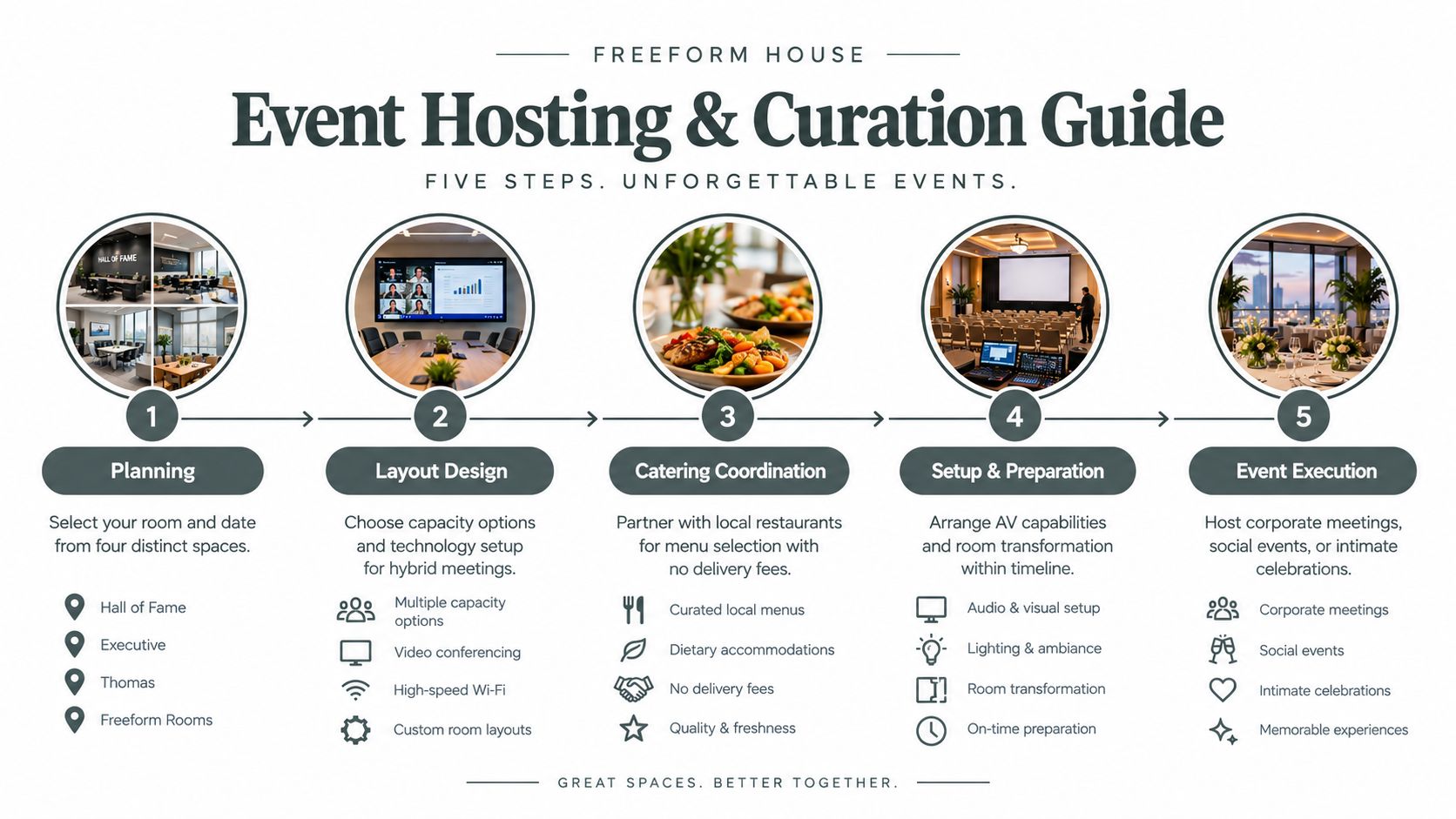
Give the host a realistic production view
A five-step visual timeline can move from planning and room selection through menu coordination, setup, hosting, and breakdown. A written guide should explain what the host needs to decide at each stage. Include hybrid meeting and streaming considerations where relevant, but don't promise technical capabilities that haven't been confirmed for the specific room.
The successful event hosting guide can serve as a deeper resource. A short video can then demonstrate the transformation of a room, while an email version highlights planning questions and a social carousel presents the key decisions.
A venue guide fails when it hides the work. Realistic timelines, candid setup images, and clear limitations build more trust than a gallery of untouched rooms. The best version helps a prospective host picture the event and understand the coordination required to deliver it.
4. Podcast Production and Creator Content Hub Series
The in-house podcast booth gives members a practical way to turn conversations into durable content. A creator series can follow member podcasters from topic selection and guest preparation through recording, editing, publishing, and promotion. The focus should stay on the workflow, not just the microphone and headphones.
Start with interviews featuring creators who already record at Freeform House. Ask how they prepare a guest, manage sound, structure an episode, and decide which clips deserve distribution. Follow with short equipment tutorials, room walkthroughs, and behind-the-scenes footage from The Rise loft studio for members creating photography or video alongside audio.
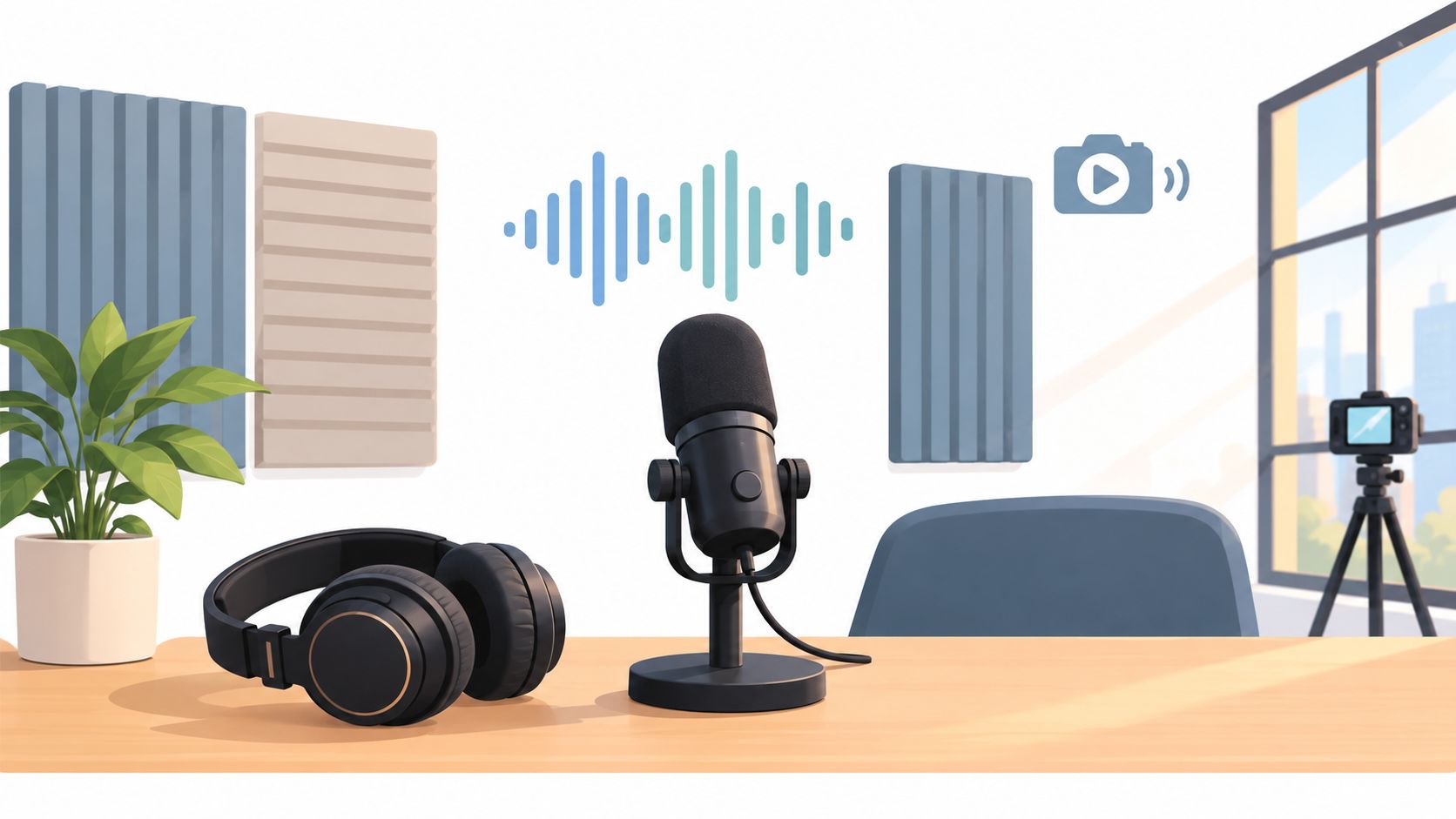
Use the recording as the source asset
One recorded conversation can produce a full episode, a transcript-based article, short vertical clips, quote graphics, an email introduction, and a member spotlight. That approach is more efficient than planning every channel as a separate production. It also keeps the message consistent while allowing the edit, aspect ratio, and opening line to change by platform.
The podcasting guide for beginners can support educational search content, while actual episodes demonstrate the environment in use. Avoid unsupported claims about audio quality. Let listeners hear a sample, explain the recording process, and show the equipment in context.
The main trade-off is production discipline. A booth can improve the recording environment, but it doesn't replace preparation, good interviewing, or thoughtful editing. Creator content should make those decisions visible so a prospective member understands both the resource and the work required to use it well.
5. Daily Operations and Member Experience Vlogs
A daily vlog earns attention through small, recognizable details. A 60 to 90-second episode might begin with morning coffee from a local partner, move through a focused work session, show members collaborating in a shared space, and end with an informal conversation or a golf cart trip through downtown. The footage should feel observed rather than performed.
Film during active periods such as the morning, lunch, and late afternoon, while respecting member privacy and confidential work. Release forms should be part of the routine, not something someone remembers after editing. Rotate the people and rooms featured each week so the series doesn't become a repetitive tour of the same corner.
Create a repeatable editorial rhythm
A recurring title such as “Monday Mornings at Freeform” gives viewers a reason to recognize the series. Trending audio and platform-native edits can help the footage feel current, but sound should never overpower dialogue or make the space seem artificial. Show Amazon Hub Lockers, local meals, coffee service, and golf carts naturally as part of the workday.
This format creates strong awareness because it answers an emotional question: what does membership feel like during an ordinary day? It's less effective as a direct explanation of meeting-room specifications or membership terms. Use captions, a linked landing page, or a follow-up email for those details.
“Authentic” doesn't mean careless. Keep the camera informal, but plan the shot list, permissions, and story before filming.
6. Entrepreneur Workshop and Skill-Share Recaps
A workshop recap can extend the value of an event beyond the people who attended. Photograph the speaker presenting, the audience taking part, and the room in use. Record short participant reflections, then publish the most useful ideas while the topic is still fresh.
Each recap should identify the speaker, explain the business problem discussed, and extract practical advice that a reader can apply immediately. A workshop about pricing, hiring, sales, or creative operations should leave the audience with a clear decision or action, not just a collection of event photos. Speaker bios and contact details can add context when the speaker has approved their inclusion.
Turn event knowledge into assets
Use the distinct rooms and The Rise loft studio as professional visual settings, but let the workshop remain the subject. A recap can become:
A written summary: Organize the main ideas around the audience's problem rather than the event schedule.
A short video: Combine speaker clips, audience reactions, and a direct takeaway.
A downloadable resource: Adapt approved worksheets, prompts, or presentation materials.
A follow-up email: Give attendees a concise summary and invite them to continue the conversation.
Publish promptly while participants are still discussing the material. The constraint is consent and accuracy. Don't publish an offhand comment as an official recommendation, and don't share presentation materials without approval. A careful recap makes Freeform House feel like an active learning community, not just a place where an event happened.
7. Local Partnership and Collaboration Features
Local partnerships give Freeform House a steady stream of stories that connect member convenience with downtown commerce. Feature the restaurant and coffee shop partners behind the meals and beverages delivered to members at no extra delivery cost. Introduce the owners, explain their approach, recommend a member favorite, and show the service as it happens.
Photograph prepared meals, coffee service, packaging, counters, and conversations with the same realism you'd use for a member documentary. Don't make every feature look like a restaurant advertisement. The strongest story explains how the partnership fits into a working day, such as a team ordering lunch before a workshop or a member meeting a client over coffee.
Make the collaboration mutual
A monthly or seasonal spotlight can be published on the Freeform House site, then adapted for the partner's social channels, email list, and in-store promotion. Ask owners what they want customers to understand about their business. Ask members what they order and why. Those perspectives create more useful content than a generic menu summary.
Cross-promotion works only when both sides receive usable assets and clear approval steps. Agree on names, images, menu details, publication dates, and tagging before the shoot. The “no delivery fee” convenience should be stated clearly, but it shouldn't overwhelm the partner's story.
This format also connects the club to Jenks's broader commercial ecosystem. It gives members a practical service while giving local businesses a way to reach an audience already using the downtown space. The trade-off is coordination across organizations, so keep each feature focused and create a repeatable interview and photography process.
8. Remote and Hybrid Work Lifestyle Content
Remote professionals don't need another generic photograph of someone typing beside a plant. They need to see how a workspace handles real work. Show a member taking a client call in the Executive Room, moving into a focused session, joining collaborators in another room, and using the community for a conversation that wouldn't happen alone at home.
The content should address specific frustrations, including isolation, distraction, Zoom fatigue, weak separation between work and personal life, and limited access to professional meeting settings. Document the technology and room setup accurately. Show the podcast booth when audio production matters, and show the different room types when the work shifts from concentration to collaboration.
Match the setting to the work mode
A useful article or video can compare common scenarios:
Focused work: A quiet room and a defined work block help create separation from home.
Client meetings: A professional setting supports calls that require privacy and presentation.
Team collaboration: Shared rooms make discussion and review more natural.
Creator production: The Rise loft studio and podcast booth support photo, video, and audio workflows.
Interview real members about their routines, accountability partners, networking, and collaboration. Don't promise a productivity improvement unless a member can describe a specific experience and approve the claim. The content succeeds when it demonstrates a credible working day, not when it presents coworking as a universal solution.
9. Downtown Jenks and Main Street Revitalization Stories
Freeform House can tell a larger story about what happens when a restored building becomes an active place for work, meetings, dining, and connection. Photograph the property in the context of downtown Jenks, including street activity, neighboring businesses, local partnerships, and members moving between destinations. The building should appear as part of a district, not as an isolated brand asset.
Main Street America describes the Main Street Approach as a practical, adaptable framework organized around economic vitality, design, promotions, and organization in its revitalization framework. That framework gives local storytelling a useful structure. A story can explore how design preserves character, how promotions bring people into the district, how organization supports collaboration, and how economic vitality appears through business activity.
Document impact without overstating it
Interview neighboring business owners, city representatives, local organizations, and members. Use before-and-after photography where it exists, but label the timeline and avoid claiming that one venue caused changes it hasn't measured. Foot traffic, new businesses, jobs, and economic activity require evidence, not assumptions.
Main Street America says it has helped more than 2,000 communities bring economic vitality back downtown while preserving historic character and strengthening community ties, as described on its history of community revitalization. That broader context can explain why local commercial districts matter, while local interviews provide the specific Jenks perspective.
A USDA resource describes Main Street America's preservation-focused work and its technical assistance, national network, conferences, products, and certification resources in its downtown revitalization overview. Use that context carefully. The content should celebrate collaboration without turning community development into an unsupported success claim.
10. Creative Professional Use Case Deep Dives
A use case deep dive follows one creative professional through a complete project. A photographer might use The Rise loft studio for a portrait session, move to another room for a client review, and collaborate with a designer on final assets. A podcaster might record in the booth, create video clips, and host a launch event for the finished series.
Start with the project's actual brief. What needed to be produced? Which space supported each stage? What did the creator bring, and what did the community provide? Document work in progress, equipment decisions, natural lighting, acoustic considerations, revisions, and the final output. That process gives prospective members a practical view of how the resources function.
Show the workflow, not just the portfolio
Use a creator interview to explain the decisions behind the work. Pair the finished portfolio with a studio walkthrough, a tutorial, a short production diary, and a longer article. If the creator produces a podcast, embed an approved episode or excerpt. If they host a launch or exhibition, document the event as another stage of the project.
The best use case includes constraints. A room may suit portraits but require a different setup for video. A podcast booth supports recording, but the creator still needs a strong concept, guest preparation, and post-production. Honest trade-offs make the story more useful than a flawless tour.
This format can become high-value consideration content for photographers, designers, artists, videographers, and podcasters. It also gives members recognition while showing how collaboration can move an idea from planning to production, presentation, and distribution.
10-Example Content Creation Comparison
Topic | 🔄 Implementation complexity | ⚡ Resource requirements | 📊 Expected outcomes | Ideal use cases | ⭐ Key advantage | 💡 Quick tip |
|---|---|---|---|---|---|---|
Member Spotlight Documentary Series | High, multi-session scheduling & editing | High, pro videography, studio time, editors | Strong community trust, membership leads, social shares | Member recruitment, ROI proof, social storytelling | Authentic, narrative-driven member showcase | Film during peak activity; rotate featured members quarterly |
Behind-the-Scenes Restoration & Architecture Content | Medium, research + expert interviews | Medium–High, archival access, high-quality photo/video | Long-term brand differentiation & PR value | Heritage positioning, design audiences, press features | Historic authenticity that differentiates the brand | Partner with local historical societies; document each room separately |
Event Hosting & Curation Guides | Medium, partner coordination & frequent updates | Medium, event photography, AV specs, partner input | High, drives venue bookings and rental revenue | Event planners, weddings, corporate workshops | Direct revenue driver through practical guidance | Photograph real events; include layouts, timelines, and tech specs |
Podcast Production & Creator Content Hub Series | Medium, technical explanations & guest coordination | Medium, studio access, equipment, sound expertise | Moderate, attracts creators, partnerships, backlinks | Podcasters, content creators, studio rentals | Positions Freeform House as a professional content hub | Produce tutorials and feature member podcast episodes |
Daily Operations & Member Experience Vlogs | Low–Medium, regular capture and consent management | Low, handheld video, light editing | High social engagement, FOMO, community visibility | Social platforms, short-form marketing, recruitment | Highly shareable, low-cost authenticity | Film peak hours; secure member release forms in advance |
Entrepreneur Workshop & Skill-Share Recaps | Medium, event coverage and rapid publishing | Medium, recording, editing, speaker coordination | Moderate, builds authority and repeat attendance | Professional development, member education, partnerships | Demonstrates thought leadership and practical value | Publish recaps within 48 hours; extract actionable takeaways |
Local Partnership & Collaboration Features | Low–Medium, partner approval and scheduling | Low, interviews, product photography | Moderate, co-marketing, strengthens member perks | Promoting dining/coffee partners, community engagement | Highlights membership value via local partner perks | Cross-promote with partners; emphasize the no-delivery-fee benefit |
Remote & Hybrid Work Lifestyle Content | Medium, nuanced storytelling to remain authentic | Low–Medium, member interviews, tech demos | High, attracts remote/hybrid professionals | Remote workers, hybrid team leaders, distributed offices | Addresses core remote work pain points and ROI | Show real members on calls; document Wi‑Fi and room setups |
Downtown Jenks & Main Street Revitalization Stories | High, data collection, stakeholder interviews | Medium–High, economic data, long-form media | Moderate–Long term, PR, civic partnerships, investor interest | Mission-driven positioning, community outreach, investor relations | Aligns brand with local revitalization mission | Collect before/after photos and local business testimonials |
Creative Professional Use Case Deep Dives | High, technical demos and creator collaborations | High, studio showcases, gear, production time | High, attracts high-value creative members and partnerships | Photographers, videographers, designers, podcasters | Positions Freeform House as premium creative infrastructure | Document real projects in The Rise loft; feature creator portfolios |
Turn One Production Day Into a Content System
The strongest content creation examples at Freeform House have four qualities in common. They feature real people, show real work, use the building's rooms as functional production settings, and give the audience a clear reason to care. A beautiful space can attract attention, but specific details create credibility. The soundcheck before a podcast, the table arrangement before a workshop, the coffee order before a client meeting, and the restoration choice behind a wall finish all make the story more believable.
Start with one member or one event. Choose the primary audience goal before filming. A member spotlight may build awareness and community recognition. A workshop recap may educate people who missed the event. An event hosting guide may support consideration. A creative use case may help a prospective member understand how the space fits into a real production workflow.
Then define the main format. Don't try to produce a documentary, blog post, email campaign, and complete social package at the same time. Choose the central asset first, then capture supporting material while the people and setting are available.
A repeatable production sequence looks like this:
Select the subject: Choose one member, partner, workshop, event, or creative project.
Set the purpose: Decide whether the piece should create awareness, demonstrate expertise, support an event decision, or explain the member experience.
Plan the capture: Prepare interview prompts, room access, release forms, supporting shots, and a short list of details that must appear.
Record the main asset: Film the interview, document the event, write the guide, or produce the deep dive.
Capture supporting material: Take realistic photographs, vertical clips, room details, quotes, and ambient footage.
Publish the primary piece: Give the audience one complete story rather than scattering unfinished fragments across channels.
Adapt the story: Turn the central asset into social clips, an email, a carousel, a short article, or a member-facing resource.
Review the response: Look at engagement, questions, permission concerns, partner feedback, and member response before repeating the format.
Permissions belong at the beginning, not the end. Members, speakers, partners, and event guests should understand where the content will appear and what it will show. Authenticity doesn't mean publishing private conversations or careless footage. It means showing approved moments with enough context that the audience can understand what happened.
Freeform House's restored building, four rooms, The Rise loft studio, podcast booth, local partnerships, Amazon Hub Lockers, and golf cart fleet give creators more than visual variety. They create practical prompts for stories about work, collaboration, convenience, restoration, and community. Use those features as part of the production workflow rather than as decorative backdrops.
The result is a content system that can be sustained by members, staff, partners, and local creators. One recording day can produce a thoughtful long-form story, an authentic short video, useful images, a newsletter feature, and a reason for the community to return. That's more valuable than a gallery of disconnected posts because each asset reinforces the same underlying message: people do meaningful work here, and the environment helps them move from idea to finished content.
Freeform House offers a members-only club and workspace in downtown Jenks with four distinct rooms, coworking areas, The Rise loft studio, an in-house podcast booth, local food and coffee partnerships, and practical amenities for working and hosting. Visit Freeform House to explore a setting where your next content idea can become a real production, community story, or repeatable publishing system.
Comments