10 Tips for Event Planning That Work

A promising event can become difficult fast. The concept is attractive, the guest list looks right, and everyone likes the venue, but nobody has connected the objective to the budget, the room setup to the guest journey, or the vendor schedule to the event-day handoff. Then small gaps become visible all at once, through late deliveries, unclear responsibilities, crowded registration, or a message that never reaches the people you wanted in the room.
The strongest tips for event planning treat the event as one operating system. Objectives shape the schedule, the schedule controls spending, the venue supports the guest experience, and the follow-up proves whether the work produced a useful result. That discipline matters in a large and increasingly specialized industry. A 2026 industry summary projects the global events industry could reach about $2.5 trillion by 2035, while a separate estimate places the U.S. conference, concert, and live events market at $408.8 billion in 2023, with a projection of $638.5 billion by 2032. G2's event industry statistics roundup also identifies corporate events as 38.76% of global event activity, showing why professional gatherings deserve serious operational planning.
Freeform House makes those decisions tangible. The restored 1920 building in downtown Jenks offers four rooms, a co-working environment, local food and coffee partnerships, The Rise loft studio, and a podcast booth. Use realistic, authentic visuals throughout your planning and promotion. Show genuine venue details, natural light, real people, and actual guest interactions. Avoid clip-art imagery or anything that makes the space feel staged and artificial.
1. Define Clear Event Objectives and Deliverables
Start with the outcome, not the decoration. A product launch, executive retreat, networking mixer, donor gathering, and private celebration may share a venue, but they don't share the same definition of success. Write one primary objective in a sentence, then identify the deliverable that will prove you pursued it.
A software startup using the Hall of Fame Room might define success as securing 15 qualified leads from product conversations. A nonprofit could focus on increasing annual giving by 25%, while an executive team in the Executive Room might use the retreat to leave with approved Q3 initiatives. These objectives affect the room layout, registration fields, staffing, agenda, and follow-up.
Separate the essential from the attractive
Document the objective and share it with every person who controls a decision. Mark secondary ideas, such as a photo wall, live content, or additional entertainment, as optional until the primary result is protected.
Useful deliverables might include:
A written outcome: State what should happen because the event took place.
A measurement plan: Choose the attendance, engagement, lead, donation, retention, or relationship signals that fit the objective.
A baseline: Record the relevant starting point before invitations go out.
Contingency outcomes: Prepare two or three alternative wins if attendance, timing, or programming changes.
Freeform House's membership community can support targeted networking, but access to a warm audience doesn't replace a clear purpose. Invite people because they fit the outcome, not just because they might fill seats. The broader industry is moving toward “proof, not just presence,” with leaders seeking pipeline, deposits, donations, retention, and trust rather than vanity measures such as badge scans, as discussed in Blackthorn's 2026 event industry trends. Define the proof before you commit the spend.
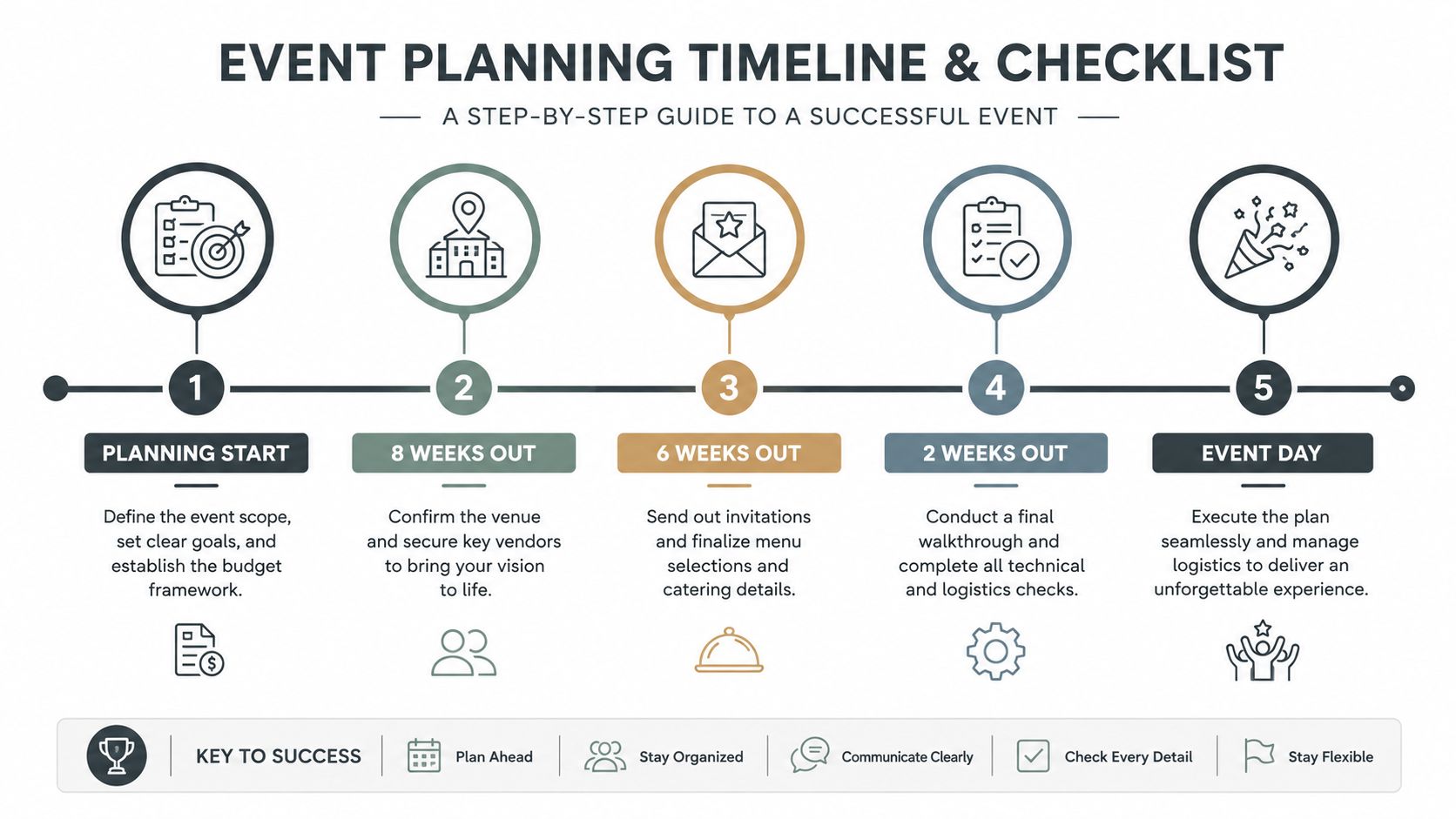
2. Create a Detailed Master Timeline and Checklist
A 40-person executive breakfast in the Thomas Room can lose momentum quickly if registration, catering, speaker preparation, and room access are managed in separate files. Build one visible master timeline backward from the event date. Assign every task an owner, deadline, dependency, and clear definition of done. Venue booking, menu approval, speaker rehearsal, registration launch, and thank-you email should sit in the same system.
Match the planning window to the event's complexity. A 12-week timeline can cover venue confirmation through post-event thank-you notes. A six-week sprint may fit a smaller breakfast. A multi-day workshop in The Rise loft studio and the Freeform Room needs production milestones for each day, supported by one master schedule.
Build around the critical path
The critical path is the chain of tasks that controls later work. Room confirmation affects invitations. The final guest count affects catering. A late speaker bio can hold up promotional material. Record these dependencies early and keep the plan active in Asana, Monday.com, or a shared spreadsheet.
Organize the schedule by phase:
Early planning: Confirm purpose, date, venue, format, budget, and major vendors.
Mid-planning: Launch registration, finalize programming, confirm room layouts, and review supplier needs.
Final preparation: Reconcile attendance, issue the run of show, test technology, brief staff, and confirm access.
Add 15% to 20% buffer time to major tasks so one late approval does not compress every later activity. Hold weekly stakeholder check-ins, with separate time for budget reviews and vendor confirmation. For premium rooms at Freeform House, start booking coordination 8 to 12 weeks in advance when possible. That lead time gives the venue and vendors room to align service, access, and setup requirements.
3. Establish a Realistic and Flexible Budget Framework
A budget should tell you what the event can deliver, not merely record what you've already spent. List venue, catering, audio-visual production, staffing, marketing, insurance, décor, transport, and contingency costs. Then rank each category by its effect on the guest experience and the primary objective.
For example, a $3,500 networking lunch for 30 creative professionals might prioritize food quality, comfortable seating, and a host who can make introductions. A $15,000 gala for 100 guests may justify stronger production and hospitality while limiting decorative elements that don't improve participation. A hypothetical $8,000 executive retreat budget could allocate $5,000 to the venue, $2,000 to catering, $800 to AV, and $200 to contingency, but only if the quoted scope supports the retreat's purpose.
Protect flexibility without hiding waste
Use detailed quotes for major services, compare two or three suitable vendors, and record what each quote includes. A low headline price can become expensive after delivery, staffing, overtime, equipment, or cleanup charges appear.
Freeform House's local restaurant and coffee partnerships can simplify food planning and support a local experience. Included amenities such as Amazon Hub Lockers and golf cart services may also reduce miscellaneous coordination needs. Review the budget every two to three weeks, not just when an invoice arrives.
Practical rule: Spend more on the moments guests feel directly, such as welcome, food, sound, comfort, and useful interaction. Cut decorative detail first when it doesn't support the objective.
A contingency reserve is valuable only when you define what it protects. Use it for a genuine operational change, not for untracked upgrades that should have appeared in the original scope. Event costs are under pressure. One 2026 events report says 58% of planners expect costs to rise by 5% to 14%, which makes disciplined estimating and flexible priorities more useful than optimistic pricing. SchedulingKit's event planning statistics also reports that 78% of organizers consider in-person events their most impactful marketing channel. If the room is doing important commercial work, fund the experience accordingly.
4. Select the Right Venue and Confirm Logistics Early
Venue choice determines more than the backdrop. It controls how people enter, where conversations happen, whether the sound carries, how vendors load in, and whether the event feels intimate or anonymous. Match the building to the guest profile and format before you compare finishes or furniture.
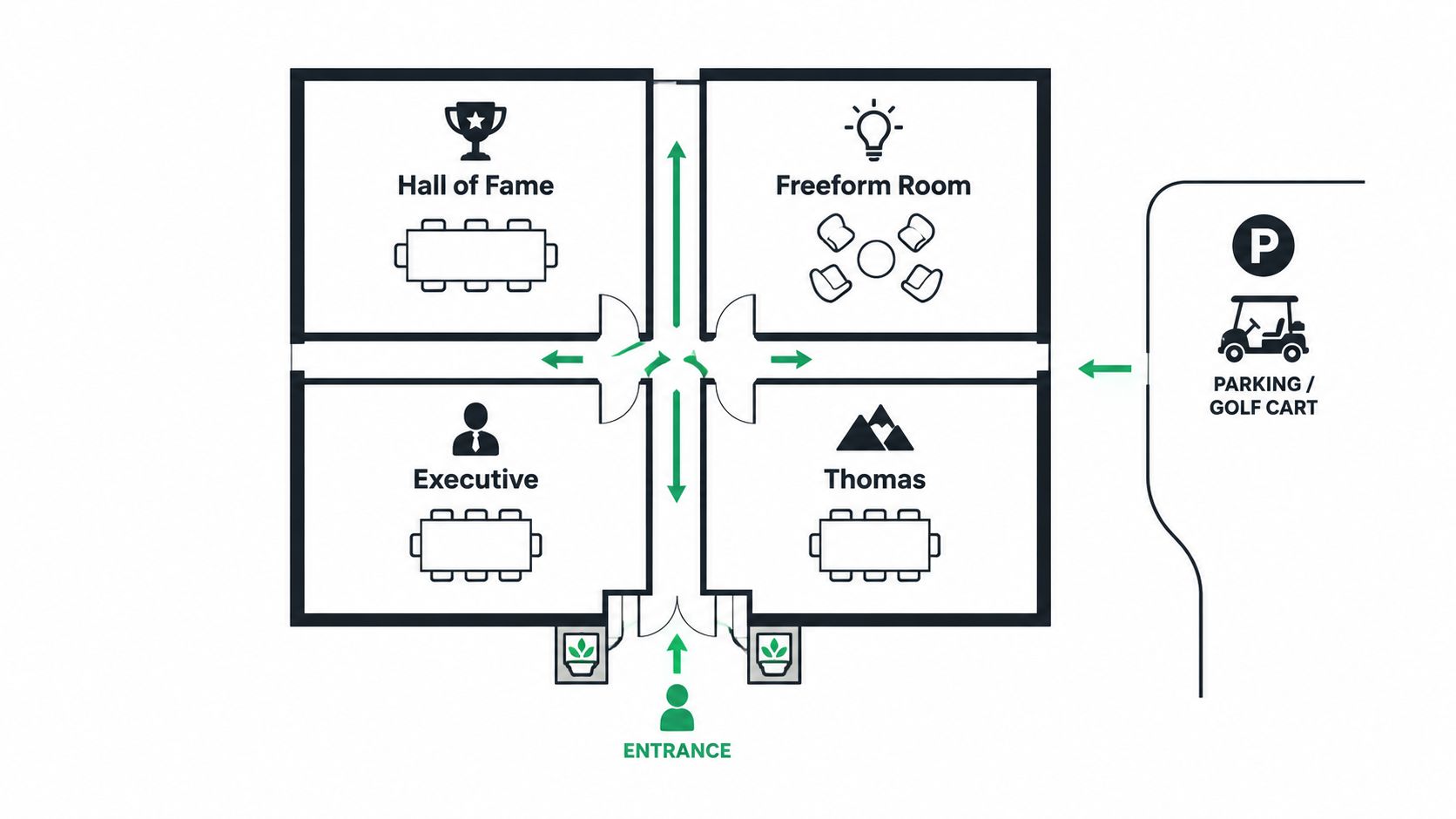
Freeform House's four rooms support different event scales and moods. The Hall of Fame Room can suit a product launch, while the Executive Room may work better for a focused retreat. The Thomas Room offers a more intimate setting, and the Freeform Room can support workshops or collaborative sessions. The Rise loft studio adds a breakout or content-production option, while the podcast booth can support recorded or streamed programming.
Walk the route guests and vendors will use
Visit the space in person, ideally at the same time of day as the event. Check natural and artificial light, acoustics, temperature, power, internet, accessible routes, restrooms, parking, loading access, and setup and breakdown windows. Ask who supports AV, who makes final room changes, and what happens if the event runs late.
Map the guest flow from arrival to registration, food, main programming, breakouts, and departure. A 150-person launch might use the Hall of Fame Room for the main presentation and the podcast booth for live or recorded content. A 40-person retreat could combine the Executive Room with The Rise loft studio for breakout work. A gala might use several rooms for cocktails, dinner, and dancing, but only if transitions remain clear.
Use this guide to choosing an event venue alongside a site visit. A floor plan is useful for testing capacity and flow, but it can't show you how the space sounds when people are speaking or where guests naturally pause.
5. Develop a Comprehensive Vendor Management Strategy
Vendors don't fail only because they lack skill. They fail when the brief is incomplete, the arrival plan is unclear, or two suppliers assume the other one owns the same task. Put every commitment in writing, including deliverables, access times, staffing, payment terms, cancellation conditions, equipment, cleanup, and emergency contacts.
A 100-person wedding may involve a caterer, florist, photographer, DJ, and venue team. A corporate content event in The Rise loft studio may add a photographer and podcaster, each with different lighting, sound, and recording requirements. An executive dinner in the Executive Room needs a detailed handoff between the local restaurant partner and the venue staff.
Give every supplier the same operating picture
Create one shared vendor document with the event schedule, floor plan, guest profile, parking and loading instructions, contact list, and escalation process. Hold coordination meetings four weeks, two weeks, and five days before the event. Ask each supplier for references from two previous clients, then verify that the examples resemble your event rather than just looking impressive.
Clarify who can approve a change on event day. Confirm:
Arrival and access: Specify load-in, parking, storage, and setup windows.
Service boundaries: State who supplies tables, linens, power, signage, cleanup, and guest support.
Failure response: Record backup contacts and the first action if a supplier is delayed.
Content permissions: Confirm whether photographs, recordings, and social content can be shared.
Local restaurant and coffee partnerships at Freeform House can reduce the number of separate food-service handoffs, but the menu, timing, dietary requirements, and serving method still need written confirmation. Use event logistics management guidance to keep the operational details in one place. A polished contract is useful. A shared, current schedule is what makes that contract workable.
6. Design an Intentional Guest Experience and Flow
Guests experience the event as a sequence, not as a list of services. They arrive, look for direction, decide whether the room feels welcoming, assess who is available to speak with, and form an opinion before the first formal segment begins. Design that sequence on paper before you finalize the furniture.
A product launch could move from cocktails and one-to-one conversations into a Hall of Fame Room presentation, followed by interactive demonstrations. A creative workshop might use the Freeform Room for instruction and The Rise loft studio for collaboration. A donor gathering could begin with a welcoming cocktail zone, move into dinner in the Thomas Room, and finish with a larger celebration.
Design zones and energy changes
Create distinct areas for arrival, the main gathering, breakouts, organic networking, and departure. Use greeters and wayfinding where guests must make a decision. Keep quiet or retreat spaces available for people who need a break from conversation and noise.
The balance between structured content and informal interaction should reflect the event objective. A networking event needs enough guided introductions to prevent awkwardness, but too much programming turns it into a lecture. A workshop needs protected teaching time, but participants also need space to apply the material with one another. Freeform House's co-working and lounge areas can create useful transition zones instead of forcing every interaction into the main room.
People remember how easy it was to enter, participate, find someone, and leave with a clear next step.
Use natural energy rhythms. Place heavier content after guests have settled, and put networking at the beginning or end when conversation feels less disruptive. Build in time for food, movement, questions, and unexpected connection. A visually attractive room won't compensate for poor acoustics, confusing signage, or an agenda that never gives people permission to interact.
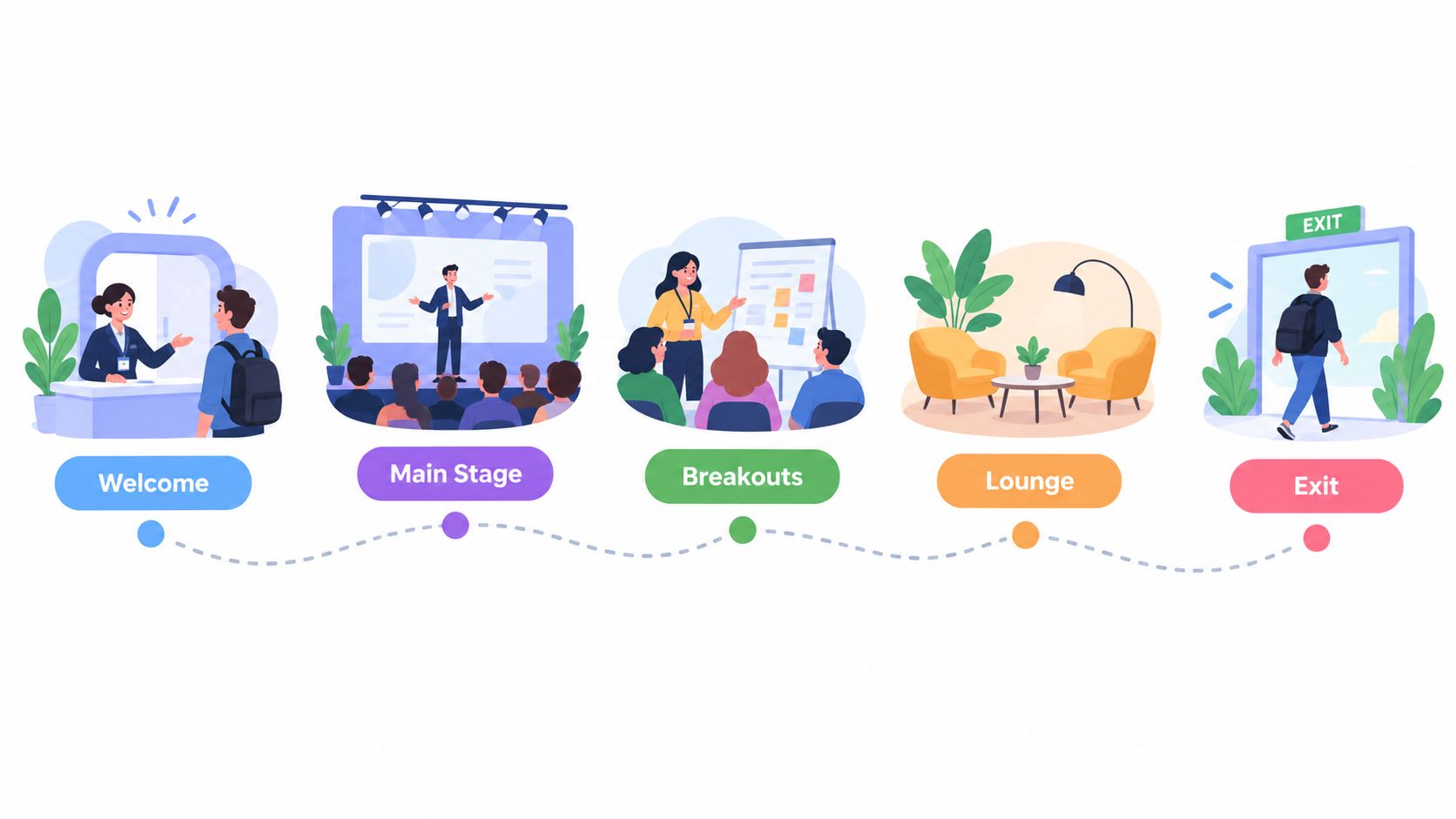
A short visual reference can help the team discuss transitions before event day.
7. Implement Strategic Marketing and Promotion
Promotion works best when the message answers a specific question for a specific audience: why this event, why now, and why should this person attend? A local entrepreneur may care about useful introductions. An executive may care about focused discussion and a reliable setting. A creative professional may respond to collaboration, production resources, and authentic community.
For a major gala, begin with a save-the-date, then use a segmented email sequence, social content, partner promotion, and direct outreach. For a smaller breakfast, a short campaign can combine the Freeform House member email list, LinkedIn invitations, and local business groups. A workshop series needs more than a date announcement. Show the curriculum, speaker credentials, practical outcomes, and the networking opportunity.
Use the venue as part of the message
Freeform House offers a restored historical space, modern co-working functionality, local partnerships, The Rise loft studio, and an in-house podcast booth. Those features should appear only when they matter to the audience. A content-production event can highlight the booth. A professional offsite can emphasize workspace and room flexibility. A community gathering can focus on connection and local hospitality.
Launch promotion 8 to 10 weeks before a major event and 3 to 4 weeks before a smaller gathering. Treat those as planning windows, not guarantees. Create separate messages for professionals, executives, and creative audiences rather than sending one generic invitation to everyone.
Your landing page should state the date, location, audience, format, agenda, access information, and registration action without forcing visitors to search. Use behind-the-scenes photographs that show genuine people and venue details. Avoid clip art, synthetic-looking scenes, or overly polished images that misrepresent the experience. Adobe recommends a flexible shot list, clear client expectations, and a check-in with the planner before an event in its event photography guidance. Those same habits improve promotional content.
8. Establish Clear Communication Protocols and Contingency Plans
A contingency plan is useful only when someone knows who can activate it. Name the decision-makers, define their authority, and give staff a communication channel that works during setup and live programming. A group text may suit a small gathering. Slack or radios may be better when several rooms and production teams are active.
Start with the risks most likely to affect the event. These may include late vendors, no-shows, technical failures, weather, staff absence, speaker cancellation, catering delays, and an agenda that runs over time. Write the first response, the owner, the backup option, and the point at which the team changes course.
Keep the response simple under pressure
Prepare alternatives for the five to ten most likely risks rather than creating a long document nobody can use. A 150-person gala might need a weather alternative, a backup caterer, and a clear technical support protocol. A multi-day workshop might need substitute activities if a speaker cancels. A corporate retreat should have an offline agenda and a way to continue if presentation technology fails.
Assign roles such as timeline keeper, vendor coordinator, guest services lead, and technical support. Confirm backup power, internet, and AV capabilities with Freeform House. Print the run of show, floor plan, emergency contacts, and key instructions so the team can operate if a check-in system or shared document becomes unavailable.
Brief staff and vendors before doors open. They don't need every planning discussion. They do need to know who makes decisions, where guests should go, how to report an issue, and what the fallback looks like. A calm team protects the guest experience better than a complicated plan that nobody remembers.
9. Leverage Data and Technology for Efficiency and Personalization
Technology should remove friction, not add another screen to manage. Select registration, ticketing, check-in, agenda, polling, messaging, or CRM tools according to the operational problem you're solving. Event management software has become mainstream, with 80% of professional event planners in one 2026 survey reporting reliance on some form of it, while another survey found 71% of respondents weren't currently paying for event planning software and 42% were likely or very likely to buy within six months. Business Research Insights' event planning service market coverage shows why buyers should test workflow value rather than chase features.
For a 200-person conference, an event app might hold the agenda, speaker profiles, networking tools, and live polls. At a corporate event, Freeform House's podcast booth could record a keynote for internal distribution or future marketing. At a networking event, table QR codes could link to speaker information, sponsor details, or a post-event feedback form.
Collect only data you can use
Ask for name, title, company, interests, dietary needs, accessibility requirements, and other details that change the experience. Explain why you're collecting them and protect the information after the event. CRM and marketing integration matters because 79% of organizers already have their event platform integrated with those systems, according to G2's event planning software overview. That connection can reduce manual list handling and improve follow-up.
Test registration and AV two weeks before the event and again two days before it. Prepare printed attendance lists and an offline check-in process. Use the podcast booth and live content only when production quality and consent are clear. Technology can extend the life of an event, but a simple, reliable system usually serves guests better than an ambitious stack that fails at the door.
10. Execute Flawless On-Site Management and Adapt Responsively
Event day rewards attention more than optimism. Assign named roles before guests arrive, with a one-page brief covering responsibilities, decision authority, contact details, and items to monitor. A 150-person gala may need door greeters, coat check, bar attendants, table floaters, technical support, and a guest services lead.
Brief staff two hours before doors open. Walk the entry route, registration area, bathrooms, food stations, breakout rooms, emergency exits, and vendor access points. State the event objective, schedule, pressure points, and adjustments staff may make without waiting for approval.
Watch the room, not only the clock
A 40-person executive breakfast can remain on schedule while guests struggle to hear, arrive in waves, or sit with familiar contacts. A roving monitor can identify those problems and adjust seating, introductions, food timing, or presentation length. At a multi-day workshop, gather feedback after each session and revise the next block if the pace or format is failing.
Give staff clear boundaries for handling small issues. They may move a chair, guide a guest to a quieter space, shorten a speech, skip an activity, or ask the caterer to hold a course. Delegating these decisions keeps supervisors available for larger risks and prevents minor disruptions from reaching guests.
The service standard is calm, gracious handling when plans change. A short delay should come with a clear update, while a room or schedule change needs visible guidance at the point of confusion.
Freeform House staff should receive an event-specific briefing covering the rooms, community elements, content-production plans, and guest priorities. Review AV equipment rental information before the technical walkthrough, then confirm equipment, access, and backup contacts on site. Debrief the team within 24 to 48 hours, recording decisions, incidents, and guest feedback while details remain clear. What matters is how quickly the team adapts without passing operational friction to guests.
10-Point Event Planning Comparison
Item | Implementation Complexity 🔄 | Resource Requirements ⚡ | Expected Outcomes ⭐📊 | Ideal Use Cases | Key Advantages & Tips 💡 |
|---|---|---|---|---|---|
Define Clear Event Objectives and Deliverables | 🔄 Medium, stakeholder alignment and goal setting | ⚡ Low–Medium, mainly time and planning effort | ⭐⭐⭐⭐ 📊 Clear metrics, focused decisions, reduced scope creep | Corporate retreats, launches, donor events | Aligns budget/ROI; tip: document objectives and set baseline metrics |
Create a Detailed Master Timeline and Checklist | 🔄 High, dependency mapping and ongoing monitoring | ⚡ Medium, PM tools, regular oversight | ⭐⭐⭐⭐ 📊 Fewer last-minute issues; coordinated vendors | Large galas, multi-room events, multi-day workshops | Prevents scrambling; tip: use PM tools and build 15–20% buffers |
Establish a Realistic and Flexible Budget Framework | 🔄 Medium, requires market research and updates | ⚡ Medium, vendor quotes, financial modeling | ⭐⭐⭐⭐ 📊 Controlled spending; prioritized guest experience | Any event with budget constraints or ROI focus | Prevents overruns; tip: get 2–3 quotes and include 10–15% contingency |
Select the Right Venue and Confirm Logistics Early | 🔄 Medium, site visits and technical checks | ⚡ Medium, deposits, coordination with venue | ⭐⭐⭐⭐⭐ 📊 Strong venue fit, technical readiness, brand alignment | Product launches, hybrid events, scalable gatherings | Venue features reduce vendor burden; tip: visit in person and confirm AV early |
Develop a Comprehensive Vendor Management Strategy | 🔄 High, contract detail and multi-party coordination | ⚡ High, vetting, meetings, backup vendors | ⭐⭐⭐⭐ 📊 Reliable execution; fewer vendor failures | Weddings, catered galas, events with many vendors | Written SLAs and backups; tip: centralize contracts and hold coordination meetings |
Design an Intentional Guest Experience and Flow | 🔄 Medium, creative mapping and testing | ⚡ Medium, signage, staffing, sensory design | ⭐⭐⭐⭐⭐ 📊 Higher engagement, referrals, improved networking | Networking events, demos, interactive workshops | Memorable experiences drive referrals; tip: map guest journey and create distinct zones |
Implement Strategic Marketing and Promotion | 🔄 Medium, multi-channel planning and timing | ⚡ Medium, content, ad spend, outreach | ⭐⭐⭐⭐ 📊 Increased awareness and targeted attendance | Public events, ticketed galas, member-driven gatherings | Builds momentum; tip: segment audiences and start promotion 8–10 weeks out |
Establish Clear Communication Protocols and Contingency Plans | 🔄 Medium, scenario planning and role clarity | ⚡ Low–Medium, documentation and briefings | ⭐⭐⭐⭐ 📊 Faster issue resolution; consistent decisions | Multi-room events, weather-sensitive or high-risk events | Reduces confusion in crises; tip: assign decision-makers and use real-time channels |
Leverage Data and Technology for Efficiency and Personalization | 🔄 Medium, platform integration and testing | ⚡ Medium, tech tools, setup, staff training | ⭐⭐⭐⭐ 📊 Better personalization, analytics, and extended reach | Conferences, hybrid events, content-driven gatherings | Enhances engagement and measurement; tip: test tech twice and safeguard data |
Execute Flawless On-Site Management and Adapt Responsively | 🔄 High, real-time coordination and rapid adaptation | ⚡ High, trained staff, roving monitors, backups | ⭐⭐⭐⭐⭐ 📊 Smooth guest experience and quick problem resolution | Large galas, client-facing events, high-expectation functions | Human execution defines success; tip: brief staff 2 hours prior and empower decisions |
Close the Loop While the Event Is Fresh
The event isn't finished when the last guest leaves. It finishes when you know what happened, what it produced, and what should change before the next booking. Return to the objectives you wrote at the beginning. Reconcile actual attendance and spending against the plan, then connect the results to the relevant outcome, whether that's qualified conversations, donations, internal decisions, content use, or future attendance.
Separate evidence from impressions. A packed room may feel successful, but it doesn't automatically mean the right people attended or that the program created useful relationships. Compare registration with attendance, review the quality of conversations or leads, track follow-up actions, and identify where guests dropped out of the intended journey. For events designed to generate commercial or community value, first-party data and real-time dashboards are becoming more important because organizers need clearer attribution rather than surface-level activity, as outlined in Blackthorn's coverage of 2026 event trends.
Collect feedback while the experience is recent. Ask focused questions about arrival, registration, room comfort, food, sound, pacing, networking, accessibility, and the most useful moment. Give vendors and staff their own debrief questions. Guests may report that the agenda was valuable while staff identify an overloaded registration table or a difficult load-in route. Both perspectives belong in the record.
Turn observations into a reusable event record
Thank attendees and vendors promptly, and make the next step clear. Send relevant photos, recordings, resources, or introductions with appropriate consent. If the podcast booth captured a keynote or conversation, create a distribution plan instead of allowing the content to disappear in a folder. Authentic event photography should show the space as it felt, including real interactions and useful details. Tripleseat's event-space photography guidance recommends varied angles, realistic wide shots, visible guest flow, and removing distracting items such as cables, storage bins, and folding carts.
Record the operational lessons before the team moves on. Note which room configuration supported conversation, where sound or lighting needed adjustment, how catering timing worked, whether signage was clear, and which vendor handoffs caused friction. Save the final floor plan, run of show, supplier contacts, actual costs, attendance notes, and approved content in one location.
Freeform House can support more than a single booking. Its four rooms, co-working environment, community, local restaurant and coffee partnerships, The Rise loft studio, and podcast booth can serve recurring meetings, workshops, celebrations, executive offsites, and professional connections. The membership-club model also shows how social programming and workspace access can coexist. For comparison, Soho House says members worldwide can book more than 2,400 monthly events and experiences, while Soho Works limits hot-desking membership to the member's local coworking space, as described on the Soho House website. The practical lesson is to treat a venue as an ongoing platform when its spaces and community fit your event calendar.
The best event planning system becomes more valuable after each use. Keep the objectives, improve the timeline, refine the budget, update vendor instructions, adjust the guest journey, and preserve the content that extends the event's value. A good gathering creates a useful experience once. A disciplined operating system helps you create the next one with greater clarity.
Freeform House offers four distinct rooms, co-working space, local food and coffee partnerships, The Rise loft studio, and an in-house podcast booth for professional and social gatherings in downtown Jenks. Use it as a practical setting for testing the planning system in this guide, then visit Freeform House to explore the space and plan your next event.
Comments