7 Local Networking Events in Jenks and Tulsa

You need useful local contacts, but you don't need another room full of vague introductions, recycled elevator pitches, and people who disappear the next morning. Most professionals in Jenks and Tulsa aren't looking for “more networking” in the abstract. They're looking for the right format. Sometimes that means a curated membership environment. Sometimes it means civic access, founder density, or a steady referral cadence.
This roundup compares seven local networking events and platforms by the kind of relationship you want to build, not just by popularity. The mix spans Jenks and Tulsa, with options for executives, founders, young professionals, small business owners, and service firms that depend on repeat introductions. Freeform House also belongs in that conversation as a planned 2026 members-only club and workspace in downtown Jenks's 10 District, combining a community hub, coworking areas, meeting rooms, creative production spaces, and private-event support.
Before you go, confirm the current schedule, location, eligibility, and registration details on each organizer's own website. Local calendars change, guest policies shift, and the best networking outcome usually starts with showing up to the right room on the right night.
1. Freeform House
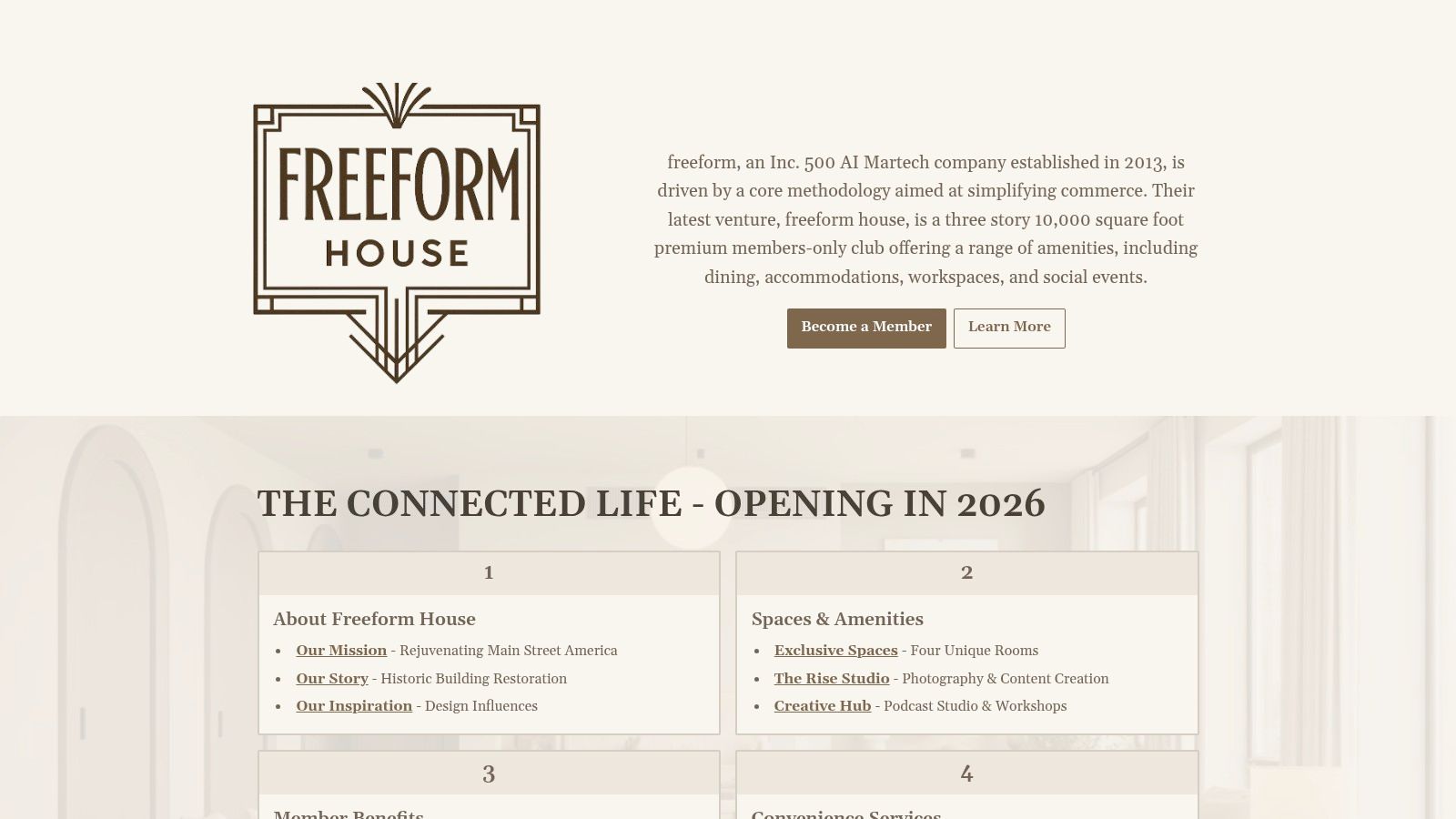
A common local scenario looks like this: you meet someone promising at a large Tulsa event, then struggle to find a quieter place in Jenks to continue the conversation, host a follow-up, or bring a small group back together a week later. Freeform House is interesting because it is built for that second step.
Planned for 2026 in downtown Jenks's 10 District, Freeform House is a members-only club and workspace designed around repeat contact rather than one-night visibility. The concept centers on four bookable rooms, coworking areas, and production spaces inside a restored three-story building. For readers who want curated membership relationships instead of broad civic access or open meetups, that makes it a distinct option in this roundup.
Where Freeform House fits best
Freeform House works best as a local base for relationship maintenance. It suits consultants, agency owners, operators, creatives, and small teams who benefit from seeing the same people often and hosting in a setting that feels more intentional than a coffee shop.
The practical advantage is concentration. A member can work onsite, hold a client meeting, record content in the podcast booth or loft studio, host a dinner or private session, and stay within one downtown footprint. That setup cuts the usual friction of moving between venues, especially for people trying to turn first introductions into ongoing business relationships.
Its location helps. The 10 District is a walkable downtown area with restaurants, retail, and active street life, as described by Jenks Downtown and the 10 District. For networking, that means better odds of casual follow-up before or after a scheduled meeting.
Best use: Use Freeform House for curated member relationships, small hosted gatherings, and follow-up conversations that need more context than a public mixer can provide.
Real trade-offs
This model will not fit every networking goal. Membership is private, pricing is handled through consultation, and the format favors small to mid-sized interactions over mass exposure. If the immediate objective is meeting the highest number of new local contacts in one night, chamber programming or a public startup event will usually produce more reach.
Freeform House makes more sense when quality of contact matters more than volume. It also gives Jenks-based professionals a practical attendance base closer to home, which is useful if they want to host locally instead of driving into Tulsa for every meeting.
The downtown setting also fits the city's planning framework. Jenks's Downtown Core District supports mixed-use, pedestrian-oriented activity, including commercial, office, entertainment, and multifamily uses under the Jenks downtown zoning code. That makes the private club, coworking, and event-venue combination a logical match for the area rather than a one-off concept.
2. Tulsa Regional Chamber Events and Councils
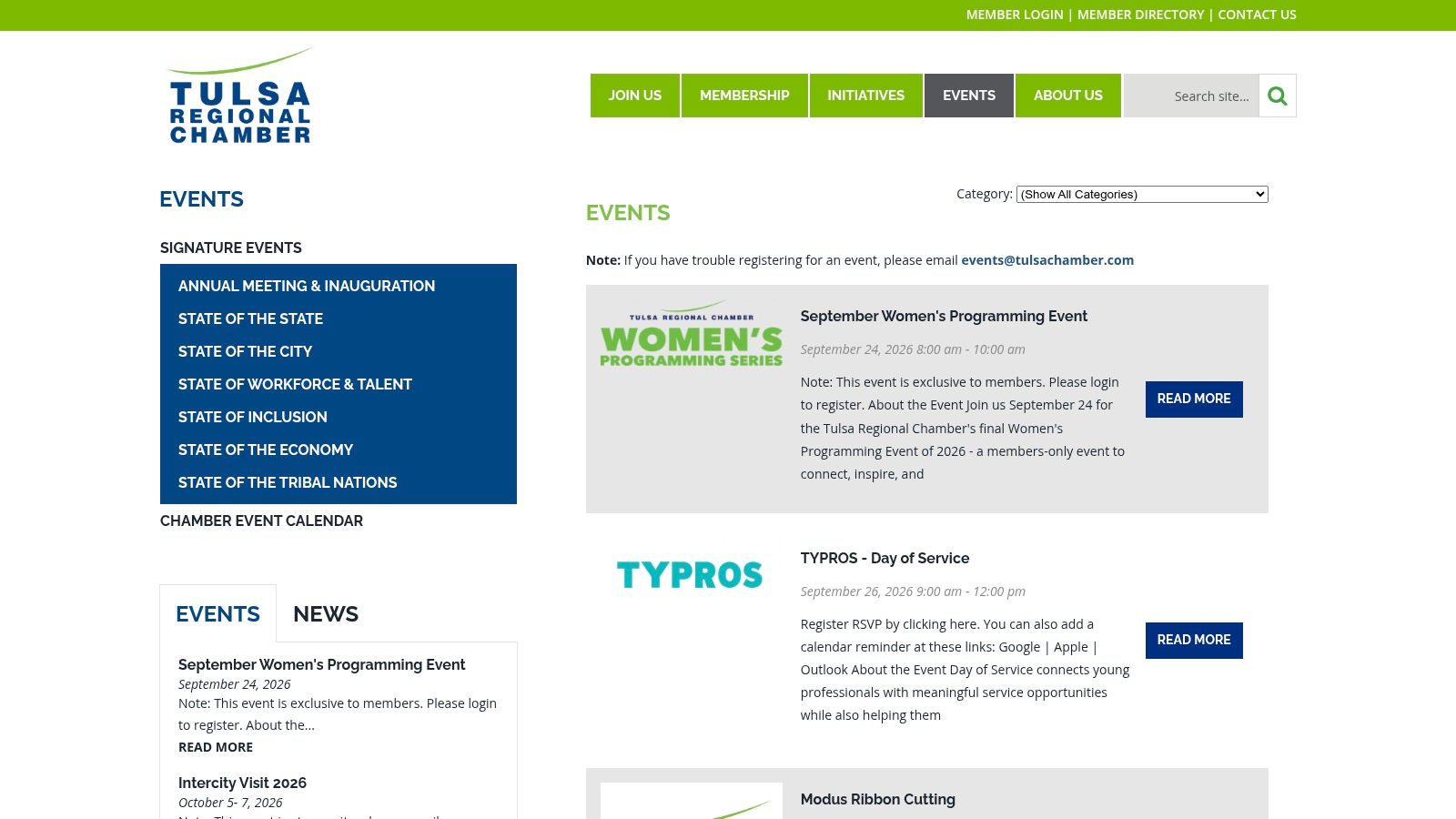
When the goal is broad business access, the Tulsa Regional Chamber is usually the first serious stop. Its calendar spans mixers, ribbon cuttings, policy conversations, and larger signature events, which means you can choose between quick visibility and more formal civic-business rooms depending on what you need that month.
This format is best for owners and operators who want to meet decision-makers across industries, not only peers in their niche. If you sell to established local companies, need city-level context, or want introductions that sit closer to economic development than social networking, chamber programming tends to outperform casual meetups.
Where the Chamber works best
The Chamber is useful because it gives you multiple lanes. Member Mingle works for lighter touch relationship-building. Councils and issue-driven programming work better when you need industry relevance or a reason to follow up beyond “nice meeting you.”
That matters because event design shapes outcomes. A study of trade show attendees found people typically followed up with only 20 to 30% of the contacts they made after an event, which is a reminder that a crowded room alone doesn't produce relationships through research on networking value at trade shows. Chamber events tend to do better when you enter with a clear reason for being there.
Go in with one target group in mind. Referral partners, civic contacts, or prospects. Trying to “meet everyone” usually produces a stack of weak follow-ups.
A useful prep angle is thinking through what kind of professional networking matches your business model before you register. This short guide on local business networking is a good frame for that.
For current programming, use the Tulsa Regional Chamber events calendar.
3. TYPROS
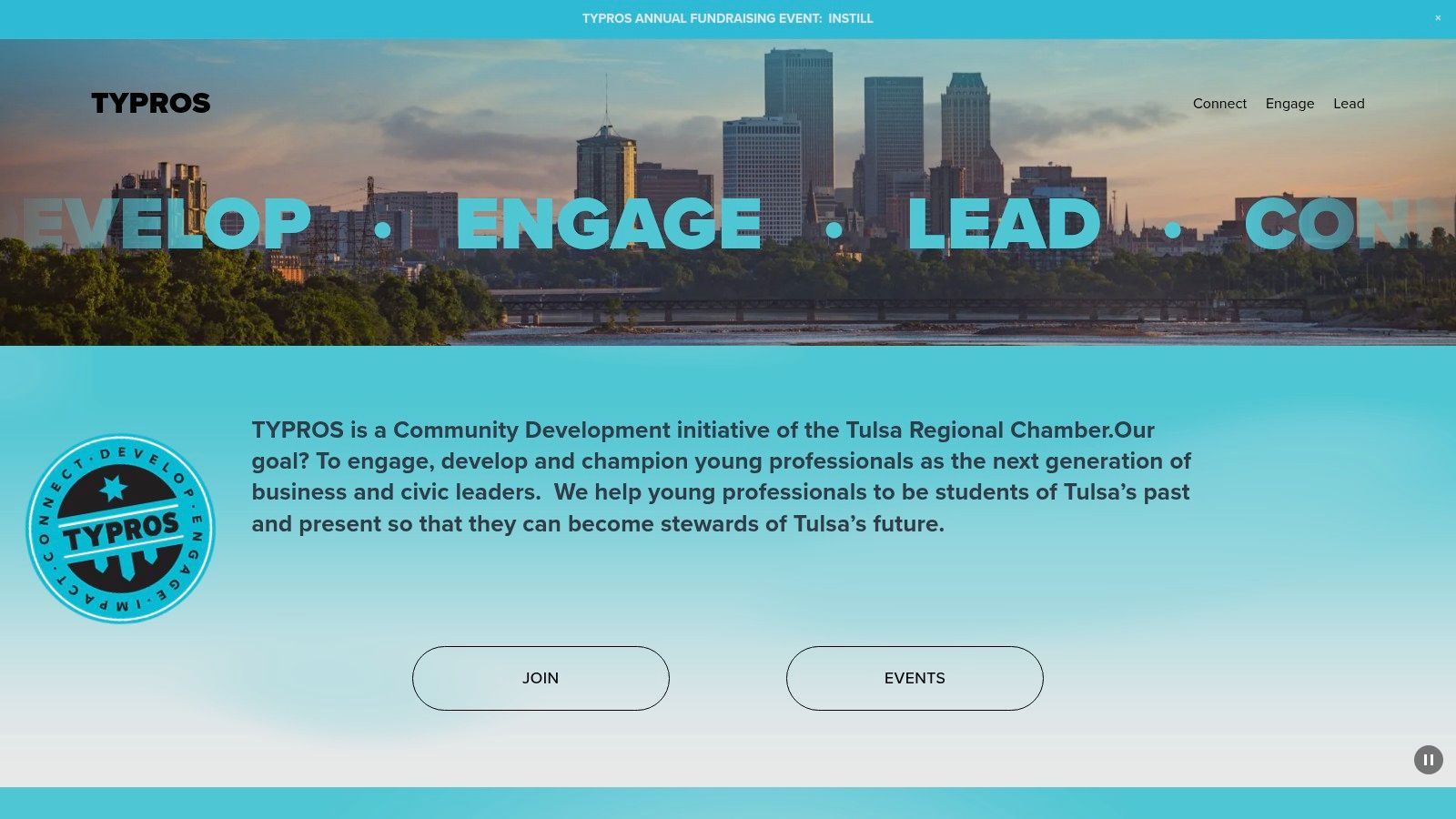
TYPROS is the easiest local option to recommend when someone says, “I need to start showing up somewhere consistently.” Free membership, recurring events, and a strong peer-community feel make it a practical on-ramp for people who want momentum more than prestige.
Its sweet spot is professionals ages 18 to 40 who want recurring contact with other ambitious locals. Pub Club, leadership programming, civic involvement, and service projects create more natural repeat interactions than a single annual event ever will.
Why recurring peer contact matters
TYPROS works because it lowers the pressure. You're not walking into a room where every conversation has to become a client lead. You're building local familiarity over time, which is often how collaborators, referral partners, and future hires show up.
That also answers a common objection. Many people assume networking problems come down to confidence, but recent Freeman research found 40% of NowGen attendees say networking feels too salesy, 40% say it feels awkward, and 30% say they aren't good at starting conversations through the Freeman Summer 2025 networking report. TYPROS-style formats often work because they reduce that pressure rather than demanding polished sales behavior.
If you want a simple primer before attending, this piece on what professional networking is gives a solid baseline.
Best for peer growth: Strong fit for early- to mid-career professionals building a local base.
Best attendance strategy: Go more than once. The value compounds when people recognize you.
Less ideal for direct selling: Some events skew more social or civic than revenue-driven.
For the current calendar and membership details, visit TYPROS.
4. Gradient Innovation Hub Events
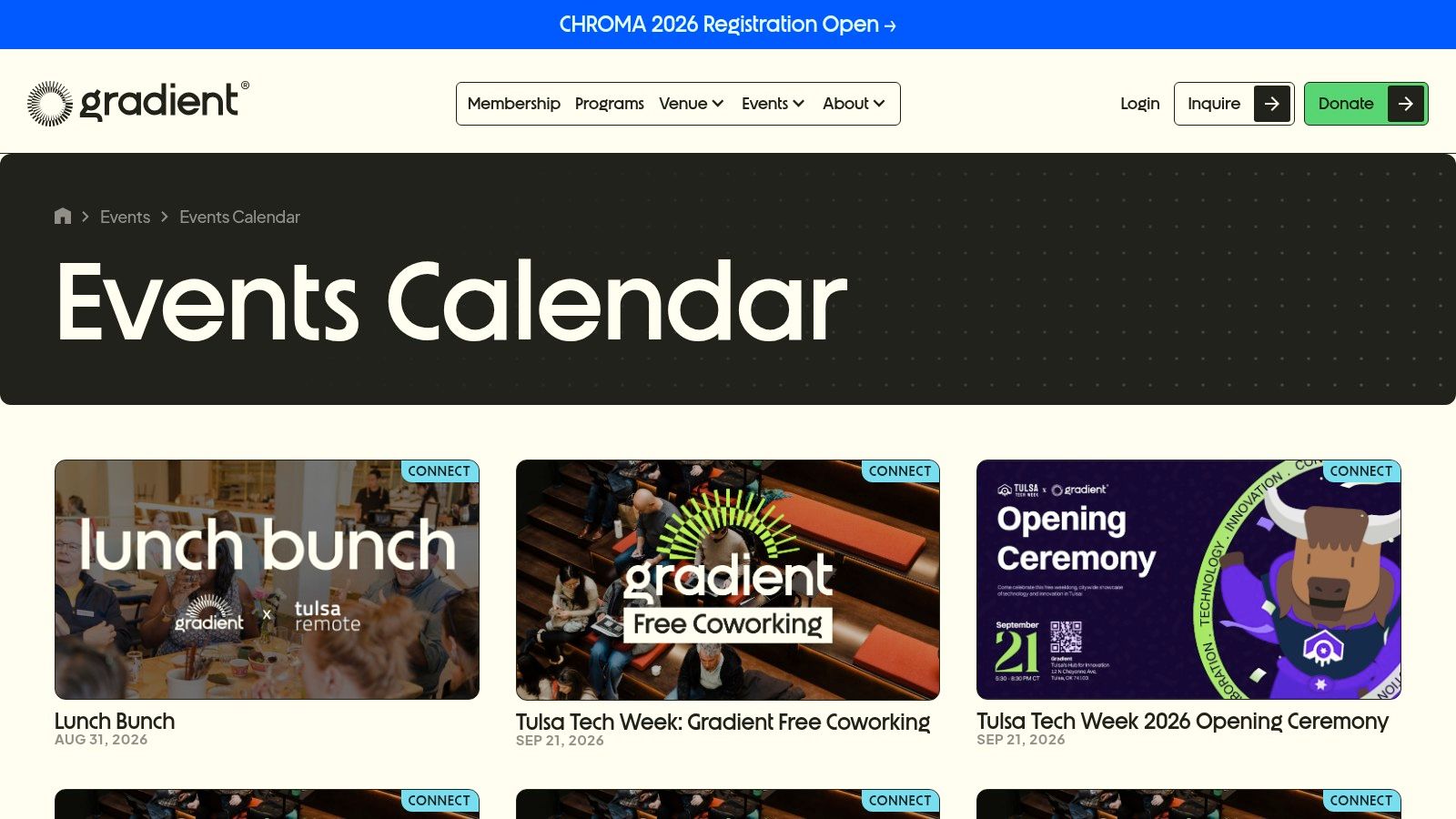
Gradient is the room to choose when you want startup density. Founders, operators, investors, ecosystem partners, and people building new products tend to pass through its event calendar, which gives it a different rhythm than chamber or referral groups.
If your work lives near software, venture, product, innovation programs, or startup support, Gradient is usually more efficient than general local networking events. You'll hear sharper questions, get more traction-focused conversations, and spend less time explaining your business model to the room.
What makes it useful
Gradient benefits from being both a workspace and an event platform. That overlap matters because relationships can continue beyond a single evening event. Day passes and membership options also help if you want to turn occasional attendance into regular visibility.
Coworking itself has practical value for this kind of relationship-building. A 2023 survey cited by Freeform House reported that 56% of coworking operators said coworking helped members build professional relationships, alongside broader growth and productivity benefits through The Ten District feature on coworking and community. That doesn't prove every coworking hub is equal, but it does support the basic model.
Working rule: If you want startup introductions, pick rooms where people already return to work, meet, and build. One-off pitch nights rarely carry the whole load.
For people comparing startup-oriented venues and collaboration spaces, this overview of the accelerator space adds useful context.
Use the Gradient events calendar for upcoming programs, passes, and registration.
5. The Root Coworking Community Events Series
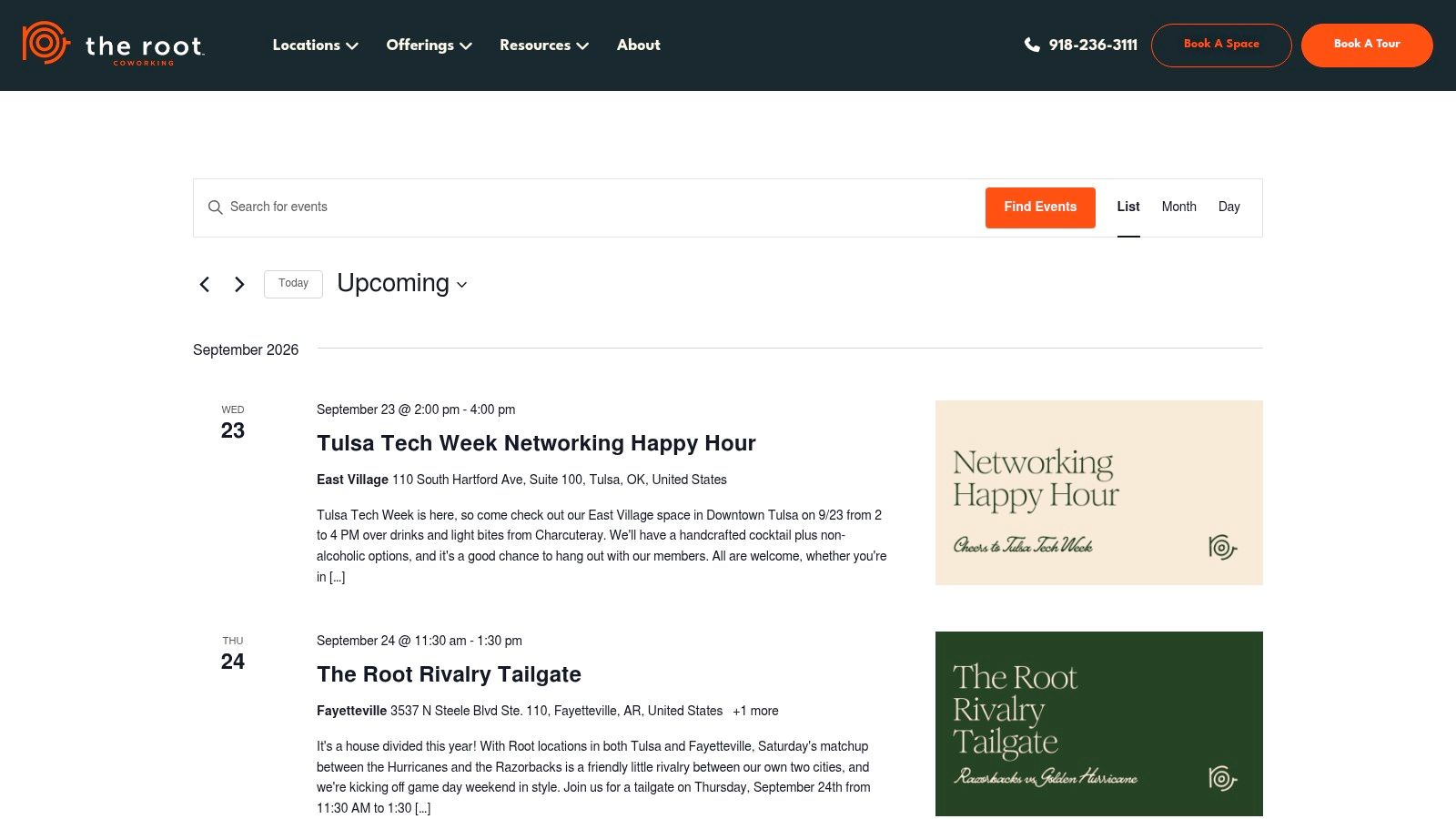
The Root is a good choice when you want networking to feel local, casual, and frequent. Its events tend to attract independents, freelancers, small teams, and people who enjoy the coworking-community format instead of just tolerating it.
That difference shows up fast in conversation quality. At The Root, people are usually open to practical exchange. Workspace recommendations, subcontracting, creative collaboration, and “who do you know for this?” conversations happen more naturally than in rooms built around formal status.
Best use case for Jenks and Tulsa professionals
Use The Root when you need lighter-friction touchpoints. First Friday Free Coworking, social gatherings, and workshops create a setting where you can test a room without a major commitment. That's helpful if you're rebuilding your network, moving into Tulsa-area work, or looking for a recurring place to meet other self-directed professionals.
There's also a larger attendance lesson here. Convenience matters more than many hosts admit. A 2026 event-attendance analysis found the importance of an accessible venue, including cost, ease of travel, and time, rose from 16.7% in 2024 to 36.8% in 2026, while travel budgets also became a bigger barrier through three years of event attendee data. Coworking-based events often win because they're easier to fit into a real week.
Good fit: Consultants, creatives, remote workers, and small operators who value approachable repeat contact.
Less ideal: Professionals seeking a highly executive-heavy room or formal referral structure.
Smart tactic: Pair a casual coworking event with one stronger follow-up coffee the next week.
See the latest options at The Root Coworking events page.
6. Startup Grind Tulsa
Startup Grind Tulsa is more focused than a broad founder mixer. That's its advantage. It usually attracts people who want practical conversations about traction, product, fundraising, growth, and leadership, with structured networking before or after the main program.
That structure is what makes it valuable. A lot of startup events overcorrect into content and forget the room. Startup Grind usually keeps the educational piece tied closely enough to the networking piece that you leave with actual next-step conversations.
Who gets the most from it
Founders, product leaders, startup operators, and investors benefit most. Main Street businesses can still get value, but only if the topic lines up with a real problem they're solving. If not, the room may feel interesting but not commercially useful.
For networking-focused events, measurement also matters more than vibe. One industry guide recommends tracking a relevant connection rate and treats 50%+ meaningful-connection reporting as a baseline target for well-designed networking events, alongside return intention and repeat attendance, through guidance on measuring event networking success. That's a good lens for evaluating Startup Grind sessions afterward. Did you leave with at least one meaningful operator or founder connection?
The best startup events give you someone to email the next day, not just ideas to think about on the drive home.
Check upcoming sessions at Startup Grind Tulsa.
7. BNI Oklahoma Tulsa Area Referral Chapters
BNI is for people who want a system, not a scene. Weekly meetings, category exclusivity, referral expectations, and one-to-one meetings create a very different experience from mixers or coworking events. If you depend on local referrals, that structure can be worth the time.
This is especially true for professional services, home services, insurance, real estate, legal, financial, and other trust-based businesses where repeat introductions matter more than broad visibility. You aren't just meeting people. You're training a room to recognize and refer your work.
What to expect before joining
Visitors can attend before making a commitment, and that's the right way to evaluate it. Chapter quality varies based on member discipline, leadership, and how seriously people take one-to-ones outside the weekly meeting.
The trade-off is intensity. BNI asks for time, consistency, and patience. That makes it a poor fit for people who want casual drop-in networking, but a strong fit for those who want accountability and measurable pipeline habits. If you host clients or small referral lunches in Jenks, a place like Freeform House could function well as an off-site follow-up base even if your weekly chapter meets elsewhere.
One more practical note applies after any BNI visit or referral breakfast. Post-event survey guidance for networking events says single-day meetup feedback works best when sent within 24 hours, with response quality dropping after the first 48 hours, and B2B event survey response rates of 30 to 40% are considered strong through post-event survey timing guidance. If you run your own referral breakfast or host a chapter-related side event, fast follow-up beats elaborate follow-up.
For nearby options, browse the BNI Oklahoma chapter finder.
7 Tulsa Networking Events Comparison
Venue | 🔄 Implementation complexity | ⚡ Resources & efficiency | 📊 Expected outcomes | 💡 Ideal use cases | ⭐ Key advantages |
|---|---|---|---|---|---|
Freeform House | Medium, membership onboarding and room reservations; staff-supported services | Medium–High cost; high convenience and production-ready amenities | High-quality content creation, intimate executive connections, event support | Small-to-medium executive meetings, podcasts, photography shoots, curated local networking | ⭐⭐⭐⭐, Premium, curated environment with production facilities |
Tulsa Regional Chamber, Events and Councils | Low, attend events or join as member for fuller access | Medium (membership recommended for best value); efficient access to executive audiences | Broad visibility to civic and business leaders; policy engagement | Formal networking, civic forums, executive introductions, large tent‑pole events | ⭐⭐⭐⭐, High-signal access to decision‑makers and policy forums |
TYPROS (Tulsa's Young Professionals) | Low, free membership and recurring, casual events | Low cost; frequent cadence supports steady engagement | Expanded peer network, volunteer collaborations, leadership development | Young professionals, early-career networking, civic volunteering | ⭐⭐⭐, Low‑barrier, regular social/professional touchpoints |
Gradient, Innovation Hub Events | Medium, membership tiers or day passes; event signups and partner coordination | Medium cost; strong leverage for startup/tech connections | Introductions to founders, operators, and investors; demo exposure | Founders seeking investors, demo days, innovation partnerships | ⭐⭐⭐⭐, Centralized startup ecosystem with national partners |
The Root Coworking, Community Events Series | Low, day passes and open events; multiple venues | Low cost; flexible attendance (day passes/free days) | Local community ties, casual client leads, frequent touchpoints | Freelancers, independents, small teams seeking casual meetups | ⭐⭐⭐, Friendly, community‑oriented coworking events |
Startup Grind Tulsa, Founders + Operator Meetups | Low–Medium, RSVP/seat reservations; events may sell out | Low–Medium cost per event; structured networking accelerates relevance | Practical founder insights, mentor introductions, investor leads | Early‑stage founders, product leaders, growth operators | ⭐⭐⭐⭐, Curated founder content with global network access |
BNI Oklahoma, Tulsa‑Area Referral Chapters | High, weekly meetings, required 1:1s, formal chapter membership | Medium fees + significant time commitment; high long‑term ROI if active | Measurable referral pipeline and steady client introductions | Service businesses and professionals focused on referral growth | ⭐⭐⭐⭐, Structured, accountability‑driven referrals and measurable results |
Turn One Visit Into a Local Network
The smartest way to approach local networking events is to match the room to the relationship you want. If you want approachable recurring contact, TYPROS and The Root are easier entry points. If you need civic visibility or executive access, the Tulsa Regional Chamber usually gives you a better signal-to-noise ratio. If your work depends on founder, operator, or investor conversations, Gradient and Startup Grind are stronger bets. If referrals are the point, BNI gives you the clearest structure.
Freeform House fits a different role. It isn't just another event listing. It's a planned 2026 Jenks base for people who want a professional setting to work, host, record, and build repeated local familiarity inside downtown's walkable core. That makes it useful both as a destination in its own right and as a support system for attending or hosting other local networking events nearby.
There's also a bigger truth behind all of this. Networking events have a long history that runs from early public assemblies and trade fairs through the formalization of conferences in the 19th and 20th centuries, and one industry account notes that the broader events sector still carries major economic weight, including more than 50 million trips globally and an estimated annual worth of 30 billion dollars through RSM's review of how networking events stimulate business innovation. The local version in Jenks or Tulsa is smaller, but the logic is the same. Concentrate the right people, lower friction, and make follow-through easier.
Keep your own routine simple. Pick one event. Prepare a specific introduction and one useful question. After each conversation, write down the context before you forget it. Then send a relevant follow-up while the interaction is still fresh.
If you need a polished place to work, host a small gathering, record content, or build community in Jenks, explore Freeform House. Its planned 2026 opening, membership model, and consultation-based pricing should be confirmed directly with the team.
Freeform House gives Jenks and Tulsa professionals a more intentional base for local networking events, coworking, private meetings, and content creation inside downtown Jenks. If you want a place that supports both everyday connection and well-run small gatherings, visit Freeform House and see whether its planned 2026 membership model fits how you work and host.
Comments