10 Corporate Offsite Ideas for Executives and Small Teams

Your leadership team has one day together, a crowded decision list, and no patience for an offsite that ends with good conversation but no operating change. Strategy needs attention, cross-functional teams need alignment, and people need enough space to think clearly. The strongest corporate offsite ideas begin with a defined business outcome, not an activity menu.
This guide compares ten formats by purpose, timing, group size, room fit, AV and catering requirements, budget categories, and follow-through. Freeform House is a premium, members-only club and workspace in downtown Jenks, Oklahoma's Ten District, designed for focused collaboration, executive meetings, workshops, private events, and creative production. Its restored 1920 building combines historic character with modern functionality, while four distinct rooms, The Rise loft studio, and an in-house podcast booth support different working modes.
The setting matters, but the operating design matters more. Use a realistic, authentic image of people working together in a character-rich professional space, not a stylized or clip-art visual. Then choose the format that matches the decision your team needs to make.
1. Strategic Planning and Visioning Retreats
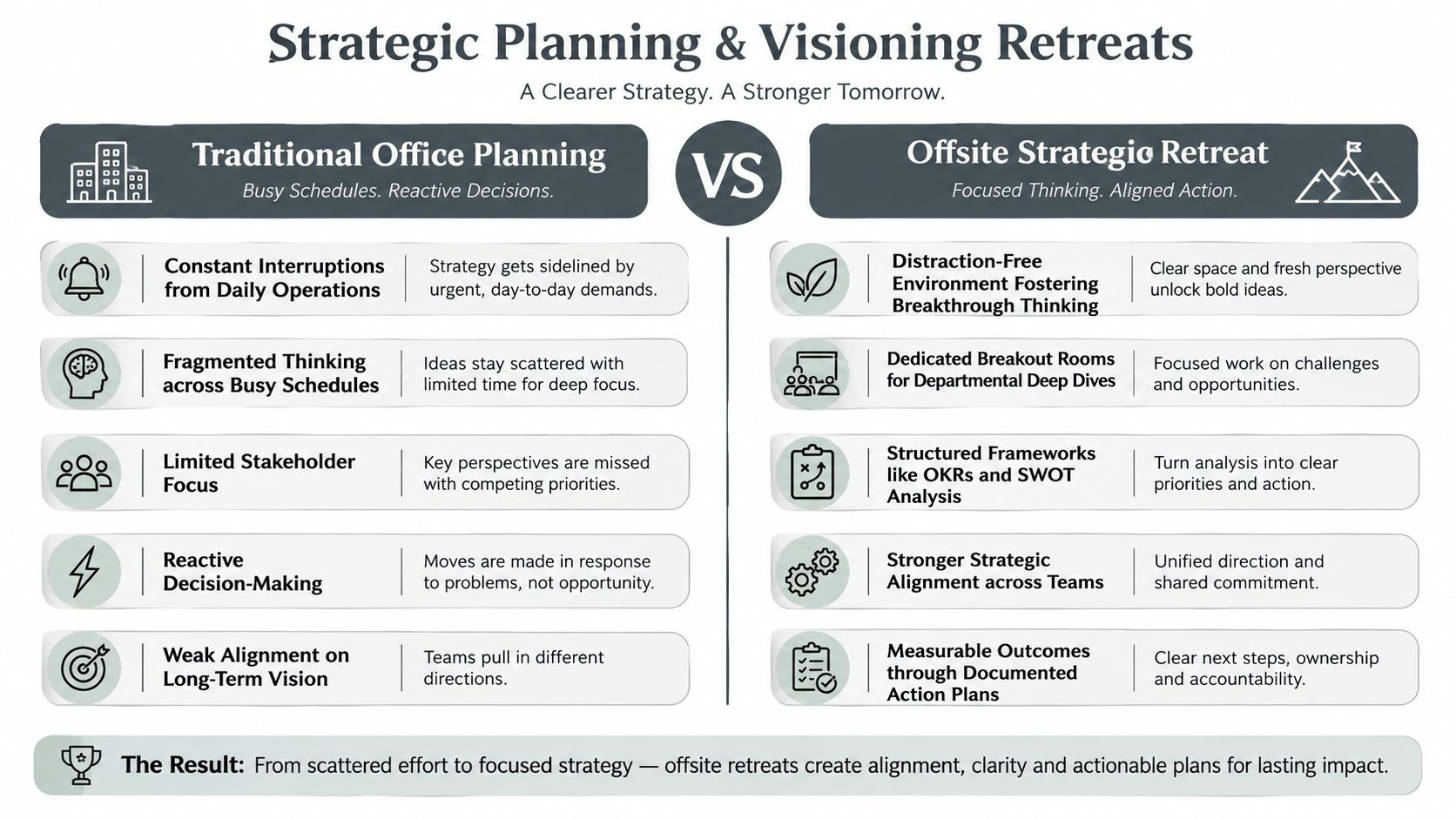
Leadership teams return from strategy retreats with direction they can explain, prioritize, and execute. That outcome depends on converting discussion into owned commitments. A focused retreat gives leaders time to resolve competing priorities, test assumptions, and turn a broad vision into quarterly decisions.
A practical format is a two-day retreat. On day one, leadership shares context, the group reviews strengths, weaknesses, opportunities, and threats, then examines alternative scenarios. Departmental breakouts let functional leaders assess implications while retaining a shared strategic frame. Day two converts the discussion into OKRs, named owners, quarterly checkpoints, and explicit risks.
Practical rule: Keep strategy language specific. Every major decision needs an owner, a next action, and a review date.
Room choice should follow the work. Use the Executive Room for confidential leadership discussions, the Freeform Room for the main working session, and the Thomas Room for breakouts. Confirm availability, capacity, catering pricing, furniture layout, and AV requirements directly with Freeform House. Multiple rooms add value only when the agenda gives each one a defined purpose.
Budget and follow-through
Separate facilitator fees, room or membership costs, meals, and technology support in the planning range. Verify Freeform House pricing and service details before approving the budget. An experienced facilitator can prevent familiar voices from controlling the conversation. Pre-retreat homework gives participants more time for judgment and less time for information gathering.
Reference points such as Google's design and planning practices, Microsoft leadership retreats, and Netflix's widely discussed culture of transparent decision-making may inform the format, but governance needs should determine the final design. Close with a decision log, named owners, and scheduled review meetings. Assign someone to maintain the log and report unresolved risks in regular operating meetings.
The retreat succeeds when its decisions survive the return to normal work.
2. Creative Workshops and Skill-Building Sessions
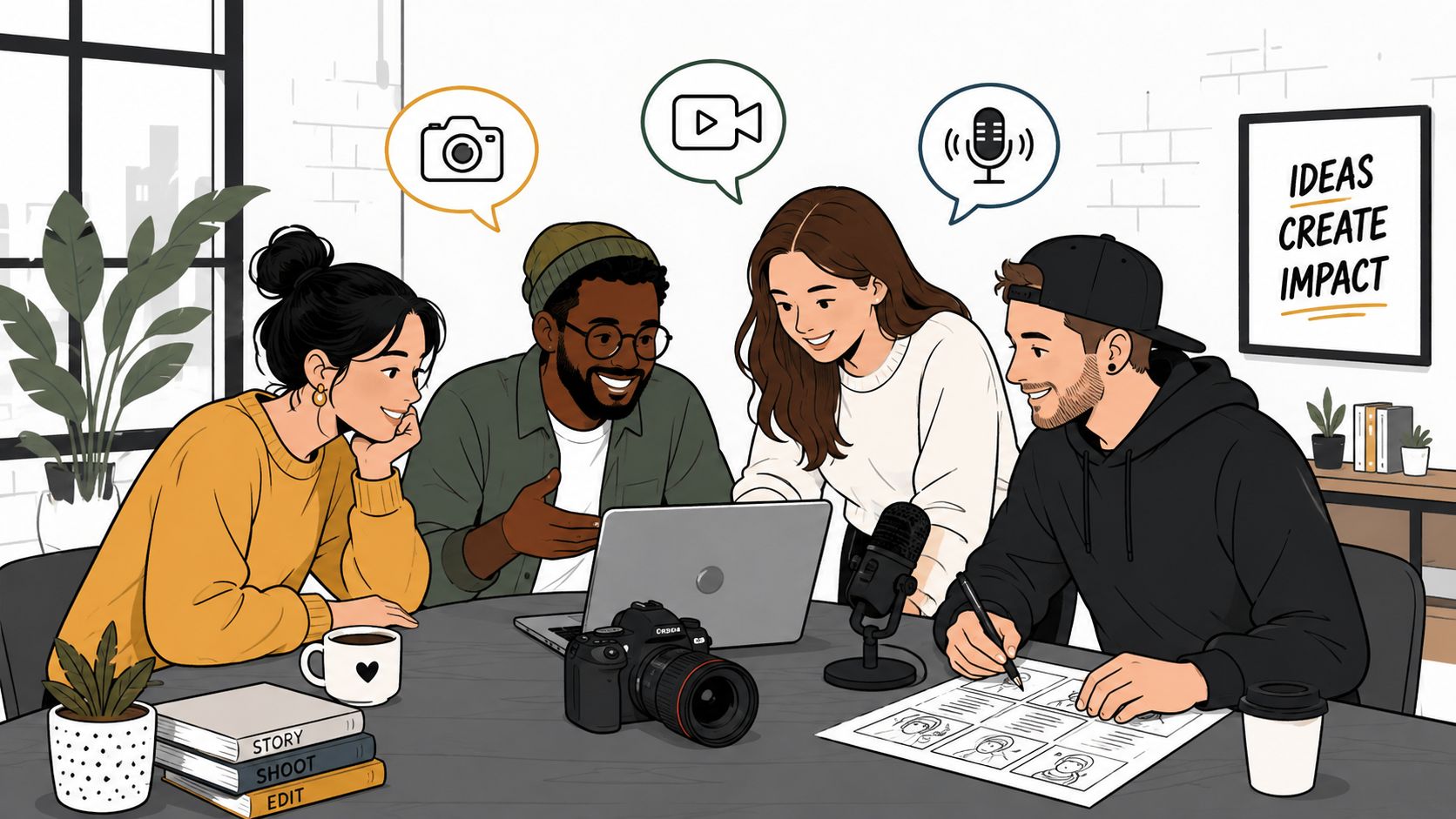
A creative workshop earns its place on the offsite agenda when participants produce something the team can use on Monday morning. A photography team might create a small content set, while a marketing group could record a podcast segment, develop campaign concepts, or practise a design-thinking exercise around a current customer problem. Hands-on production also reveals the difference between understanding a technique and applying it under workplace constraints.
For 4 to 10 participants, plan a half-day or full-day sequence with an instructor demonstration, small-group practice, project production, critique, and an application plan. Keep the brief narrow enough for the group to finish a usable work sample. A broad skills survey may expose more topics, but it usually leaves less time for practice and revision.
The Rise loft studio suits visual work, while the in-house podcast booth supports audio exercises and recorded training content. Confirm equipment, technical support, room access, reset requirements, and catering with Freeform House before promising a production setup. Choose an instructor who understands your industry, audience, brand constraints, and approval process. Creative expertise alone may not translate into work your team can publish or reuse.
Turn learning into workplace output
Give every attendee a defined application or work sample. Possible outputs include a recorded episode outline, revised campaign asset, photography brief, or repeatable interview framework. Assign one person to document the process, decisions, templates, and feedback so future employees can use the material without relying on memory.
Adobe's creative workshops, HubSpot's content training, and Buffer's social media learning practices show how skill-building can connect to actual business work. The trade-off is practical: a specialist instructor and production-ready space can improve the work, while equipment, editing, and technical support increase the budget. Separate instructor fees, production, catering, and facility costs, then obtain a verified quote.
Build in a short internal showcase after the workshop. Ask each participant to present the output, explain its intended use, and name the next owner. Leaders can then distinguish capability demonstrated in the session from enthusiasm that fades after the team returns to regular work.
A production-oriented session benefits from seeing the environment before participants arrive. Use this video as a visual reference when discussing the tone and workflow of a creative offsite.
3. Cross-Functional Collaboration Sprints
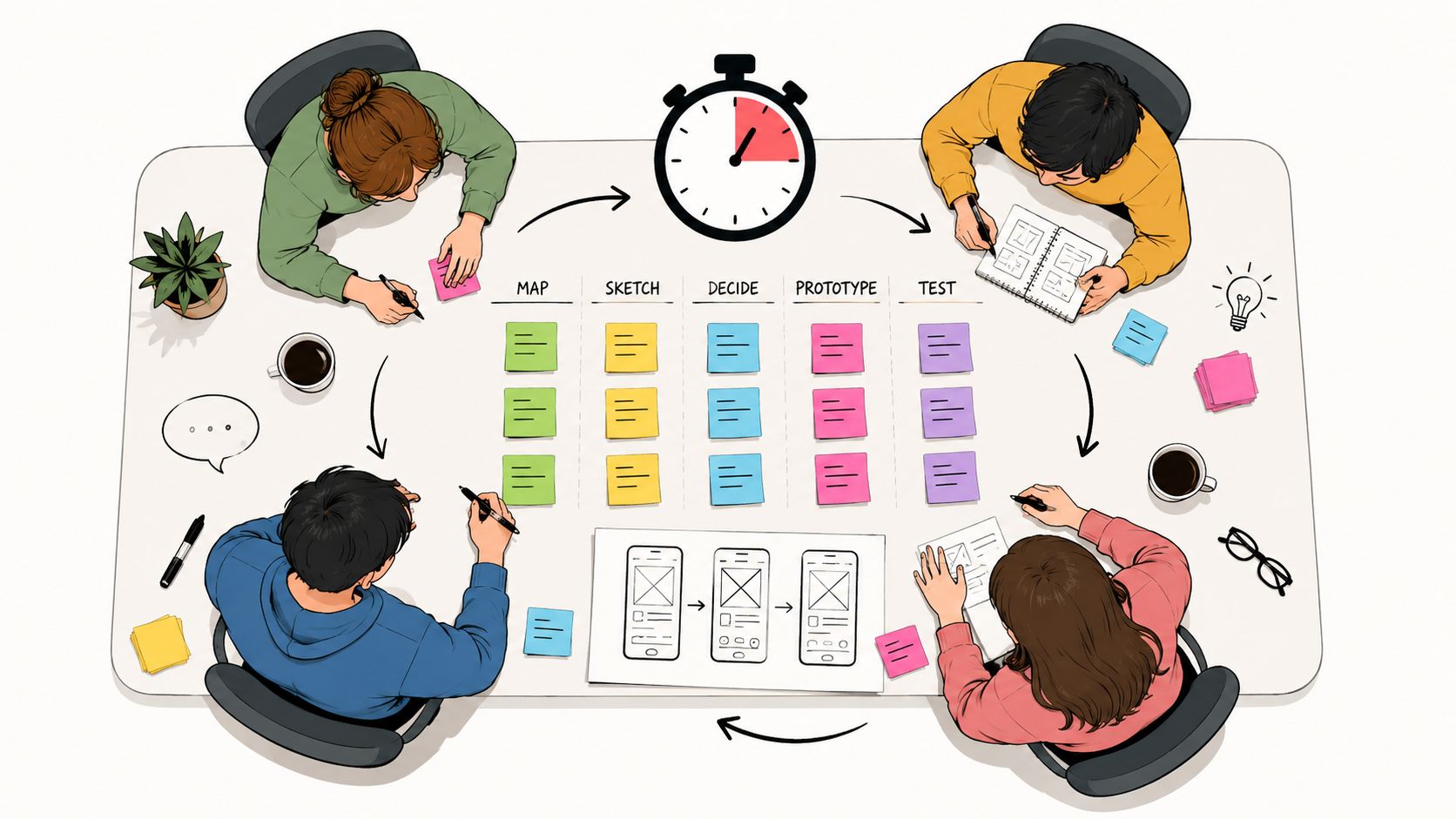
Cross-functional sprints are for a specific problem that needs concentrated progress, not a general request for better collaboration. Bring together people from product, sales, operations, marketing, customer success, or engineering around one challenge with a defined deliverable.
A one-day model can move quickly:
Frame the challenge: Agree on the problem statement, constraints, and success criteria before arrival.
Generate options: Use short ideation rounds that prevent early attachment to the first plausible answer.
Select a direction: Include the decision-maker so the group doesn't create an approval queue.
Prototype and test: Build a rough model, script, workflow, or customer journey, then challenge its assumptions.
Assign the next steps: Name the owner, milestone, dependency, and review point for every action.
The Freeform Room can serve as the shared command center, with the Thomas Room and Hall of Fame Room supporting parallel tracks, subject to confirmed availability and setup. Six to twelve participants is a workable range for keeping expertise broad without making every decision a committee exercise.
Protect the sprint from friction
Plan AV for remote contributors, demonstrations, and screen sharing. Confirm working-wall materials, writable surfaces, connectivity, room transitions, and timed catering breaks. Budget categories should include facilitation, workspace, meals, materials, and technical support. All Freeform House costs need direct verification.
Google Design Sprints, IBM enterprise design thinking, and Spotify's squad model show how timeboxing can create momentum. The trade-off is intensity. A sprint can expose unresolved ownership or weak evidence quickly, which is useful, but only if the sponsor is prepared to make decisions. Document progress visually throughout the day so absent stakeholders can understand what the group tested, rejected, and approved.
4. Team Building and Culture-Focused Events
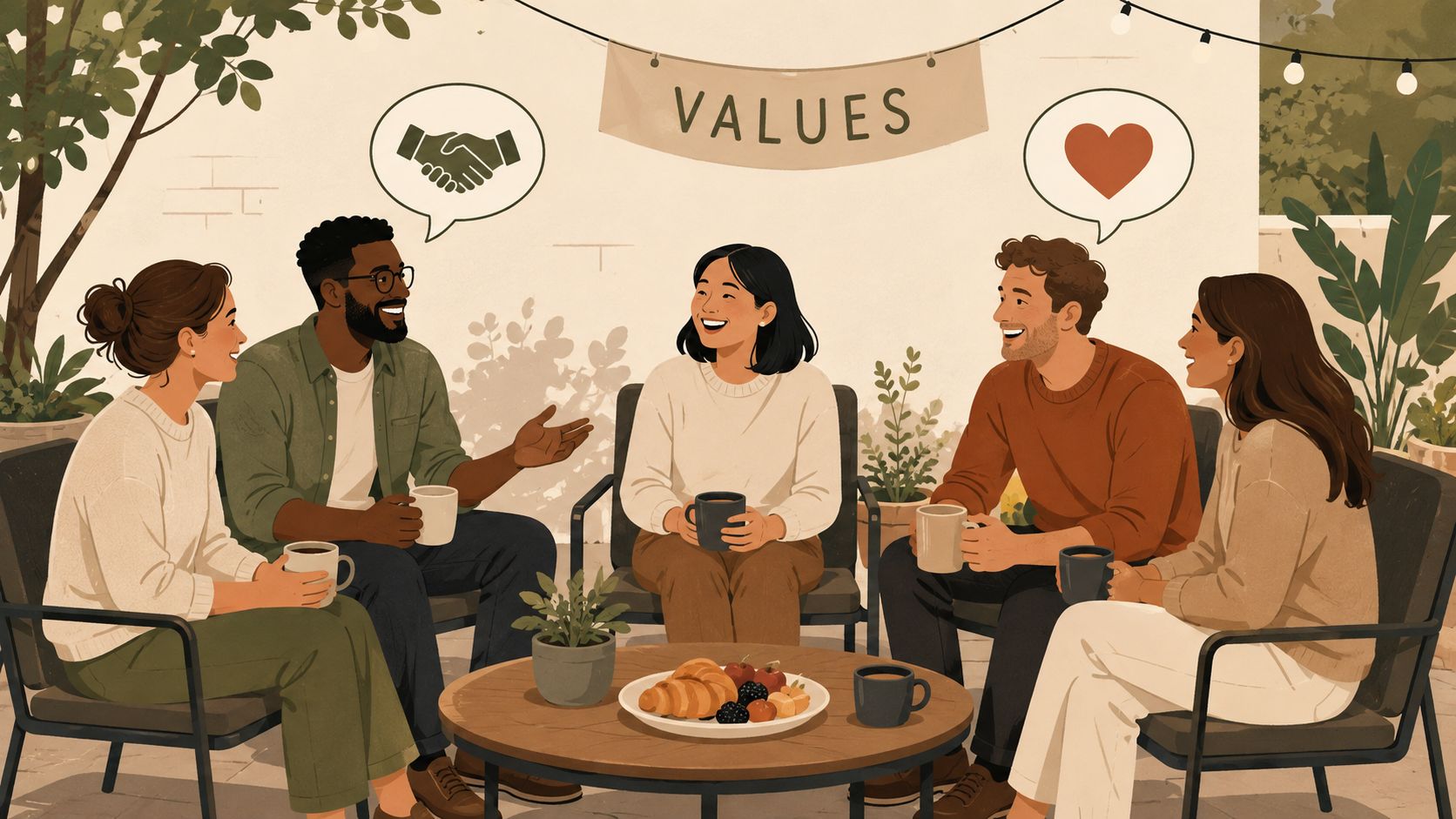
Culture work deserves intention. A useful culture-focused offsite creates room for honest conversation, shared meals, collaborative activity, and reflection, then connects those experiences to the behaviors the team expects from one another.
For 6 to 20 participants, use a full-day agenda. Open with a values-based discussion, move into an inclusive collaborative activity, share a meal, hold small-group reflection, and close with commitments. The activity should give people a practical reason to cooperate without pressuring anyone into public vulnerability. Keep social elements optional when the team has different comfort levels, physical abilities, or cultural expectations.
The Hall of Fame Room or Freeform Room can support the main sessions. Confirm dining arrangements, dietary requirements, beverage service, activity materials, and golf cart logistics with Freeform House. Its local restaurant and coffee-shop partnerships can support shared meals and informal conversation. The Jenks setting also allows the group to build a place-based experience rather than recreate an office dinner. Review how to choose a team-building space while comparing room layout, accessibility, and activity requirements.
Measure behavior, not mood
Survey employees before the event about activity preferences and access needs. Afterward, agree on a small set of observable behaviors, such as clearer handoffs, more direct feedback, or a stronger meeting norm. A short follow-up pulse can test whether those behaviors appear in daily work, while managers can review examples during regular team meetings.
Budget for facilitation, meals, room setup, materials, transportation, and optional activities. A competitive format may create energy but exclude people who dislike competition or cannot participate physically. A reflective format supports broader participation but may feel slow for a team that needs movement. Explain the purpose of each activity, provide meaningful choices, and record the agreed behaviors, owners, and review date so the offsite changes how the team works.
5. Executive Coaching and Leadership Development
Executive coaching adds depth when a team needs to change how it leads. A small group can examine decision-making, communication, emotional intelligence, and team dynamics in a setting that protects confidentiality and allows honest feedback.
For 3 to 8 participants, build a one-day agenda around individual goals, a facilitated leadership case, peer coaching, private sessions, and a written leadership experiment for the following month. The coach should provide assessments or preparation materials beforehand, then connect individual patterns to real business situations during the offsite.
The Executive Room suits confidential work. Use a separate confirmed room for peer learning, so private conversations and group discussion do not compete for the same environment. Keep AV discreet and limited to tasks that support the session. Confirm private catering, guest access, room privacy, and confidentiality protocols before arrival.
Make the coaching experiment concrete
Each participant should leave with one leadership experiment, such as changing one-to-one meeting structures, testing a delegation practice, or requesting targeted feedback after a difficult decision. Schedule follow-up check-ins and progress assessments before the group departs, then assign responsibility for tracking each commitment. For related planning ideas, see executive team-building ideas.
Harvard Executive Education partnerships, Marshall Goldsmith's coaching work, and the Center for Creative Leadership's programs provide examples of coaching integrated with leadership development. The main trade-off is privacy versus group learning. Individual coaching requires protected time, while peer coaching builds shared accountability but can feel exposed without clear participation rules.
Budget from a verified quote covering coach fees, facility or membership access, meals, and assessment tools. A coaching offsite also needs a follow-up plan, not only a strong agenda. Its value depends on recurring accountability after the event, including scheduled reviews of each experiment and adjustments when business conditions change.
6. Customer Advisory Board and Stakeholder Engagement
A customer advisory board offsite should make it easy for customers and partners to disagree usefully. Hospitality matters, but the event's credibility depends on how clearly you frame the questions, moderate the discussion, and respond afterward.
Use a half-day or full-day agenda with a concise business update, moderated feedback sessions, product or strategy discussion, private leadership debrief, and documented response plan. Invite 5 to 12 external participants plus a focused internal host group. Too many internal attendees can make customers cautious, while too few may leave important questions unanswered.
The Freeform Room can host the main conversation, with the Executive Room reserved for confidential internal synthesis. Confirm room configuration, guest access, video conferencing, AV, dietary needs, and catering in advance. A premium, members-only setting can reinforce the importance of the relationship, but the room shouldn't overshadow the conversation.
Close the loop visibly
Prepare discussion topics and a short pre-read. Ask questions that distinguish user pain from preference, then test whether feedback reflects a broad pattern or a single account's unusual situation. After the session, state what the company will act on, investigate, or decline, and explain why.
Salesforce customer advisory summits, Apple customer councils, and HubSpot partner gatherings show how companies can use structured stakeholder dialogue to improve alignment. The trade-off is candor versus presentation. A polished event can create a strong guest experience, but excessive branding and scripted messaging may suppress the very feedback you need.
Budget categories should separate hospitality, facilitation, room or membership costs, travel support if applicable, and production needs. If the board meets repeatedly, establish terms and a quarterly or biannual cadence so participation has a clear purpose rather than becoming an occasional listening exercise.
7. Sales Conference and Revenue Team Kickoffs
Revenue teams need an offsite that combines energy with operating clarity. Recognition and motivation can open the day, while product knowledge, competitive positioning, peer learning, and next-quarter commitments receive equal weight.
A full-day agenda can include a leadership kickoff, product and competitive training, role-based breakouts, peer learning, recognition, and a next-quarter commitment session. For 8 to 30 participants, use the Hall of Fame Room for the main program and confirmed breakout rooms for regional, role-based, or experience-level tracks. The trade-off is pace: high-energy programming holds attention, but too much stage time leaves little room to practise new messaging and sales motions.
Use breakouts for role-play, objection handling, and peer teaching. Invite top performers to explain the behavior behind their results, turning recognition into transferable learning. Each attendee should leave with one priority, one metric, and one first action recorded in the team's normal reporting system.
Plan microphones, presentation screens, remote participation, award displays, meal timing, coffee service, and recording support with Freeform House. Separate facility access and facilitation from speaker fees, awards, production, and catering when building the budget. Confirm actual Freeform House pricing before committing to the program.
A recognition segment can celebrate individual and team achievements, but the commitment session must connect those achievements to next-quarter execution. Record selected training content only when the production plan covers editing, permissions, and future employee access. Assign owners and review dates for each commitment, then add them to pipeline, forecast, or enablement reviews so the offsite changes routine work rather than ending with the final session.
8. Board Meetings and Governance Sessions
Board meetings need a room and process built for formal decisions, confidential materials, reliable remote participation, and discreet service. A half-day or full-day agenda can cover consent items, financial and operational review, strategic decisions, executive session, and an action register.
For 4 to 12 participants, use the Executive Room for the formal meeting. Confirm whether the Hall of Fame Room or another space can handle waiting, dining, or overflow without exposing confidential discussions. A single room simplifies movement, while separate spaces provide better privacy and reset time.
Arrange secure document distribution before arrival. Confirm presentation AV, video conferencing, private catering, room access, and confidentiality protocols with Freeform House. Staff should know which conversations are private, where documents may remain, and how remote members will join without technical interruptions.
Governance standard: Assign the minutes owner, decision deadline, and next board follow-up date before the meeting closes.
Build the budget around facility access, catering, technology support, governance materials, and travel or lodging rather than a public figure. Professional clubs or private facilities may suit private equity firms, venture firms, and corporate boards because they combine formality with controlled access. The venue still needs to meet the board's security and governance requirements.
Close with a documented action register. Assign minutes ownership, record unresolved questions, set decision deadlines, and circulate approved materials through the board's established process. For room-layout considerations that align with governance requirements, see boardroom-style seating.
9. Wellness Retreats and Stress Management Programs
Wellness belongs in an offsite when it supports the team's actual needs, not when it decorates a demanding agenda. A useful program combines an optional wellness session, focused business work, nutritious meals, resilience education, quiet reflection, and a short planning close.
For 6 to 15 participants, make physical activities opt-in and provide accessible alternatives. A flexible full-day format might begin with meditation, yoga, or another morning wellness session, followed by a focused business block, a shared meal, a resilience workshop, quiet reflection, and a short planning close. People should be able to participate without disclosing personal health information or performing enthusiasm for the group.
Use a confirmed meeting room for business work. Coordinate any off-site provider, equipment, mats, room reset, catering, beverages, dietary requirements, and schedule buffers with Freeform House. Its restaurant partnerships can support meal planning, but healthy food still needs to account for allergies, preferences, and the practical timing of a working day.
Avoid wellness theater
Survey employees about comfort levels and interests before booking an instructor. Partner with qualified local fitness or wellness professionals, schedule the event during a lower-pressure business period, and protect quiet time instead of filling every gap with another activity.
LinkedIn, Google, and Patagonia are associated with different approaches to employee wellness and outdoor experiences. Their examples shouldn't become a template for every team. A high-intensity activity may suit some employees and exclude others, while a contemplative session can feel disconnected from work if the facilitator doesn't link it to workload, recovery, or team norms.
Budget categories should include instructors, facilitation, meals, room access, materials, and optional local activities. Evaluate the event through participant feedback, agreed workload changes, and a later check-in. Don't claim productivity gains unless your own organization defines and measures them.
10. Product Launch and Go-to-Market Events
A launch offsite should happen early enough to expose gaps, but close enough to keep decisions relevant. Schedule it 4 to 6 weeks before the launch window, then bring product, marketing, sales, and customer success into one operating conversation.
Use a full-day agenda: product analysis, audience and positioning work, sales enablement, campaign sequencing, risk review, content recording, and launch-readiness decisions. The Freeform Room supports cross-functional alignment, while the Thomas Room suits messaging or enablement breakouts. The podcast booth can handle launch announcements or thought-leadership recordings, subject to confirmed availability and technical support.
Require a pre-read with customer insights, competitive analysis, launch constraints, and draft messaging. This shared factual base limits presentation time and leaves more room for decisions. Confirm AV, recording support, catering, workspace, production materials, and venue services before setting the budget. Include contingency for technical needs, schedule changes, and any follow-up production work.
Convert alignment into a launch system
End the session with a RACI-style ownership map, dated milestones, and a launch-readiness checkpoint. Add customer feedback where possible, including advisory board input if the product is still being refined. Separate risks that need escalation from issues the team can resolve during the meeting.
Apple product launch summits, HubSpot collaborative planning, and Microsoft go-to-market alignment sessions offer recognizable models for bringing product and revenue teams together. Their trade-off is breadth versus depth. A broad group can expose dependencies across customer, enablement, and operations, but may reduce discussion time. A smaller group can make decisions faster while leaving gaps that require follow-up.
Record content only when it has a defined use case, owner, approval path, and distribution plan. Close by confirming launch readiness, assigning the first execution actions, and placing milestones in the teams' existing planning system. A later checkpoint should review owners, unresolved risks, and customer or sales feedback so the offsite produces operating follow-through rather than temporary enthusiasm.
10 Corporate Offsite Ideas, Side-by-Side Comparison
Activity | Implementation Complexity 🔄 | Resource Requirements ⚡ | Expected Outcomes 📊 | Ideal Use Cases 💡 | Key Advantages ⭐ |
|---|---|---|---|---|---|
Strategic Planning & Visioning Retreats | High 🔄🔄🔄, multi-day agenda, heavy facilitation | High, facilitators, multiple rooms, AV, catering ⚡⚡ | Clear strategy, OKRs, decision log, owners | Executive teams, annual/quarterly planning | Strong alignment and measurable action plans ⭐⭐⭐⭐ |
Creative Workshops & Skill-Building Sessions | Moderate 🔄🔄, instructor-led, project work | Medium, instructors, studio/equipment, materials ⚡⚡⚡ | New skills, work samples, content for teams | Marketing, content teams, creative agencies | Tangible skills and content creation for teams ⭐⭐⭐ |
Cross-Functional Collaboration Sprints | Moderate‑High 🔄🔄🔄, tight timeboxes, prep required | Medium, facilitator, materials, focused spaces ⚡⚡⚡⚡ | Rapid prototypes, clear deliverables, decisions | Product dev, innovation, cross-team problems | Accelerated delivery and cross-team alignment ⭐⭐⭐⭐ |
Team Building & Culture-Focused Events | Low‑Moderate 🔄🔄, curated activities and reflection | Medium, activities, catering, facilitators ⚡⚡ | Improved trust, psychological safety, agreed behaviors | Growing teams, mergers, culture initiatives | Stronger team cohesion and retention ⭐⭐⭐ |
Executive Coaching & Leadership Development | Moderate 🔄🔄, tailored sessions, confidentiality | High, experienced coaches, private rooms, assessments ⚡⚡ | Improved leadership effectiveness, measurable change | C‑suite, high‑potential leaders, transitions | Personalized impact on decision-making and presence ⭐⭐⭐⭐ |
Customer Advisory Board & Stakeholder Engagement | High 🔄🔄🔄, external guests, structured feedback | High, hospitality, travel support, facilitation ⚡⚡ | Direct customer insights, roadmap influence, loyalty | B2B, SaaS, strategic partnerships | Actionable market intelligence and stronger relationships ⭐⭐⭐⭐ |
Sales Conference & Revenue Team Kickoffs | High 🔄🔄🔄, multi-track program, recognition elements | High, speakers, AV, awards, multiple rooms ⚡⚡ | Energized salesforce, aligned targets, training outcomes | Sales orgs, revenue teams, CS kickoffs | Motivates teams and clarifies priorities ⭐⭐⭐ |
Board Meetings & Governance Sessions | High 🔄🔄🔄, strict confidentiality and protocol | Medium‑High, secure AV, private catering, docs ⚡⚡ | Formal approvals, governance decisions, minutes | Boards, private companies, family offices | Confidential, authoritative decision-making ⭐⭐⭐⭐ |
Wellness Retreats & Stress Management Programs | Low‑Moderate 🔄🔄, optional wellness + business blocks | Medium, instructors, healthy catering, space ⚡⚡ | Reduced stress, wellbeing gains, engagement signals | High‑stress industries, employee‑focused orgs | Demonstrates commitment to wellbeing; reduces burnout ⭐⭐⭐ |
Product Launch & Go‑to‑Market Events | High 🔄🔄🔄, cross‑functional prep, recording needs | High, cross‑team prep, AV, recording, facilitation ⚡⚡ | Launch readiness, RACI, aligned messaging and timelines | Product teams, SaaS, frequent release cycles | Coordinated launches with clear ownership and readiness ⭐⭐⭐⭐ |
Turn a Strong Offsite Into Operating Momentum
The right format depends on the decision your team needs to make. Choose strategic planning when leaders must agree on direction, a collaboration sprint when a defined problem needs a prototype, coaching when leadership behavior is the constraint, and a customer advisory session when outside perspective should shape the next move. Culture events, wellness programs, and sales kickoffs serve different purposes, even when they all include meals and conversation.
Group size changes the design. Small leadership groups can work confidentially in the Executive Room, while broader working teams benefit from the Freeform Room and parallel sessions in the Thomas Room or Hall of Fame Room. A creative or launch-focused group may need The Rise loft studio or the podcast booth, while a board meeting may need quiet service, secure documents, and minimal production.
Energy matters, too. A sales kickoff can support recognition and lively peer learning. A board session needs formality. A wellness program should leave room for choice and recovery. A customer advisory board needs enough structure to keep feedback useful without making guests feel managed. Don't use one agenda template for every group.
Confidentiality is another deciding factor. Leadership coaching and governance sessions need private protocols, controlled access, and careful technology planning. Cross-functional sprints need visible working walls and fast room transitions. Creative workshops need equipment access and technical support. Confirm the room fit before you promise the experience.
Budget discussions should begin with categories, not an unsupported headline number. Confirm Freeform House membership or access requirements, room availability, capacity, AV, catering, technology support, creative-resource availability, and any local transportation needs. Separate facilitator or speaker fees, room or membership costs, meals, materials, production, travel, and contingency. The Ten District gives downtown Jenks a place-based setting, while the city's official downtown information describes Main Street, free street parking, and parking at Jenks Commons Park. Freeform House's restored downtown building preserves original architectural elements from a 1920 building, so the setting can feel authentic rather than like a generic office rental.
The broader operating context supports treating offsites as repeatable business infrastructure. A recent industry report found that organizations average 2.6 corporate offsite events per year, compared with 2.4 in 2019, indicating a measurable rebound in in-person collaboration and a shift toward recurring offsite rhythms. The same corporate offsites report describes offsites as recurring operating practices that balance strategy, bonding, and practical work.
Remote-capable work makes flexibility essential. Gallup-tracked 2026 data reports that 52% of remote-capable U.S. workers are hybrid, 27% are fully remote, and 21% are fully on-site in the hybrid work data overview. A venue should therefore support breakout collaboration, dependable connectivity, hybrid participation, and content capture rather than only a single presentation room.
Meeting design also deserves discipline. 79% of workers say a clear agenda creates more productive meetings, while 65% say they regularly waste time in meetings, according to meeting-efficiency reporting. Build agenda blocks, rapid room changes, tested video workflows, and intentional breaks into the plan.
After the event, distribute decisions within 24 hours. Assign owners and dates, schedule the first checkpoint, and measure the outcome against the original purpose. A strategy retreat should be judged by decisions and progress, a wellness event by feedback and workable changes, and a customer session by the transparency of the response plan. The offsite is the catalyst. Daily operating habits determine whether it mattered.
Visit Freeform House to assess the rooms, membership or access requirements, creative resources, and service model before setting your final agenda.
Freeform House offers a members-only club and workspace in downtown Jenks with distinct rooms for executive discussions, group work, breakouts, events, and creative production. Explore Freeform House to plan a corporate offsite around the decision, team, and follow-through your business needs.
Comments