7 Small Wedding Reception Ideas for Intimate Venues

You trimmed the guest list to forty people, then walked a ballroom that still expects a head table, a long program, and a dance floor nobody will fill. The room looks thin because the format was built for a crowd you no longer have. Intimate receptions reward a different set of choices: conversation, a shared table, and a short path from drinks to dessert, not a smaller copy of a big wedding.
Couples have been trading headcount for a richer hour with each guest. The Knot's 2017 Real Weddings Study found the average U.S. wedding had 136 guests, down from 149 in 2009, while average spending per guest rose from $194 to $268. A shorter list does not have to mean a thinner party. It can mean better food, clearer sound, and time with the people who came.
These seven small wedding reception ideas are complete formats. Each one names a guest range, a clock, a seating plan, a menu shape, and a service style you can match to the room you already have.
1. Intimate Brunch Reception
A 40-guest brunch in a private dining room beats a hollow evening in a hall you only half fill. Say the ceremony ends at 10 a.m. Guests walk two blocks to a downtown Tulsa-area restaurant, find a coffee and pastry station already open, and take seats at one shared table for a meal that runs about two and a half hours. That is the whole program: a late morning, shared plates, one toast, and everyone out by early afternoon.
Brunch costs less than dinner service because the kitchen works a lighter menu and the room turns over before evening bookings. Small weddings in this range run well below the cost of a full-scale event, and a daytime format keeps that spend on food and the room, where every guest feels it.
The format holds together on three details: guest count under 50, a seating plan that puts everyone at one or two tables, and a service style that mixes a station with shared plates. Book the room for at least two hours so the meal does not feel rushed. Ask the caterer for a mix of hot and cold dishes so dietary needs do not stall the line. Open the coffee or tea station before the first guest sits down.
Midpoint toast: Keep it under four minutes, after people have eaten, not while coats are still coming off.
Room choice: A private restaurant room or a membership club dining room keeps service close and conversation easy.
What fails: A one-hour slot. Guests arrive late, miss the toast, and leave hungry.
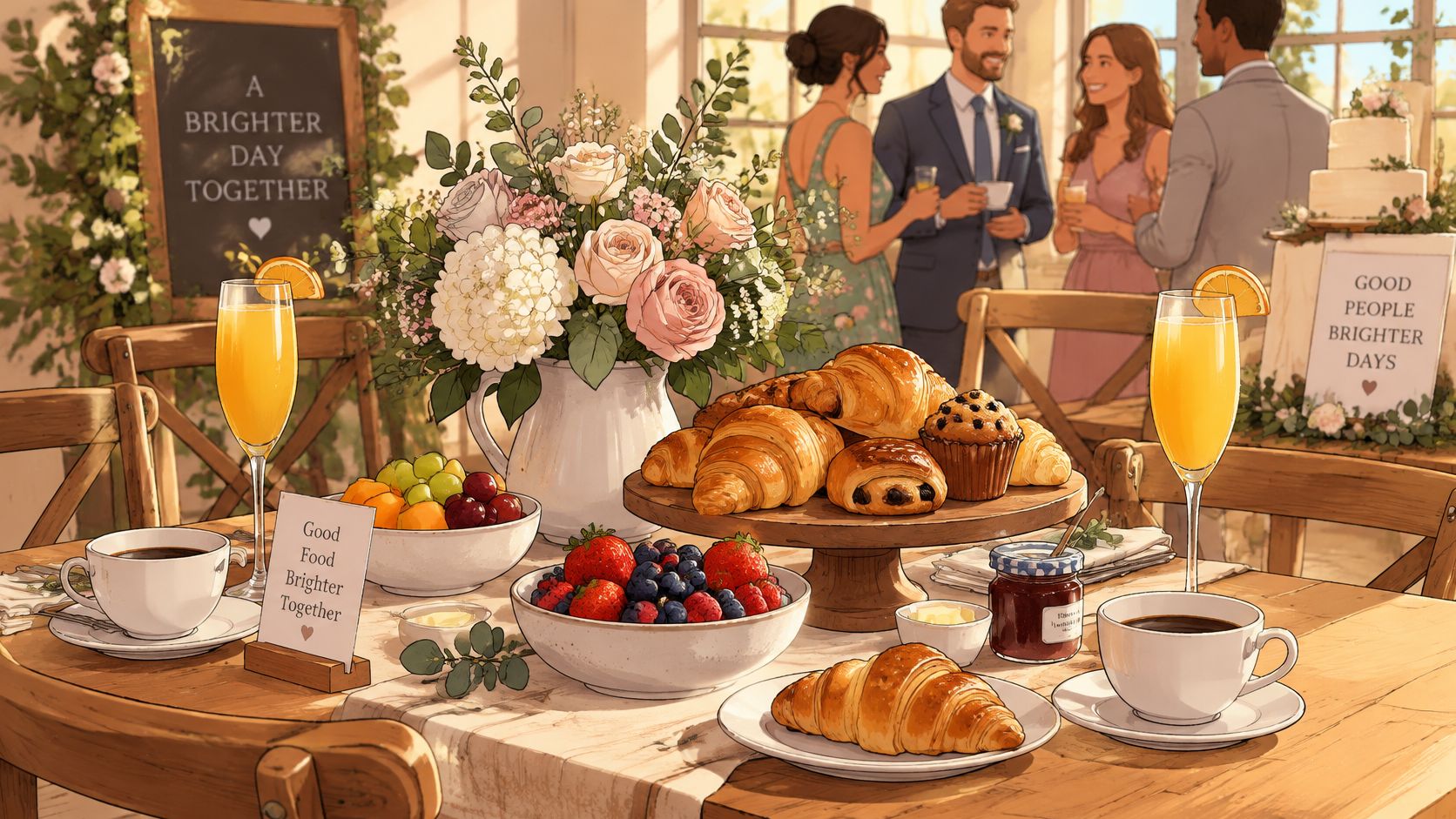
I would pick brunch for couples who want a lively, low-pressure morning with close family and have no use for a formal evening program.
2. Micro-Wedding Family-Style Dinner
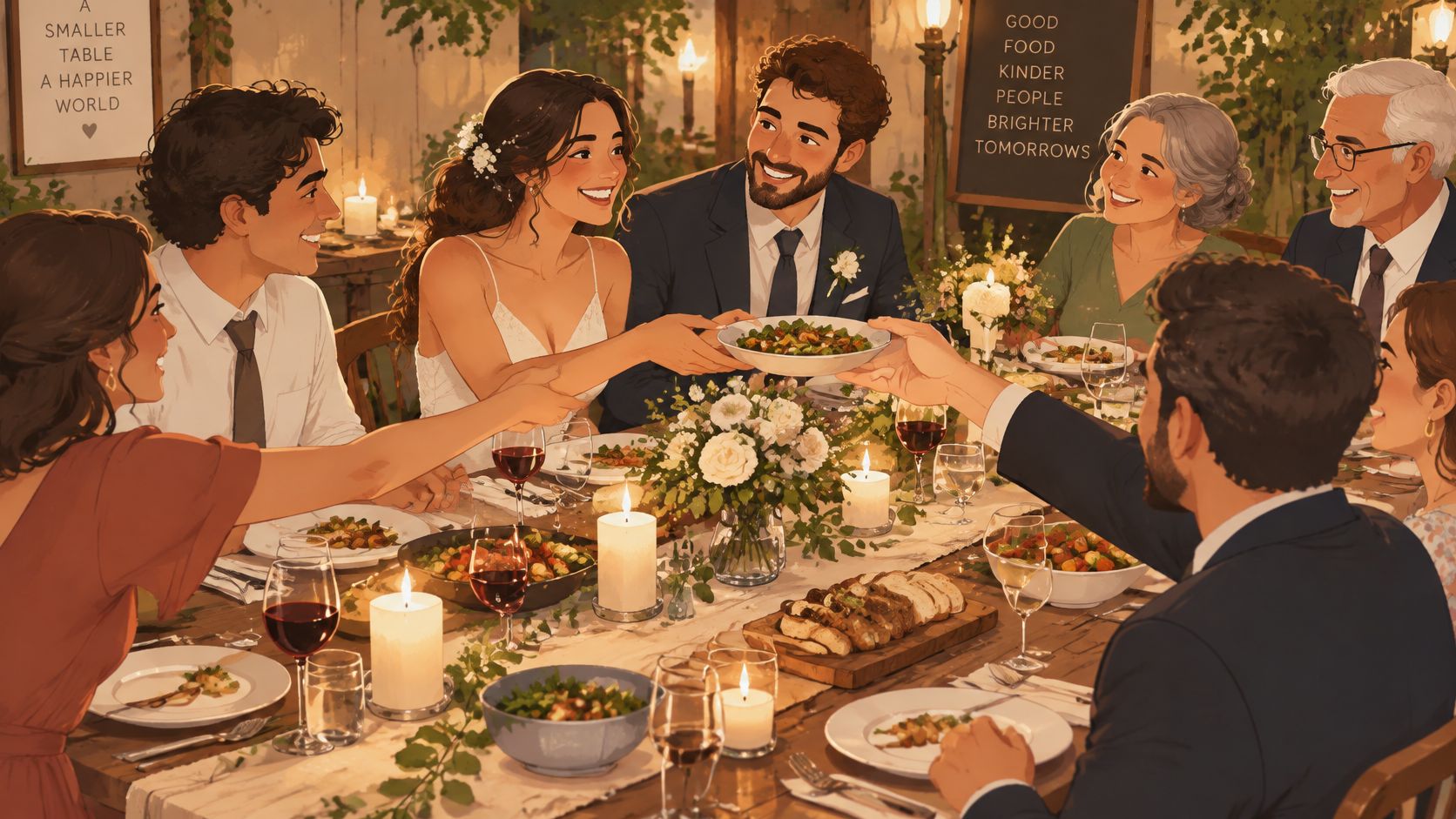
For 15 to 40 guests, one long table and shared platters do more than a plated menu with six silent courses. A 30-guest dinner in a restored hall, with farm-style platters from a local caterer, feels like a dinner party because everyone can hear the same toast.
Service rule: Two or three shared platters, replenished in small batches, beat a long plated menu that stalls while one dietary plate is finished.
Ireland's Environmental Protection Agency hospitality pathway describes a wedding-event case where cutting prep trim and replacing individually plated vegetables with large central dishes cut food waste per person by almost 37% within two months. On a micro list, that same idea is simple. Confirm diets on the RSVP, keep the menu narrow, and let staff watch what guests eat.
Confirm the table layout and the room's real capacity before you lock the headcount. Mix family and friends on the chart so talk does not stay inside one household. One speaker, or a quiet playlist, is enough. A full band overwhelms a single room and buries the speeches.
A tasting menu in a private downtown room works when you want courses, but only if the kitchen can plate every seat in one pass. If the pass takes twenty minutes, switch to platters. The micro-wedding planning sequence is easier when the meal itself is the entertainment.
3. Coffee and Dessert Reception
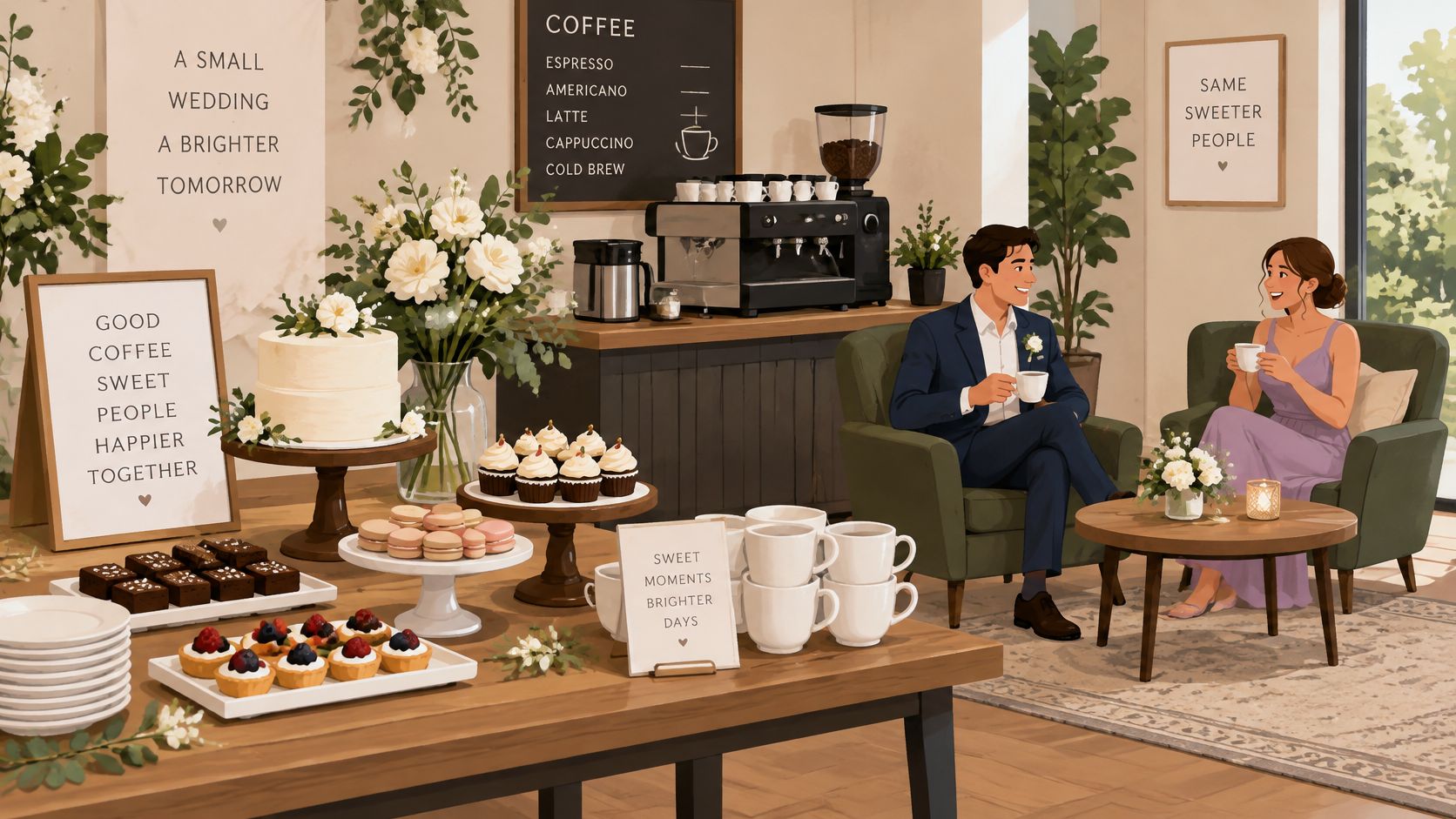
Skip the full meal when the ceremony already ran long, or when this is a second celebration for people who could not travel the first time. A late-afternoon reception built on coffee, tea, pastry, and one savory bite runs 90 minutes to two hours. Guests move between lounge chairs and a dessert table. There is no seating chart and no empty dance floor to explain.
What to put on the table
A local roaster can run a small cart. A neighborhood bakery can rotate slices so the display does not look picked over by the second hour. Ask for a custom blend or a simple sleeve with the couple's names if you want a keepsake that is not another favor bag.
Dietary floor: At least one savory item, plus one gluten-free or dairy-free dessert. A sugar-only table loses half the room.
Clock: Print a start and an end. Without them, a “drop by for cake” turns into an unplanned evening the couple has to host.
Furniture: Lounge seating, not rows of banquet chairs. People stay when they can sit sideways and talk.
What does not work is treating dessert as the leftover of a dinner you cancelled. If there is no meal anywhere that day, say so on the invitation. Guests who expected dinner will leave early and hungry, and the pastry table will not save the mood.
4. Cocktail-Style Reception with Passed Bites
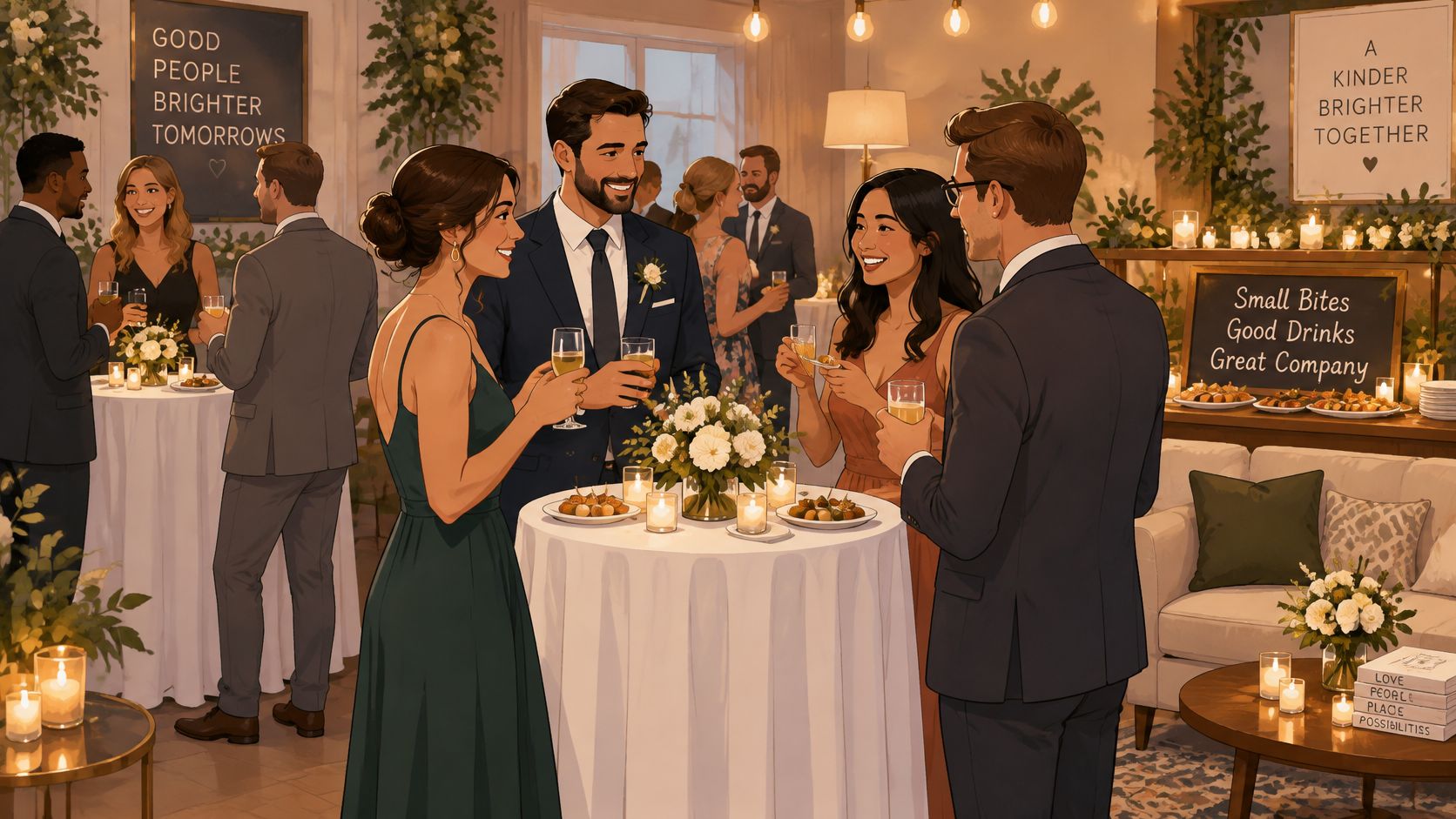
A standing reception fits 40 to 100 guests when the building has two connected rooms or an open lounge. People move, reconnect, and leave the head-table problem behind. A 60-guest version I recommend often uses passed bites in both rooms, one signature drink named for the couple, and a matching non-alcoholic pour so the bar is not the only social spot.
The Knot's study of couples married in 2022 found that 83% still followed ceremony, cocktail hour, and reception. You can keep that rhythm and drop the seated dinner. Farms and barns tied with banquet halls as the leading reception type that year, which is a useful reminder that the room does not have to look like a hotel ballroom.
Passed service fails when the kitchen sends four items and then disappears. Plan eight to ten bites across the first two hours, and seat at least a third of the guests, including older relatives.
Room dividers or a furniture line can split a hall into a louder bar zone and a quieter talk zone. A small DJ in the second hour works if the first hour stays acoustic. A full dance floor in a standing room usually sits empty until people give up and leave. For room types that already support this flow, start with a cocktail-ready private hall.
5. Drop-In Open House Reception
An open house suits guests spread across cities and couples who refuse a single seated moment. You publish a window, often two to four hours, and people arrive and leave on their own. There is no program and no chart. Food and drinks stay up the whole time.
A four-hour afternoon with three small stations and a coffee bar is the version that holds. Guests from out of town come after a drive. Local friends stop in after work. Nobody misses “the” toast because there is not one.
Average U.S. guest counts fell from 131 in 2019 to 116 in 2024, and 13% of couples hosted weddings with 50 or fewer guests, while 48% considered it, according to Zola's First Look data deep dive. A short list does not automatically feel fair. Every omission is visible. An open window lets you invite a wider circle without pretending everyone can sit for three hours.
How the room has to work
Invitation clock: Print the open and close times. “Come by sometime” produces a crush at one hour and an empty room the rest.
Peaks: Staff the first hour and the last hour. The middle is quieter than hosts expect.
Food: Replenished stations, not one large spread that dies at minute forty.
Wayfinding: Simple signs if guests move between a lounge, a dining nook, and a quieter corner.
This format fails in a single echoey room with no place to land. It works in a building with more than one zone.
6. Storytelling Reception with a Recorded Booth Experience
A meal or a cocktail hour can carry the party. The piece guests remember later is often a short recording they made when nobody was watching. Set a small booth away from the bar and the speaker. Guests answer two prompts. You compile the files into one video after the weekend.
A studio-equipped room makes this cleaner than a closet with a phone. A podcast-style setup, with someone checking levels, keeps the audio usable. Three or four prompts on cards are enough. “How did you meet them?” and “What should they never stop doing?” outperform a blank “say something nice.”
Keep the line moving
Assign one friend or a staffer. Their job is levels, not hosting. If a guest freezes, the card is the script. If the line backs into the bar, move the booth farther down the hall before the next group.
Confirm delivery before the date: who exports the files, in what format, and by which week. A booth with no handoff plan becomes a folder nobody opens. Background music in the same room ruins every take. I would not put this next to a DJ, even a small one.
Pair the booth with a short reception, not a six-hour night. People record when they are still sharp, usually in the first 90 minutes. After that, the messages get long and the audio gets loud.
7. Multi-Room Reception Journey
One building can hold three short scenes instead of one long stay in a single hall. Guests start with cocktails in a lounge, sit for dinner in a second room, and finish with dessert and a toast in a smaller, quieter space. Each move is announced. Nobody hunts for the next course.
Map the path on paper first. Mark doors, stairs, and the spot where a photographer will clog the hall. A bottleneck at the dining-room door wipes out the timing you planned for hot food. Staff, not a microphone speech, should point people through the first transition. After that, a lighting change and a music change are enough of a signal.
Keep the main toast in the room where everyone is seated. A toast in the lounge, while half the guests are still finding chairs next door, splits the moment. If the building is historic and the rooms already have different characters, do not force one theme across all of them. Let the lounge stay social, the dining room stay focused, and the last room stay soft.
This short walk-through shows how a compact downtown room can shift from dinner seating to a looser evening without a ballroom reset.
What does not work is three rooms and no owner for the clock. Pick one person who calls each move. Couples should not be the ones herding their own guests.
Reception Formats at a Glance
Format | Best Guest Count | Typical Duration | Food & Service Style | Best For |
|---|---|---|---|---|
Intimate Brunch Reception | 20–60 guests | 90–150 minutes | Seated or buffet brunch with coffee or mimosas | Relaxed daytime celebrations with close friends and family |
Micro-Wedding Family-Style Dinner | 15–40 guests | Dinner-length event | Seated dinner with shared platters or served courses | Intimate, convivial evening celebrations |
Coffee and Dessert Reception | Not specified | 60–120 minutes | Coffee, tea, pastries, and desserts | A shorter, flexible, budget-conscious celebration |
Cocktail-Style Reception with Passed Bites | 40–100 guests | Flexible evening event | Cocktails and passed appetizers with mixed seating | Lively gatherings where guests can mingle |
Drop-In Open House Reception | Not specified | 2–4 hours | Continuous food and drink service with rotating stations | Guests with varied schedules or travel plans |
Storytelling Reception with a Recorded Booth Experience | Not specified | Varies by event | Food and service style not specified; includes a guest recording station | Creating a personal keepsake from guest messages |
Multi-Room Reception Journey | Not specified | Evening event with room transitions | Food and service style varies by room and event phase | A dynamic celebration in a venue with connected spaces |
Choosing Your Format and Booking the Right Space
Match the format to three facts, then stop shopping for décor ideas. Guest count picks the furniture: under about forty, a shared table or brunch works; past that, cocktail service or an open house is kinder than cramming chairs. Schedule picks the menu: morning favors brunch, a second celebration favors coffee and dessert, and a full evening can carry family-style dinner or a room-to-room path. Architecture picks the rest. One room cannot fake a journey. Three rooms cannot fake a single conversation.
Lock the date before you design the menu. Small rooms in walkable downtowns book around other private dinners, and a late hold pushes you back into a hall that is too big.
In downtown Jenks, Oklahoma, Freeform House sits in a restored 1920s building. The Hall of Fame Room can be booked for evening events, including small weddings. A secluded covered patio in the private back alley has string lights, overhead fans, and heaters that keep the celebration outside on cooler nights. An in-house podcast booth can capture the recorded messages from a storytelling reception as a polished keepsake instead of a noisy phone clip. Members also use the building for work and gatherings, which is why the rooms already support dinner, lounge time, and a quieter close without a temporary build-out.
Tour the rooms with your guest count and your clock in hand.
If the format and the floor plan agree, reserve the date.
Freeform House gives couples and hosts a members' club in downtown Jenks with bookable rooms for intimate dinners, cocktail gatherings, and small wedding receptions, plus patio seating and a podcast booth when you want guest messages kept. If you are matching a format to a real floor plan, see the Hall of Fame Room and the patio in person. Visit Freeform House and reserve a tour before your date is gone.
Comments