Finding the Perfect Tulsa Recording Studio for Your Project

Picking a Tulsa recording studio is about more than just finding a room with a mic—it's about plugging into a deep, rich current of music history. This guide will help you navigate Tulsa's vibrant recording landscape, whether you're a musician tracking an album, a podcaster ready to launch, or a business creating your next piece of audio content.
Why Tulsa's Recording Scene Punches Way Above Its Weight
Tulsa, Oklahoma has a sound baked right into its foundation. It's a legacy that stretches far beyond its borders, influencing artists and producers all over the world. When you choose to record here, you’re stepping into a story that has been shaping music for decades.
This isn't just nostalgia; it's a creative atmosphere you can actually feel. The city’s one-of-a-kind artistic heritage, from the iconic Tulsa Sound pioneered by legends like Leon Russell and J.J. Cale, creates an incredible environment for making something new. Think of this guide as your roadmap—not just to producing great-sounding audio, but to becoming part of that continuing story.
A Legacy of Authenticity
The Tulsa recording scene has always been defined by a certain authenticity. It’s a gritty, soulful quality that you just can't replicate with software plugins. This is a sound born from collaboration, raw experimentation, and a no-frills attitude toward making music that feels real.
That spirit is alive and well in studios all over the city today. Whether you're laying down a full-band rock album or recording a crisp, clean voiceover, you'll find a deep-seated commitment to sonic excellence. This history has set a seriously high bar for creative work in the region.
The Modern Creative Hub
That historical foundation now supports a growing, modern creative class. The city's energy is a magnet for musicians, podcasters, and business leaders who all need professional audio production, and that demand has led to the rise of new kinds of creative spaces.
A great recording environment is more than just good acoustics; it's a space that inspires focus and facilitates collaboration. It blends technical precision with creative energy, allowing ideas to flourish.
Modern hubs like Freeform House offer a glimpse into this evolution. Envisioned as a premier, membership-based club in the heart of Jenks, Oklahoma's 10 District downtown, and comparable to the renowned SoHo House, it offers more than just a social club. Members can take advantage of co-working spaces and a dynamic community hub designed for collaboration and connection. It's a central gathering spot aimed at fostering a creative and cooperative spirit within our local community, where history and innovation meet.
To get a feel for what’s happening in the local scene, check out our ultimate Tulsa, OK calendar of events.
To really get the soul of any Tulsa recording studio, you have to start with a story. It begins in an old stone church, but this isn't just local trivia—it's the origin story for the city's entire creative soundscape. At the heart of it all was Leon Russell, an Oklahoma music legend whose vision became the gold standard for artistic excellence. A standard that still echoes today.
He didn't just buy a building; he built a sanctuary for sound. That space quickly became the undisputed creative engine of the "Tulsa Sound," a gritty, soulful, and laid-back blend of rock, blues, and country. Its influence was immediate and undeniable, shaping artists far beyond Oklahoma's borders. The studio wasn't just a place to record—it was a destination.
The Epicenter of the Tulsa Sound
The magic of The Church Studio was its almost magnetic pull on talent. Back in 1972, Leon Russell, the piano-pounding maestro himself, bought a rundown stone church at 304 South Trenton Avenue for his Shelter Records label. He turned it into the undisputed heartbeat of the Tulsa Sound.
From 1972 to 1976, it wasn't just a studio; it was a pilgrimage site for rock royalty. Bob Dylan scribbled lyrics in the corners. Eric Clapton laid down blistering guitar riffs. Tom Petty and his band Mudcrutch signed their very first record deal there. Even George Harrison dropped by to jam, cementing its place in music history. You can dive deeper into this incredible story by reading about Tulsa's rich music history on VisitTulsa.com.
This incredible concentration of talent set the bar for creative work in the city. It proved that world-class music could come from anywhere, as long as the environment was right.
The Church Studio wasn't just built with wood and stone; it was built on a foundation of collaboration and raw, unfiltered creativity. It became a symbol of what was possible when artists were given the freedom to experiment.
That legacy is exactly what makes recording in Tulsa so special. When you step into a studio here, you’re not just renting a room with gear. You’re tapping into a deep artistic heritage that values authenticity and soul above all else.
A Legacy That Inspires a New Wave
The Church Studio's influence isn't stuck in the past. It continues to inspire a new generation of studios and creative hubs pushing Tulsa's sonic boundaries forward. That original spirit of innovation lives on in the city's modern recording spaces.
This history proves a great studio is more than the sum of its gear. It's about the energy, the history, and the community it fosters. The story of Leon Russell and his church-turned-studio is a powerful reminder that the right space can do more than capture sound—it can create a movement. It set a precedent for quality and vibe that every Tulsa recording studio since has aimed for, ensuring the city's musical legacy continues to evolve.
Finding the Right Kind of Recording Studio
Picking a Tulsa recording studio is a bit like choosing the right knife for a kitchen task. You wouldn't use a meat cleaver for delicate vegetable prep, and you wouldn't try to carve a roast with a paring knife. The same logic applies here—the right studio depends entirely on what you’re trying to create, because not all spaces are built the same.
Figuring out the key differences is the first step toward getting the sound you're after. A big commercial studio, for instance, is designed to capture the raw energy of a full band playing live. These places usually have massive live rooms, several isolation booths for different instruments, and a control room that looks like it belongs on a spaceship. They're built for complex, multi-track projects.
On the flip side, a smaller project studio might be the perfect spot for a solo producer, a singer laying down vocals, or an executive recording a company podcast. These cozier environments are all about controlled, focused sound, offering a direct path to a great recording without the expense of a giant facility.
From Full Bands to Focused Podcasts
The specialization goes even deeper. Lots of modern creative hubs now have rooms built for one specific purpose. A dedicated podcast booth is a prime example. Unlike a music studio designed for instruments and complex frequencies, these booths are acoustically treated specifically for the spoken word, giving you that crisp vocal clarity and killing any distracting room echo right from the start.
This means podcasters, voiceover artists, and business leaders can get that polished, broadcast-quality sound without needing to spend hours cleaning it up in post-production. It’s all about matching the room to the content.
Choosing the right type of studio is the single most important decision you'll make after finishing your material. The space itself becomes an instrument in your recording, shaping the final sound in profound ways.
This quick table breaks down the common studio types you'll find around Tulsa, helping you match your project to the right kind of space.
Comparing Tulsa Recording Studio Types
Studio Type | Best For | Typical Gear | Example Use Case |
|---|---|---|---|
Commercial Studio | Full bands, orchestral recording, major label projects | Large format console, extensive mic collection, multiple live rooms & iso booths | A five-piece rock band tracking their new album live to capture their stage energy. |
Project/Home Studio | Solo artists, producers, vocal overdubs, mixing | High-quality interface, select microphones, MIDI controllers, acoustic treatment | A singer-songwriter recording vocals and acoustic guitar over a pre-made instrumental track. |
Podcast Booth | Podcasting, voiceovers, audiobook recording, corporate training | Broadcast-quality microphones (e.g., Shure SM7B), headphones, simple audio interface | A CEO recording a weekly internal message or an author narrating their new book. |
Integrated Creative Space | Members needing flexible access for various creative projects | A mix of professional gear accessible on-demand, often with co-working amenities | A marketing consultant who uses the co-working space for meetings and books the podcast booth for client interviews. |
As you can see, each space is a tool designed for a specific job. Knowing what you need is half the battle.
Tulsa's music scene has a powerful legacy, with the iconic Tulsa Sound directly connected to legendary spots like The Church Studio and the trailblazing artists it helped launch.
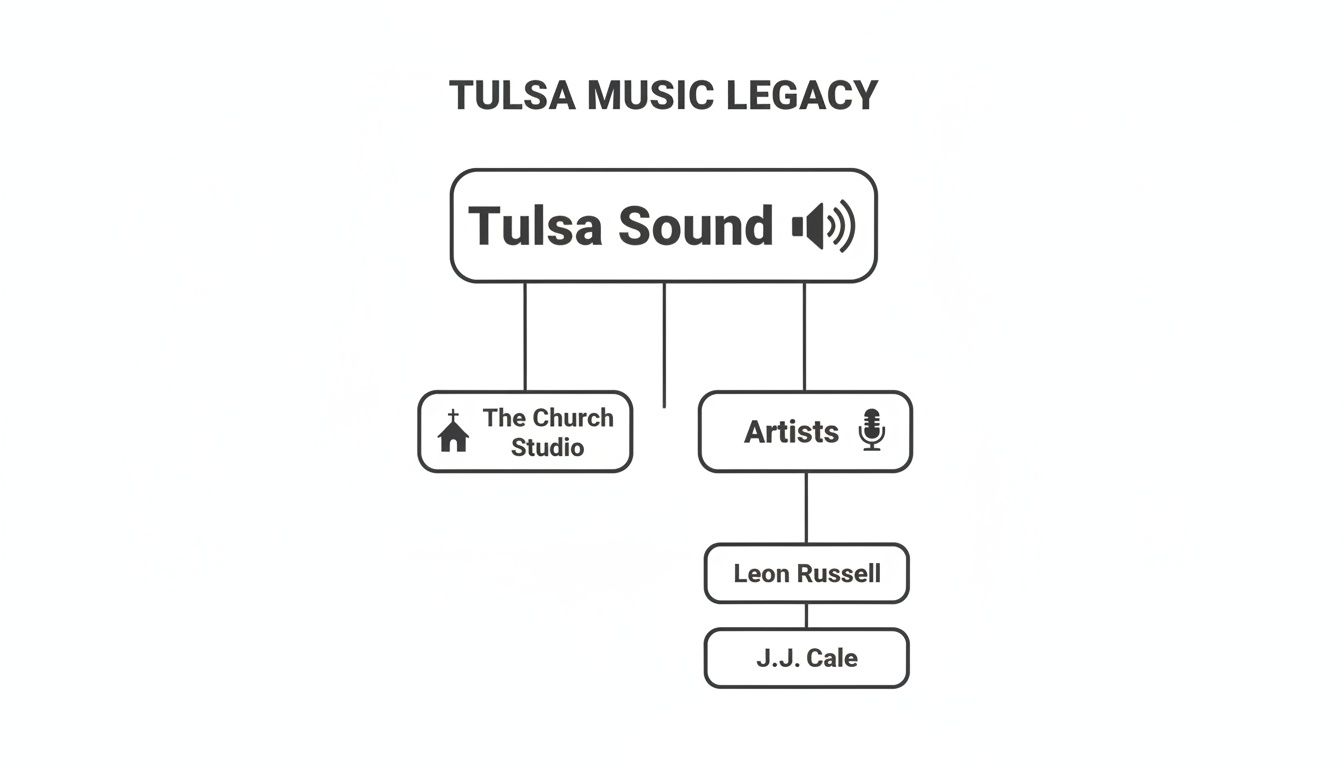
That heritage set a high bar for creative quality that continues to shape the city's best recording spaces today.
The Rise of Integrated Creative Spaces
A new kind of studio model is also taking hold, one that merges professional production tools with community and collaboration. Freeform House, just down the road in Jenks, is a perfect example of this modern approach. It’s a premier, membership-based club where top-tier facilities, like our Rise loft studio and podcast booth, are part of a larger ecosystem designed for networking and co-working.
This gives today’s creators an incredibly flexible and powerful setup. Members can go straight from a business meeting in a conference room to a recording session in the studio, all within an environment built to spark new ideas and connections. For many, this all-in-one model is the perfect tool for the job.
Essential Questions to Ask Before You Book
Booking a session at a Tulsa recording studio is a huge step forward for any project. But it's also a real investment—of your money, your time, and your creative focus. To make sure you get exactly what you need and sidestep any costly surprises, you've got to ask the right questions upfront.
Think of it as your pre-flight checklist. We're going beyond the simple hourly rate to get into the details that separate a decent session from a great one. When you come prepared with thoughtful questions, it shows the studio you're a pro and helps them understand your vision. Any good studio will welcome this conversation; it's the best way to make sure everyone is on the same page.
Digging into the Technical Details
The final sound of your project is shaped just as much by the studio's gear as it is by your performance. A studio’s equipment list, or "spec sheet," is its technical resume. Don't be shy about asking to see it and digging into the specific tools that matter for your sound.
Here’s what to ask about the gear:
What microphones do you have available? If you have a favorite for vocals or instruments (like a classic Neumann U 87 for vocals or a trusty Shure SM57 for a guitar amp), ask if they have it.
What preamps and audio interface are you using? These are the critical first steps in capturing your sound and converting it to digital, so their quality really matters.
What Digital Audio Workstation (DAW) and plugins do you run? This is key for compatibility, especially if you plan on taking the session files to another studio for mixing.
And don't forget about the room itself. Acoustics are just as important as the electronics. Ask how the rooms are treated to manage reflections and kill unwanted frequencies. A well-treated room is the foundation for a clean, professional recording—it's non-negotiable.
Clarifying the Human Element and Deliverables
All the best gear in the world won't do you any good without a talented person behind the controls. If an in-house audio engineer is part of your booking, you're not just renting a room; you're hiring their ears, their taste, and their expertise. A great engineer can elevate a session from good to incredible.
A great audio engineer isn't just a technician; they're a creative partner. Their job is to translate your artistic vision into a technical reality, making the process smoother and the final product better.
Before you lock anything in, ask about the engineer's background. What kind of music do they usually work on? Can you listen to some of their past projects? Finding an engineer you click with is vital for a session that feels both productive and creative.
Finally, you need to be crystal clear on what you're walking away with. Don't leave the deliverables up to chance.
Make sure you clarify these final points:
What file formats will I receive? Will you get high-resolution WAV files, MP3s for easy sharing, or the raw session files themselves?
When can I expect the final files? Find out if a basic mix is included in the rate or if that’s a separate service and cost.
How will the files be delivered? Will they send a cloud link, or do you need to bring a hard drive?
Getting these answers upfront protects your investment and sets your project up for success from the moment you hit record.
A Modern Hub for Creators at Freeform House
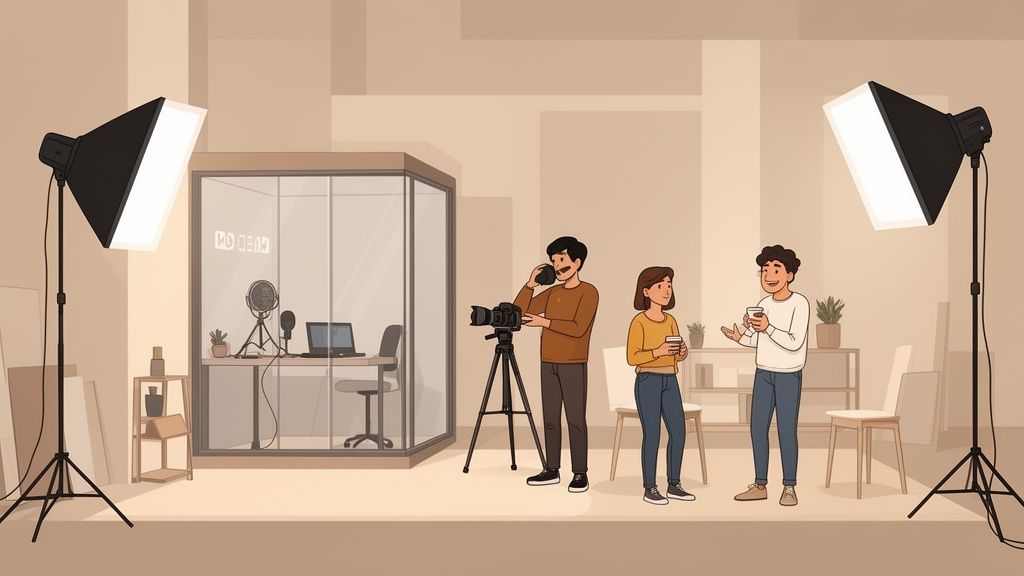
Tulsa's recording scene has a legendary past, but its future belongs to places built for the creators of today. Imagine a spot where you get top-tier production tools without the isolation, all wrapped up in a vibrant, collaborative community. That’s exactly what we’ve built at Freeform House, a private, members-only club right in the heart of Jenks.
We’re moving past the old-school studio rental model. Modern entrepreneurs, executives, and artists need more than just a room with gear—they need an ecosystem. By putting professional-grade recording facilities inside a co-working and social hub, Freeform House becomes a natural gathering place where creativity and cooperation just happen.
It’s an environment designed for both focus and connection. One moment you’re laying down the perfect track, and the next you’re bumping into someone who becomes the key to your next big project.
Professional Tools for Modern Projects
At Freeform House, our members get access to spaces that were purpose-built for creating high-quality content. These aren’t just spare rooms we stuck a mic in; they're professionally outfitted environments designed for specific creative work.
Two of our standout resources really show what we’re about:
The Rise Loft Studio: This is a bright, versatile loft that’s perfect for photoshoots, video production, or intimate recording sessions. It’s an inspiring space with pro-level gear, giving you a backdrop that’s as functional as it is stylish.
The Turnkey Podcast Booth: We built this for busy executives and entrepreneurs. It’s an acoustically treated booth that delivers broadcast-quality audio without any of the technical headaches. Just walk in and hit record for crisp, clear podcasts, voiceovers, or corporate messages.
Having these tools right at your fingertips simplifies everything. If you want a deeper dive into what makes a great recording space, our guide on choosing a podcast studio rental near you is a great place to start.
An Ecosystem for Collaboration and Growth
This idea of a creative club with an integrated Tulsa recording studio is our way of honoring the local legacy. Tulsa's recording history is incredible, anchored by the resilience of The Church Studio. Built in 1915, it survived the 1921 race massacre, and by 1972, Leon Russell had transformed it into the home of Shelter Records. It was the creative nexus for hits from Eric Clapton and JJ Cale, and it's where Tom Petty signed his first record deal. The Tractors' 1994 album, recorded there, went on to sell over 3 million copies.
Freeform House channels that same spirit of creative community, just in a modern setting. It’s not just about access to gear; it’s about access to a community of like-minded professionals who can become your next collaborators, clients, or mentors.
This blend of high-end facilities and a dynamic social hub is what makes Freeform House so powerful. It’s a place where content creation and connection happen under one roof, giving you a serious advantage in Tulsa’s thriving creative scene.
How to Prepare for a Successful Recording Session
Time in a professional recording studio is an investment. The secret to making every minute (and every dollar) count is simple: solid preparation. Showing up ready to go is the difference between a frustrating, expensive session and walking out with a final product you're proud of.
That means locking down your material before you even think about hitting the record button.
Finalize your lyrics, nail down your script, or polish your talking points well in advance. Then, rehearse until performing it feels like second nature. When you aren't struggling to remember words or chords, you can pour all that mental energy into what really matters—the emotion and delivery of your performance.
Create a Clear Session Plan
Think of a session plan as your roadmap. It's a simple document that outlines exactly what you need to accomplish and in what order, keeping both you and the engineer perfectly in sync.
A good plan doesn't have to be complicated. Just make sure it includes:
A "Must-Have" List: These are the non-negotiables. The core tracks, the main vocal takes, or the key interview segments that absolutely must be completed.
A "Nice-to-Have" List: Got a cool harmony idea or an experimental guitar part you want to try? Put it here. If time allows, you can dive into these creative extras.
Reference Tracks: Bring a few songs or recordings that capture the sound and vibe you're chasing. This is the fastest way to get your vision across.
Communicating this plan to your audio engineer is everything. They're your creative partner in this process, and the more context you give them, the better they can steer the ship toward your goal. This simple act of preparation demystifies the whole experience and puts you firmly in control of your project's outcome.
The legendary Tulsa Sound—that unmistakable mix of rock, country, and blues honed at The Church Studio—put Tulsa on the recording map back in the 1970s. That legacy is alive and kicking, proven by recent wins like Taj Mahal's 2024 Grammy nod for a live album recorded right there. You can learn more about The Church Studio's incredible history.
And if you're just starting your audio journey, be sure to check out our guide on the best podcast equipment for beginners.
Common Questions About Tulsa Recording Studios
Stepping into the world of recording studios can feel like wandering into a maze, especially if it’s your first time. Below, we’ve gathered answers to the most frequent questions we hear from artists, podcasters, and producers hunting for a Tulsa recording studio.
How Much Does It Cost To Rent A Recording Studio In Tulsa
Prices in Tulsa run the gamut—from budget-friendly booths to full-service rooms staffed by veteran engineers. Here’s a rough breakdown:
Dedicated Podcast Booth: Ideal for voice work, often under $50/hour
Project Studio: Mid-range setup with an engineer, around $75–$150/hour
Commercial Studio: Large live rooms and top-tier gear, typically $800+ for a full day
Some spaces flip the script on hourly fees. At clubs like Freeform House, you pay a monthly membership—think of it like a creative gym membership—with unlimited studio access, priority booking, and a community of fellow makers.
Do I Need To Bring My Own Equipment
Studios usually supply the essentials:
Microphones, preamps, cables
A recording computer loaded with popular DAWs
But your signature gear is still yours to pack:
Guitars, basses, synths
Specialty microphones or outboard effects
Tip: Always double-check with the studio what’s on hand and what you need to bring. A quick call saves last-minute scrambles.
Can I Record A Podcast In A Music Studio
You can—yet it’s like shooting a documentary in a noisy café. A purpose-built podcast booth offers:
Acoustic panels tuned for speech
Low-noise ventilation and lighting
Instant vocal clarity, slashing edit time
At Freeform House, our Rise loft and podcast booth are designed so you sound polished straight out of the gate.
At Freeform House, members enjoy on-demand access to premium recording suites, podcast booths, and a vibrant creative network. Learn more about membership opportunities at Freeform House Membership.
Comments